
Last updated September 20, 2026
Free on-site gate assessment - hinges, posts, and your LiftMaster or Nice gate operator checked before anything is quoted
The assessment is free and the quote is the invoice.

Farm & ranch
 Before
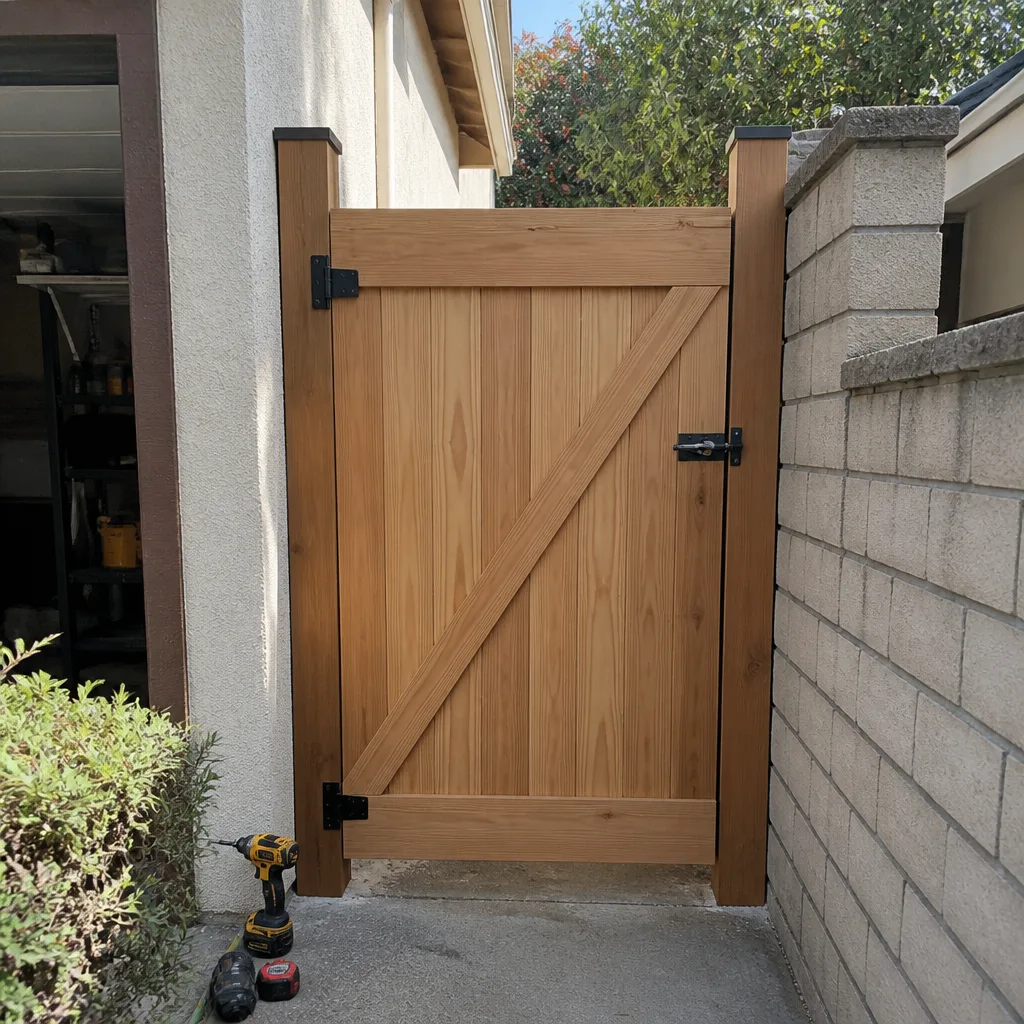 After
After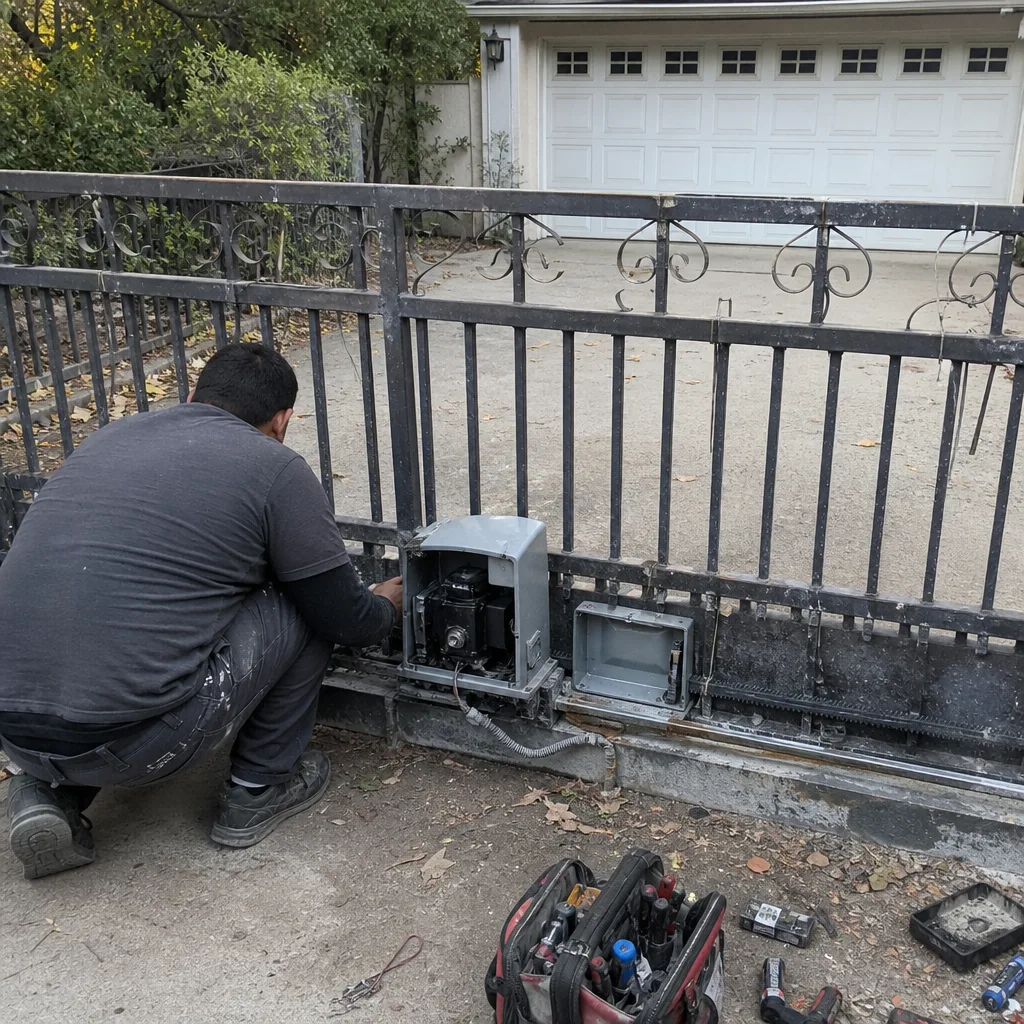 Before
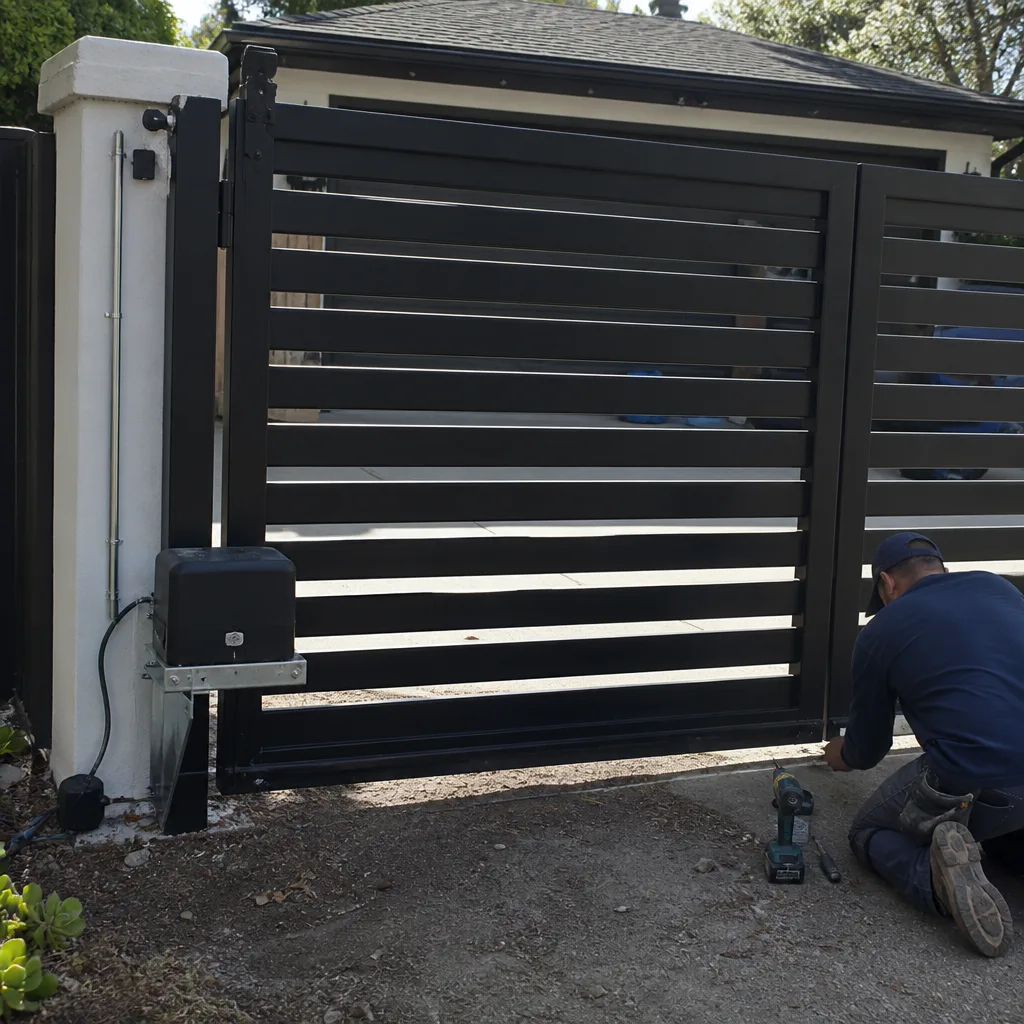 After
After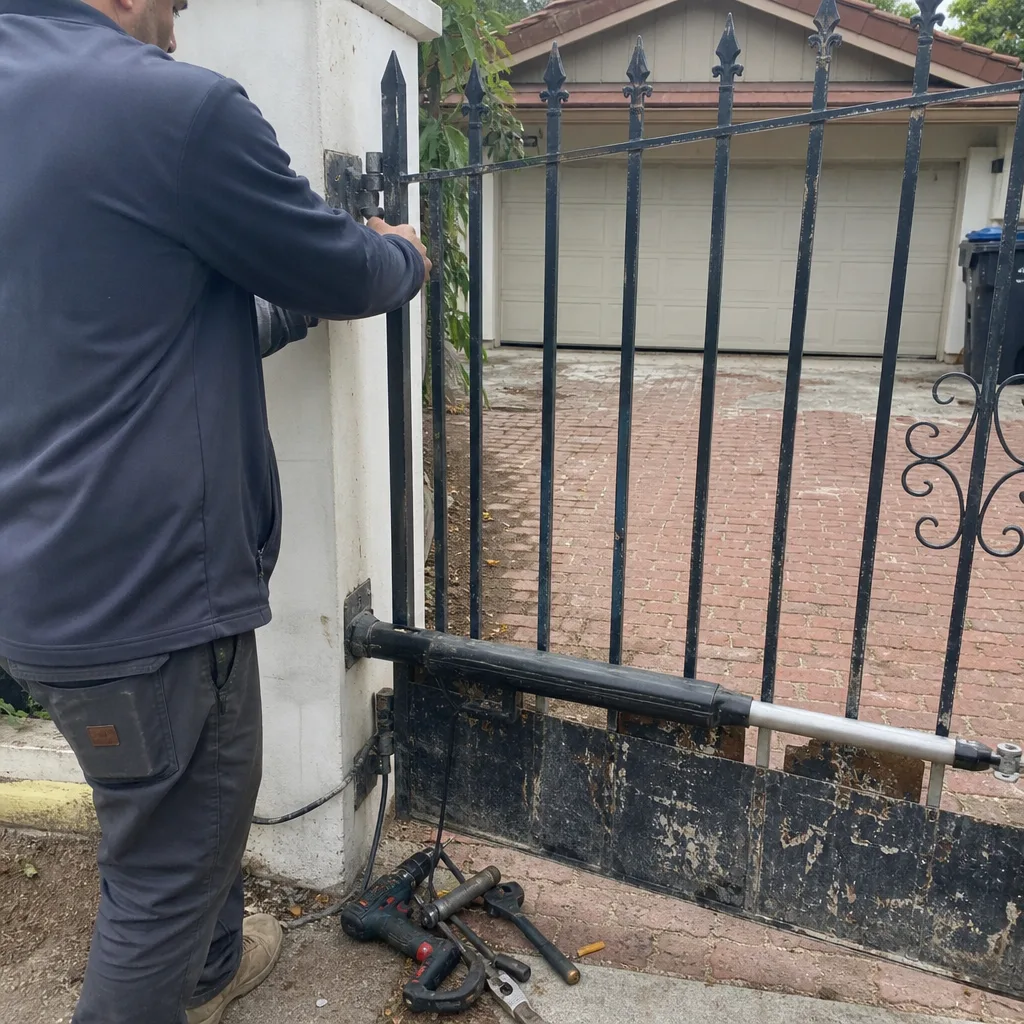 Before
 After
AfterSeasonal Gate Repair Care for Pasadena: Year-Round Homeowner’s Guide
Pasadena averages 284 sunny days a year, which leads most homeowners to assume their gate hardware is under minimal stress. The UV degradation on a south-facing gate post tells a different story. Between late-summer heat spikes, October Santa Ana winds, and winter hillside drainage, Pasadena gates face a predictable annual failure calendar that most people only learn about after a hinge cracks or a control board burns out. This guide lays out what fails, when it fails, and what to inspect before you’re standing in the driveway at 7 a.m. with a gate that won’t move.
Quick Answer
Seasonal gate care in Pasadena means inspecting and maintaining different components at different times of year: batteries and control boards before summer heat, hinges and post bases after winter rain, and gate hardware within 48 hours after any Santa Ana wind event. A seasonal inspection every three months, plus a documented photo record of wear, prevents roughly 80% of the emergency failures we see on residential gates in Pasadena. Most seasonal damage is caught early with a visual check that takes under fifteen minutes.
Table of Contents
- Why Pasadena’s Climate Punishes Gate Hardware Differently
- The Pasadena Gate Failure Calendar: Month by Month
- Santa Ana Wind Events: What to Inspect Within 48 Hours
- Summer Heat Above 95°F: Control Boards, Hydraulics, and Batteries
- Winter Drainage and Hillside Post Movement
- Building a Dated Photographic Record Across Seasons
- Common Mistakes to Avoid
- When to Call a Professional
- Frequently Asked Questions
- The Bottom Line
BeforeAfterWhy Pasadena’s Climate Punishes Gate Hardware Differently
Pasadena sits at the base of the San Gabriel Mountains, which creates a specific set of conditions that inland and coastal cities don’t share. Morning marine layer burns off by mid-morning, leaving south-facing and west-facing gate surfaces exposed to direct sun for eight to ten hours a day from April through October. That solar load does more than fade paint. It degrades PVC insulation on low-voltage wiring, dries out lubricants, and causes thermal expansion cycles that work screws and bracket bolts loose over time.
The second factor is wind. Pasadena’s position against the mountain front means Santa Ana events push dry air downslope at speeds that routinely reach 40 to 60 mph in exposed canyon-adjacent neighborhoods. A swing gate is a large sail. A sliding gate takes the load differently but still absorbs sustained lateral force through its rollers and track. Wind doesn’t just move a gate; it loads the hinge points, the operator arm, and the post anchors in ways that daily use never does.
The third factor is drainage. Pasadena neighborhoods built into the foothills, including areas above the Rose Bowl and along the Arroyo Seco, sit on slopes where winter rain saturates soil and moves it downhill. Gate posts set in concrete can shift by a quarter-inch over a single wet season. That doesn’t sound like much, but a quarter-inch at the post translates to a half-inch or more at the latch point, and that’s enough to cause binding, misalignment, and hinge stress.
We’ve been repairing gates in Pasadena since 2014, and the failure patterns are consistent enough that we can tell what month a gate failed just by looking at the damage. Learn the seasonal rhythm, and you’ll catch most issues before they become driveway emergencies. If you need help identifying the components on your gate, our Gate Repair in Pasadena page walks through what we check on every visit.
The Pasadena Gate Failure Calendar: Month by Month
Every gate has a failure profile that shifts with the calendar. Here’s what we see most often, month by month, on residential properties across Pasadena.
January-February: Soil Saturation and Post Movement
Pasadena’s wettest months push ground moisture into concrete footings and the soil around them. Clay-heavy soils expand, then contract during dry spells, gradually shifting posts. Symptoms include a gate that rubs the ground on one corner, a latch that no longer lines up, or a gate that starts binding halfway through its travel. Fix it early and you’re adjusting hinges. Wait until spring and you’re often replacing a cracked hinge or a bent post bracket.
March-April: Lubricant Breakdown and Hinge Wear
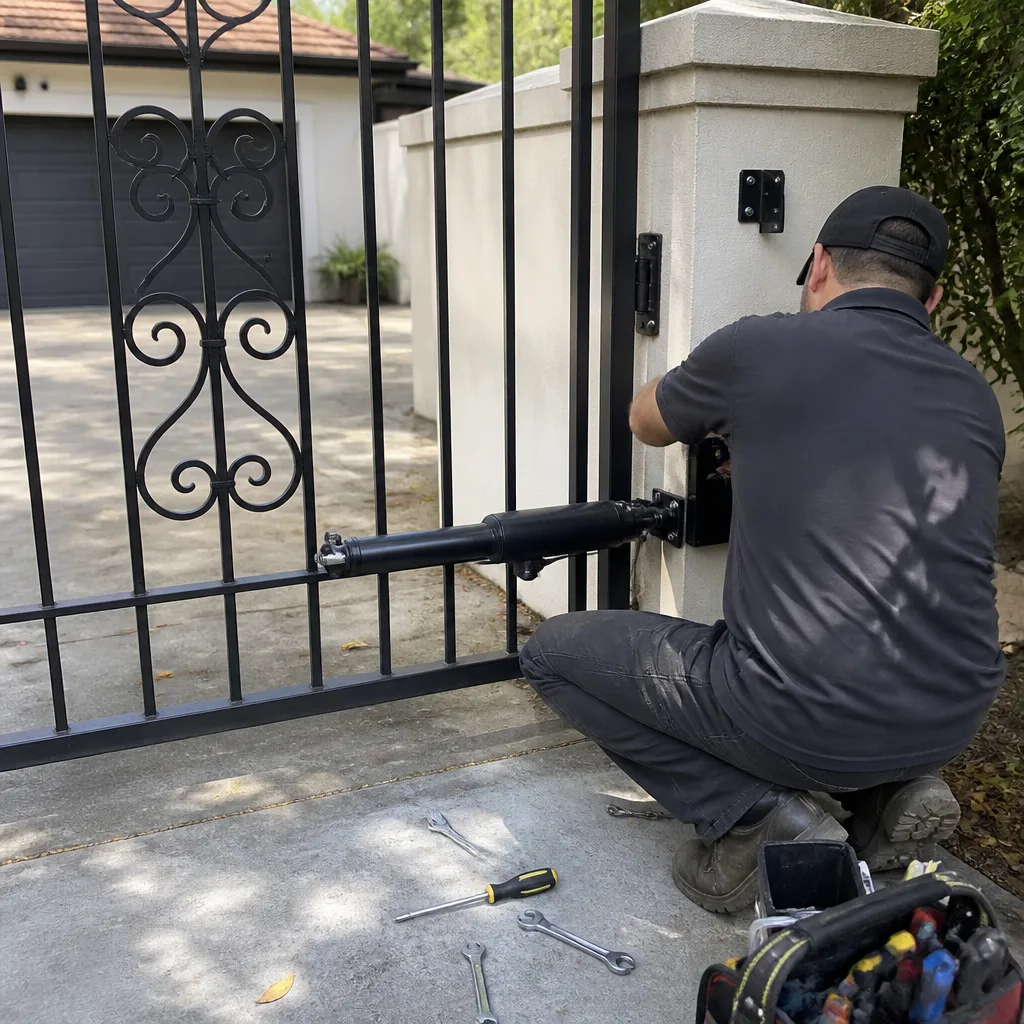
As temperatures swing from the 50s to the 80s, old grease turns stiff and collects grit. Hinges, roller bearings, and operator arms that were quiet in February start to creak in April. This is the season to clean and re-lubricate hinge pins, check roller wheels on sliding gates, and inspect the operator arm bushing for slop.
May-June: Battery Backup Fade and Photo-Eye Misalignment
Warm weather exposes weak batteries. A backup battery that lasted through winter may fail its first real heat test. Photo-eyes, the infrared beams that stop the gate when something crosses the path, drift out of alignment as mounting brackets expand. Symptoms include the gate reversing for no reason or refusing to close. A misalignment of two inches is enough to interrupt the beam.
July-August: Control Board Overheating and Capacitor Failure
Temperatures above 95°F are hard on control boards, especially when the board sits inside a metal enclosure in direct sun. Capacitors age faster in heat. Symptoms include intermittent operation, a gate that opens but won’t close, or a board that works in the morning and fails in the afternoon. Hydraulic fluid in swing-gate operators also thins at high temperature, slowing gate movement.
September-October: Santa Ana Wind Damage
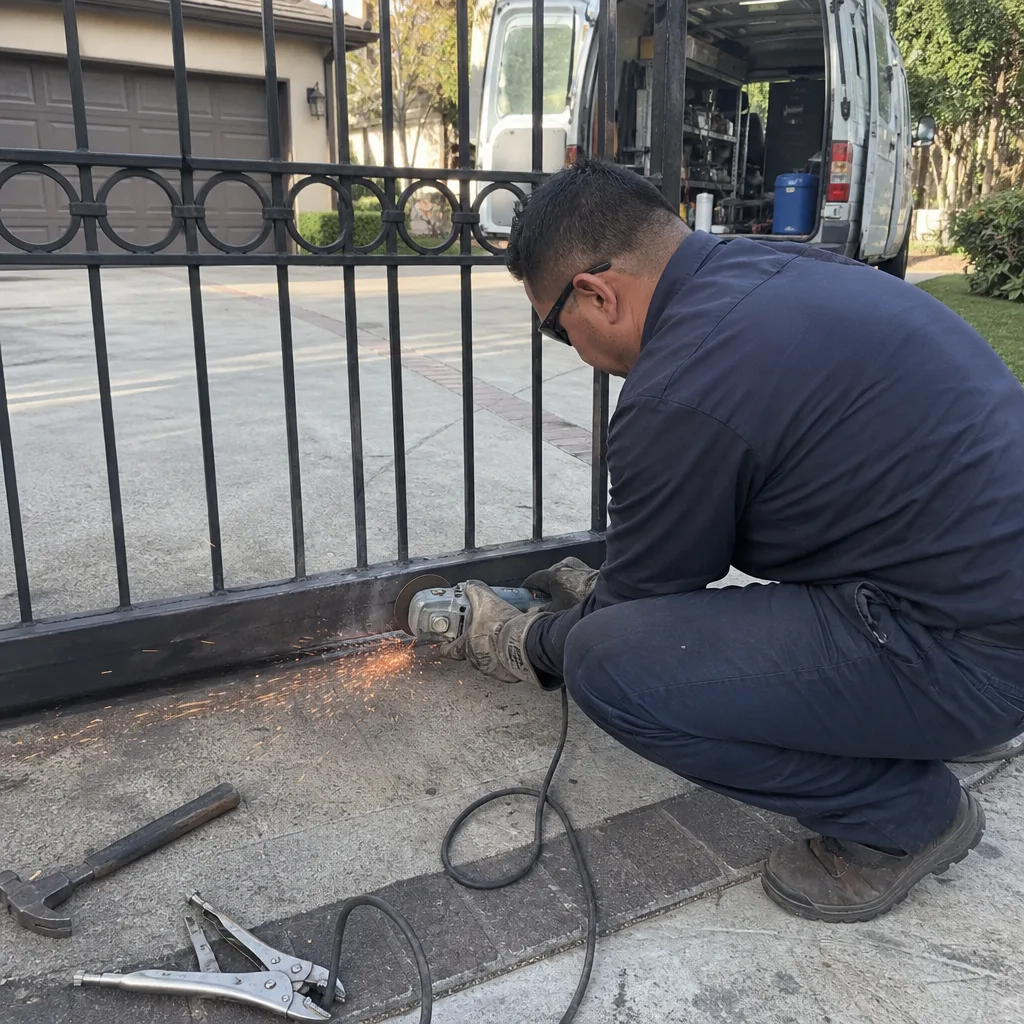
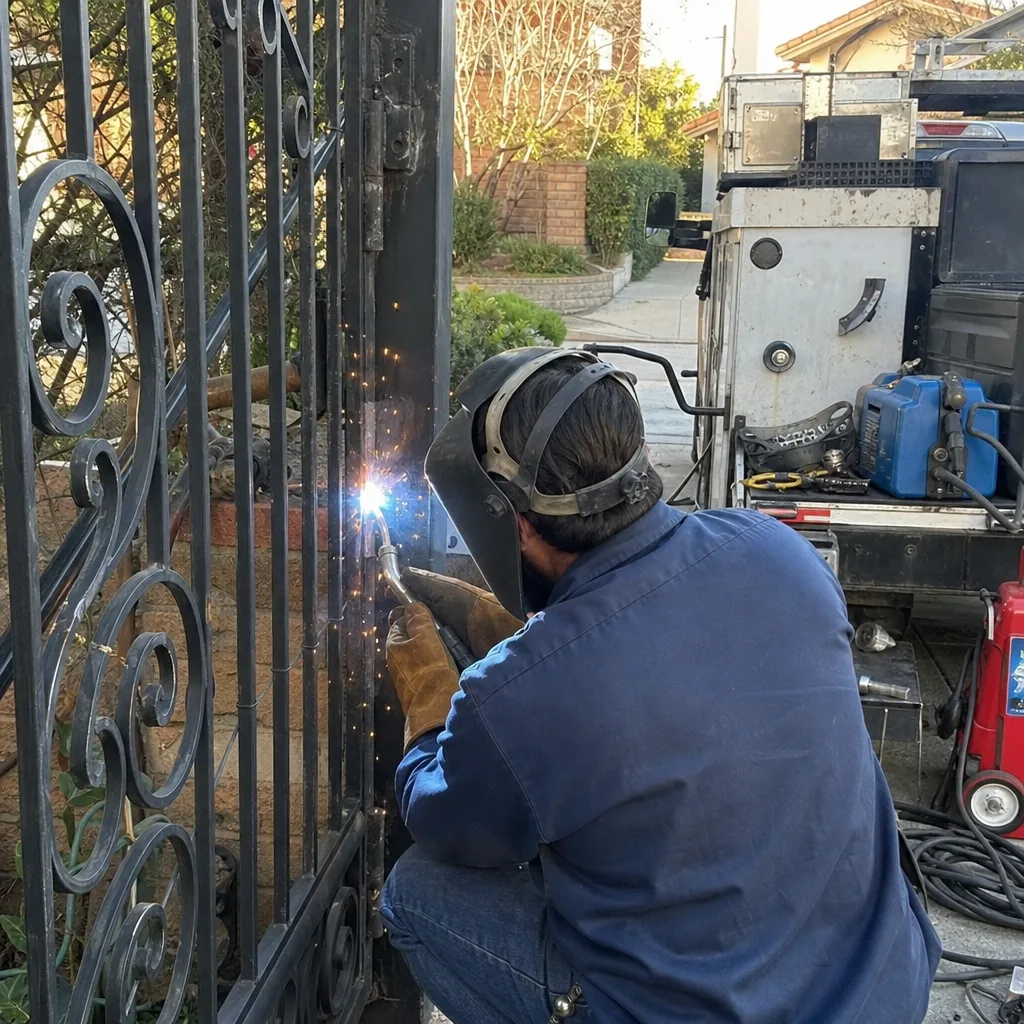
Sustained wind finds weak points. Hinge bolts stretch. Gate frames flex and crack at weld points. Operator arms bend. Sliding gates jump their tracks when debris lodges in the track. After any major wind event, inspect the gate within 48 hours. We cover the specific inspection points in the Santa Ana section below.
November-December: Cold-Weather Adjustments and End-of-Year Wear
Cooler temperatures harden rubber seals and make aged wiring less flexible. Gate limit switches, which tell the operator where to stop, drift as metal contracts. A gate that previously closed flush now leaves a one-inch gap. This is the season to re-check limit settings and test safety features before holiday traffic increases gate cycles.
Santa Ana Wind Events: What to Inspect Within 48 Hours
Santa Ana winds are the single most damaging weather event for Pasadena gates. A swing gate ten feet wide and six feet tall has a surface area of sixty square feet. In a 50 mph wind, that’s hundreds of pounds of sustained force working against hinges, posts, and the operator arm. Sliding gates don’t catch wind the same way, but they shift laterally, loading roller brackets and the track.
Here’s a numbered inspection sequence we follow after every major wind event. It takes about twenty minutes.
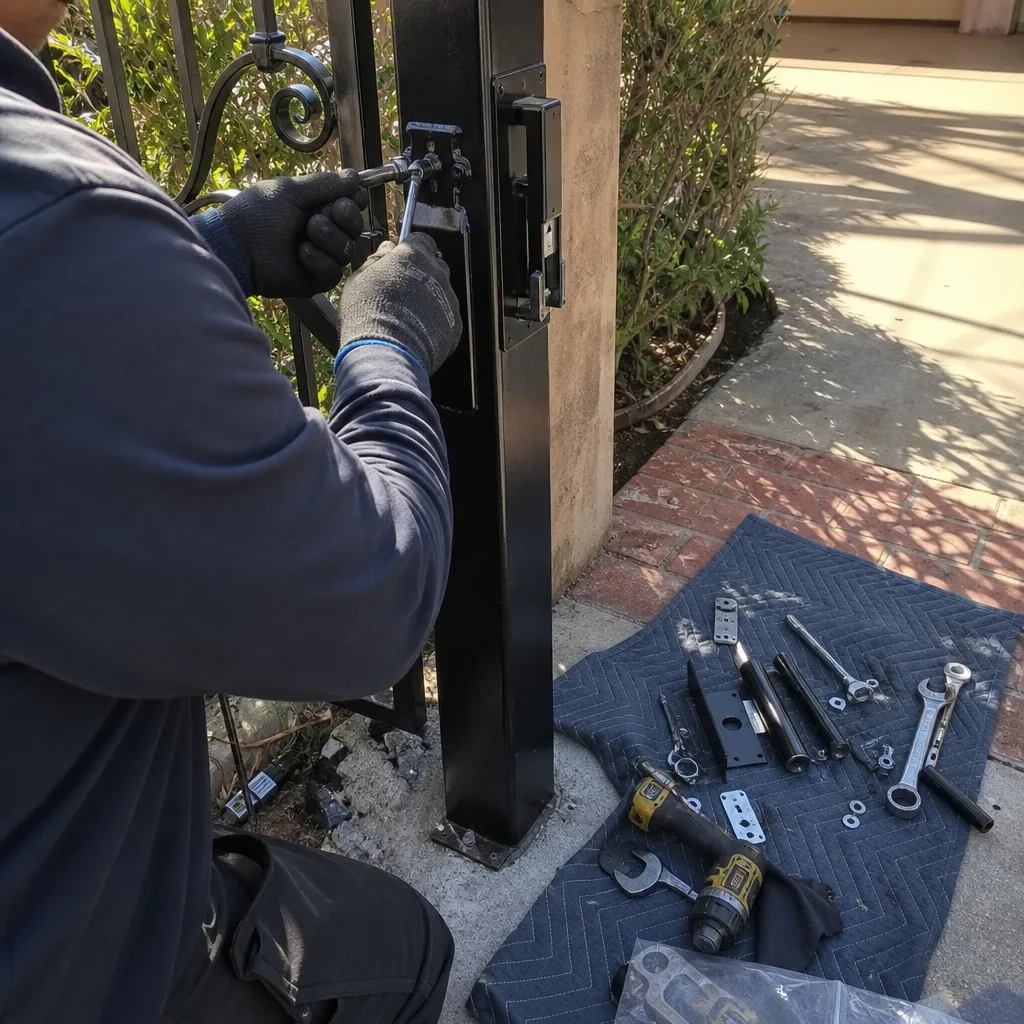
- Check the hinge bolts first. On a swing gate, the top hinge carries the most tension. Look for any gap between the hinge plate and the gate frame or post. A bolt that’s backed out even one-eighth of an inch means the gate has shifted under load.
- Inspect the operator arm attachment point. The arm connects the motor to the gate. Wind load can bend the arm, crack the bracket, or wallow out the bolt hole. Open and close the gate once and watch the connection for wobble.
- Look at the post bases. On both swing and sliding gates, check where the post meets the concrete or soil. Fresh cracks in the concrete, a visible gap at the base, or rust staining from water intrusion are all signs the post moved during the wind event.
- Run the gate and listen. A gate that hums, grinds, or hesitates after a wind event is telling you something moved. Compare the sound to before the wind. New noise means new misalignment.
- Check sliding gate rollers and track. Debris from wind gets packed into tracks. Rollers can chip or flatten. Roll the gate manually if possible and feel for rough spots.
- Test safety devices. Photo-eyes can get knocked out of alignment by wind-blown debris or gate movement. Block the beam with your hand and confirm the gate reverses. If it doesn’t, the beam is misaligned or the control board isn’t receiving the signal.
We recommend photographing any damage you find before attempting any adjustment. A photo log dated the day after a wind event gives us evidence of progression. When wind damage is left unaddressed, a bent operator arm can fail completely within weeks. If your gate needs professional attention, our Gate Motor & Opener in Pasadena page explains what we inspect and how we document every adjustment.
Summer Heat Above 95°F: Control Boards, Hydraulics, and Batteries
Pasadena summer heat spikes above 100°F for days at a time, especially in July and August. The components inside your gate operator absorb that heat. A metal control board enclosure in direct sun can reach 140°F or more, and most residential control boards are rated for operating temperatures far below that.
Here’s what heat does to each component and what the symptoms look like:
Control Boards
Heat accelerates capacitor aging. A control board that fails in summer often shows warning signs first: the gate opens but won’t close, the remote works intermittently, or the operator reboots itself. If symptoms appear only during the hottest part of the day and disappear in the evening, the board is overheating. Adding a shade cover or relocating the enclosure can extend board life.
Hydraulic Fluid
Swing-gate operators that use hydraulic fluid experience viscosity changes at high temperature. Thinner fluid means slower, weaker gate movement. A gate that takes noticeably longer to open on a 100°F afternoon than on a 70°F morning is often showing hydraulic fade. Check the fluid level and condition. Dark or cloudy fluid should be replaced.
Battery Backup Units
Sealed lead-acid and lithium batteries degrade faster in heat. A battery that provided ten minutes of backup in spring may provide two minutes by August. The only reliable way to test a backup battery is to disconnect AC power and run the gate. If the gate moves slowly or not at all, the battery has failed. In our experience, backup batteries on Pasadena gates last two to four years, with south-facing installations failing sooner.
Photo-Eyes and Wiring
Thermal expansion moves brackets. Wiring insulation becomes brittle after prolonged UV exposure, and heat accelerates the process. Summer is the most common season for intermittent photo-eye faults caused by microfractures in low-voltage wiring. When the beam drops out, the gate refuses to close or reverses mid-cycle.
If any of these symptoms sound familiar, the fix might be simpler than replacing the operator. A documented inspection identifies whether the board, the battery, or the wiring is the actual failure point. For homeowners considering a new operator, our Gate Installation in Pasadena page covers what’s involved when replacement is the right call.
Winter Drainage and Hillside Post Movement
Pasadena’s hillside neighborhoods, from Linda Vista to Hastings Ranch, sit on soils that expand when wet and contract when dry. Over a single winter, a gate post can move enough to cause visible problems at the latch. Over several winters, that movement compounds.
The mechanism is straightforward. Rain saturates the soil around the post footing. Clay-rich soils swell, pushing against the concrete. When the soil dries, it shrinks and leaves a void. The post settles into the void. Repeat this cycle twenty times over a winter, and a post that was plumb in October is leaning half a degree by February.
Here’s how to detect post movement before it breaks a hinge:
- Check the gap at the latch. A latch that was aligned in October but sits off-center in February means one post has moved. Measure the gap monthly through winter and note any change.
- Look for fresh concrete cracks. Hairline cracks at the base of the footing that weren’t there in the fall are evidence of soil pressure or settling.
- Plumb the post. Use a level on two adjacent faces. A post that’s off by more than a quarter bubble has moved enough to affect gate operation.
- Watch for ground contact. A gate that clears the ground by four inches in summer may drag in February if the hinge-post side settles.
- Inspect the hinge bolts. Movement at the post transfers stress to the hinge connection. A cracked hinge or wallowed bolt hole is the failure that follows post movement.
Catching post movement early is cheaper than the alternative. Adjusting hinges, adding a shim plate, or re-securing the footing costs a fraction of replacing a cracked gate frame. If you’re seeing repeated alignment issues season after season, the post itself may need to be re-set, which is a job for a professional.
Building a Dated Photographic Record Across Seasons
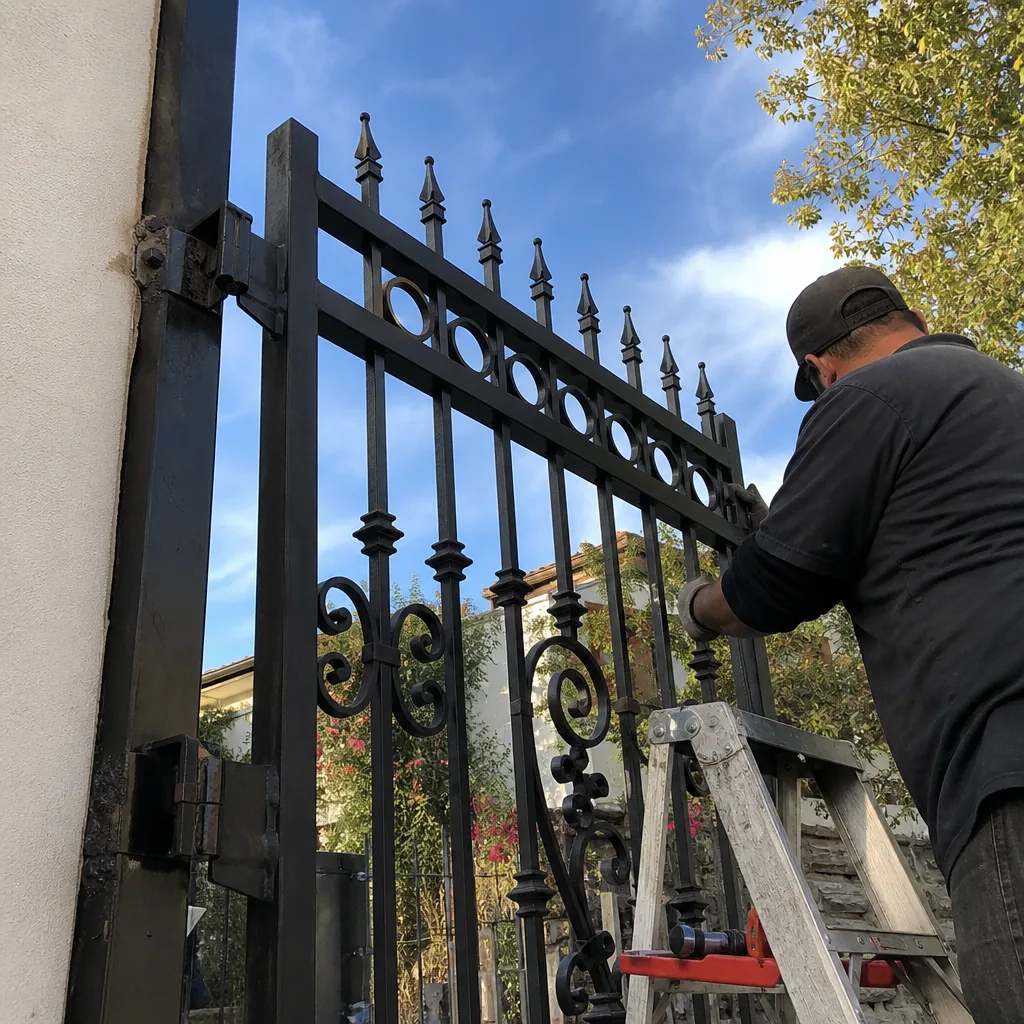
Most homeowners call a gate repair company with a single symptom and no history. The gate won’t open. It’s making a noise. It reversed on the car. What they usually don’t have is a record of how the gate looked and sounded three months earlier.
A dated photographic record changes that conversation. When we can see that a hinge gap was one-eighth of an inch in September and a quarter-inch in January, we know the post is moving. When we can see a crack propagating across a weld over six months, we know the frame is fatiguing. Evidence of progression beats a snapshot of the current symptom every time.
Here’s how to build that record with fifteen minutes of work per season:
- Pick a fixed camera position. Stand in the same spot each time. The same angle lets you compare photos directly. Include the whole gate and both posts.
- Photograph the hinge points up close. Use your phone’s macro mode if you have it. You want to see bolt heads, hinge plates, and any gaps clearly.
- Photograph the latch and strike plate. This is the most common failure point on swing gates, and alignment drift shows up clearly in photos.
- Photograph the operator. Include the arm attachment, the enclosure, and any visible wiring.
- Photograph the track and rollers if you have a sliding gate. Debris buildup and roller wear are visible season over season.
- Store photos in a dated album. Create a folder on your phone or computer called “Gate - 2025” and add each seasonal set. The date stamp matters more than the photo quality.
When you call a gate company, send the photos along with a description of the current symptom. It saves diagnostic time and often changes the recommendation. Under our Haven Standard, every visit includes a documented photo record of what we found, what we adjusted, and what we replaced, so you’re adding to a record rather than starting one from scratch.
Common Mistakes to Avoid
- Ignoring a seasonal noise. A gate that creaks in April and grinds by June is telling you the hinge or roller is failing. Lubrication is a temporary fix; the underlying wear continues. In Pasadena’s dry season, a neglected hinge can seize completely within six weeks.
- Skipping the inspection after a Santa Ana event. Wind damage compounds. A slightly bent operator arm left through the next wind event often fails completely, turning a $200 bracket replacement into a full operator replacement.
- Using the wrong lubricant. WD-40 is a cleaner, not a long-term lubricant for gate hinges and rollers. It strips existing grease and leaves metal dry. Use a heavy-duty lithium grease or a dedicated gate hinge lubricant instead.
- Replacing the operator before checking the battery. Many “dead” operators are just failed backup batteries or tripped thermal breakers. A ten-minute check can save the cost of a new motor.
- Power-washing the gate without protecting the electronics. Pasadena’s dry season kicks up dust, and power-washing is a common way to clean it off. Water forced into the operator enclosure, photo-eye housings, or control board will cause failures. Cover all electronics before pressure washing anything.
- Fixing the symptom without addressing the cause. Re-aligning a latch without checking why the post moved means you’ll re-align it again in a few months. The post movement is the problem. The latch misalignment is the symptom.
- Forgetting that the sun moves. A gate that was shaded by a neighbor’s tree in June may be in direct sun by August, or vice versa. The thermal load changes seasonally, and a gate that overheated last summer might not do it again if the shade pattern has changed.
When to Call a Professional
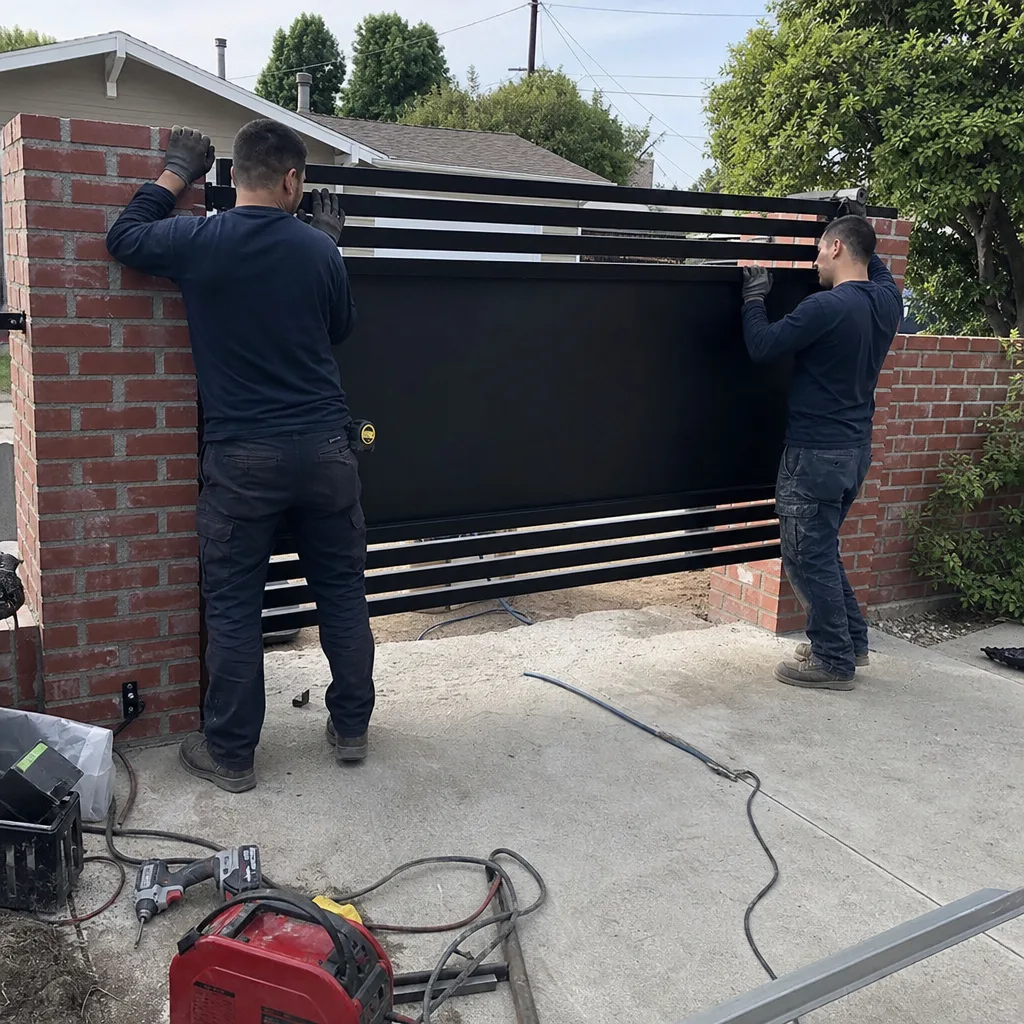
Some seasonal gate work is safe to handle yourself: lubricating hinges, clearing debris from a track, taking photos, noting symptoms. Other work is not. If your gate has a damaged hinge that’s actively cracking, a post that’s visibly leaning, a control board that’s arcing or burning, or an operator arm that has come loose from its bracket, stop using the gate and call someone who works on these systems daily.
Gate operators contain capacitors that retain charge even when unplugged, and high-tension springs and heavy gate panels can injure someone who doesn’t know how the system transfers force. We’d rather answer a question on the phone than see a homeowner hurt by a gate that was “mostly fixed.”
Vance Gate Repair Pasadena offers free estimates in Pasadena, and every estimate is a written price delivered before any work starts. Call (626) 624-4196 and a live person answers, 24 hours a day, seven days a week.
Frequently Asked Questions
How often should I have my gate inspected in Pasadena?
A visual inspection every three months covers the seasonal failure points, but a professional inspection once a year catches the issues that aren’t visible from outside: control board condition, battery health, operator force settings, and limit switch calibration. In Pasadena’s climate, we recommend scheduling that professional inspection in the fall, before Santa Ana wind season and winter rain arrive.
How much does seasonal gate maintenance cost in Pasadena?
Most seasonal maintenance visits in Pasadena run between $125 and $250, depending on the gate type, the number of operators, and whether any adjustments or minor parts are needed. A full tune-up that includes cleaning, lubrication, limit calibration, and safety-device testing typically falls in the lower end of that range. Larger repairs like post re-setting or operator replacement are quoted separately and always in writing before work starts. Call (626) 624-4196 for an exact quote, estimates are free.
Can you fix my gate the same day in Pasadena?
For emergency failures, yes. A live person answers our phone 24/7, and we dispatch technicians to Pasadena addresses for same-day repair on most emergency issues including gates that won’t open, gates stuck open, and safety-device failures. A written price is delivered before any work begins. Call (626) 624-4196 and a live person answers at any hour.
What gate brands do you work on?
We service nine major gate-automation brands including Ghost Controls, DoorKing, Elite, and Mighty Mule, among others. Whether your existing operator is a residential swing arm or a commercial-grade sliding gate system, we work on whatever motor is already on the property rather than steering you toward a replacement. If you’re not sure what brand you have, send us a photo and we’ll identify it.
Do I need to replace my gate after Santa Ana wind damage?
Usually not. Most wind damage we see on Pasadena gates is repairable: bent operator arms can be replaced, hinge bolts re-torqued or upsized, track sections repaired, and post bases re-secured. Replacement becomes the right call when the gate frame itself has cracked at a weld point or the post has moved enough that the footing needs to be entirely re-poured. A written estimate tells you which path you’re on before any work starts.
What does a full gate tune-up include?
A full tune-up from Vance Gate Repair Pasadena includes cleaning hinge points and rollers, lubricating all moving parts with the correct lubricants, checking and adjusting limit switches, testing safety devices including photo-eyes and obstruction sensing, checking battery backup condition, inspecting the operator arm and mounting hardware, and documenting everything with photos. You receive a written record of what was found and what was adjusted. Call (626) 624-4196 to schedule, estimates are free.
The Bottom Line
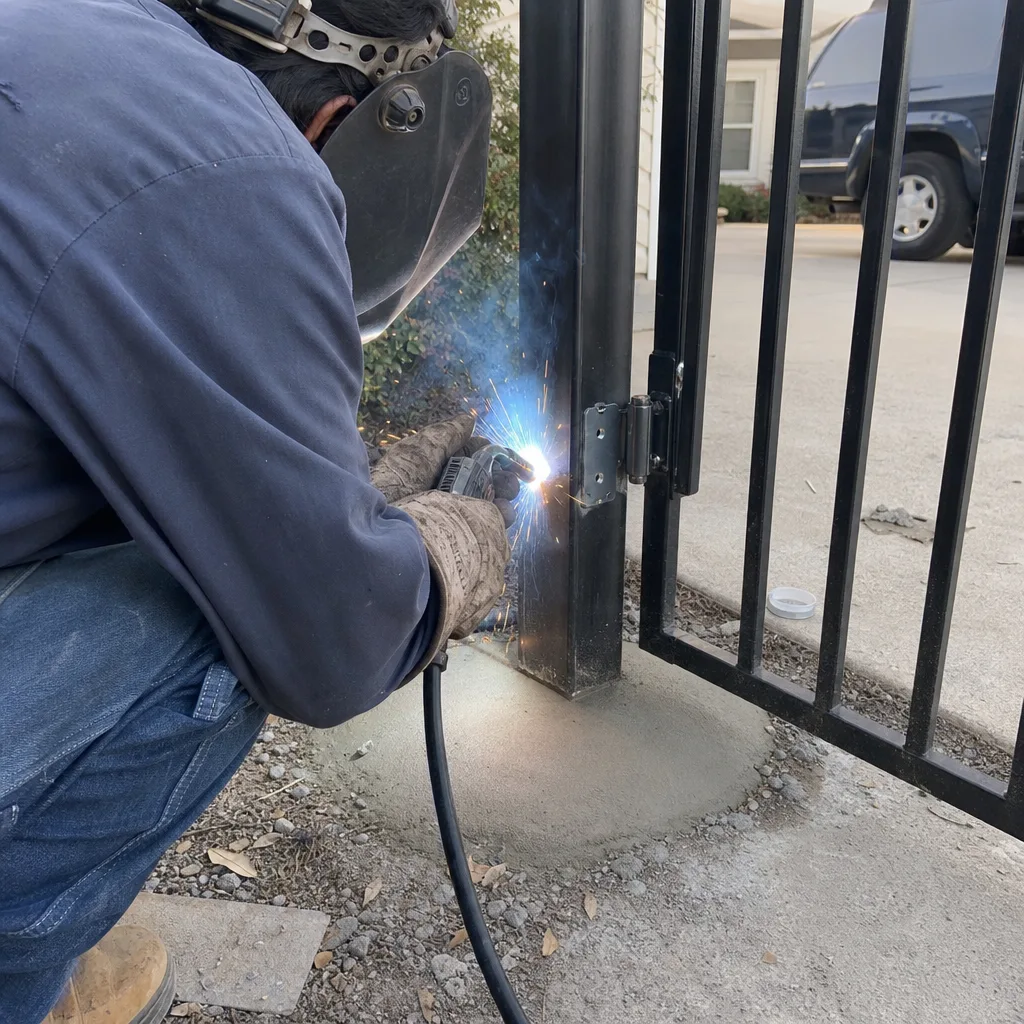
Pasadena’s mild climate hides a predictable annual gate failure pattern. Heat, wind, and winter drainage each attack different components at different times of year. The homeowner who inspects hinge bolts after a Santa Ana, tests battery backup before summer, and watches post alignment through the winter will catch most failures before they become emergencies. A quarterly visual check plus a dated photo record gives you and any technician the evidence needed to diagnose a problem correctly the first time.
When your gate needs professional attention, the work should come with a written price before anyone picks up a tool and a documented record after. Our homepage at Vance Gate Repair Pasadena home has more about how we work, or call (626) 624-4196. A live person answers, any hour, every day.
Written by Adrian Vance, Owner at Vance Gate Repair Pasadena, serving Pasadena since 2014.