
Last updated September 20, 2026
Free on-site gate assessment - hinges, posts, and your LiftMaster or Nice gate operator checked before anything is quoted
The assessment is free and the quote is the invoice.

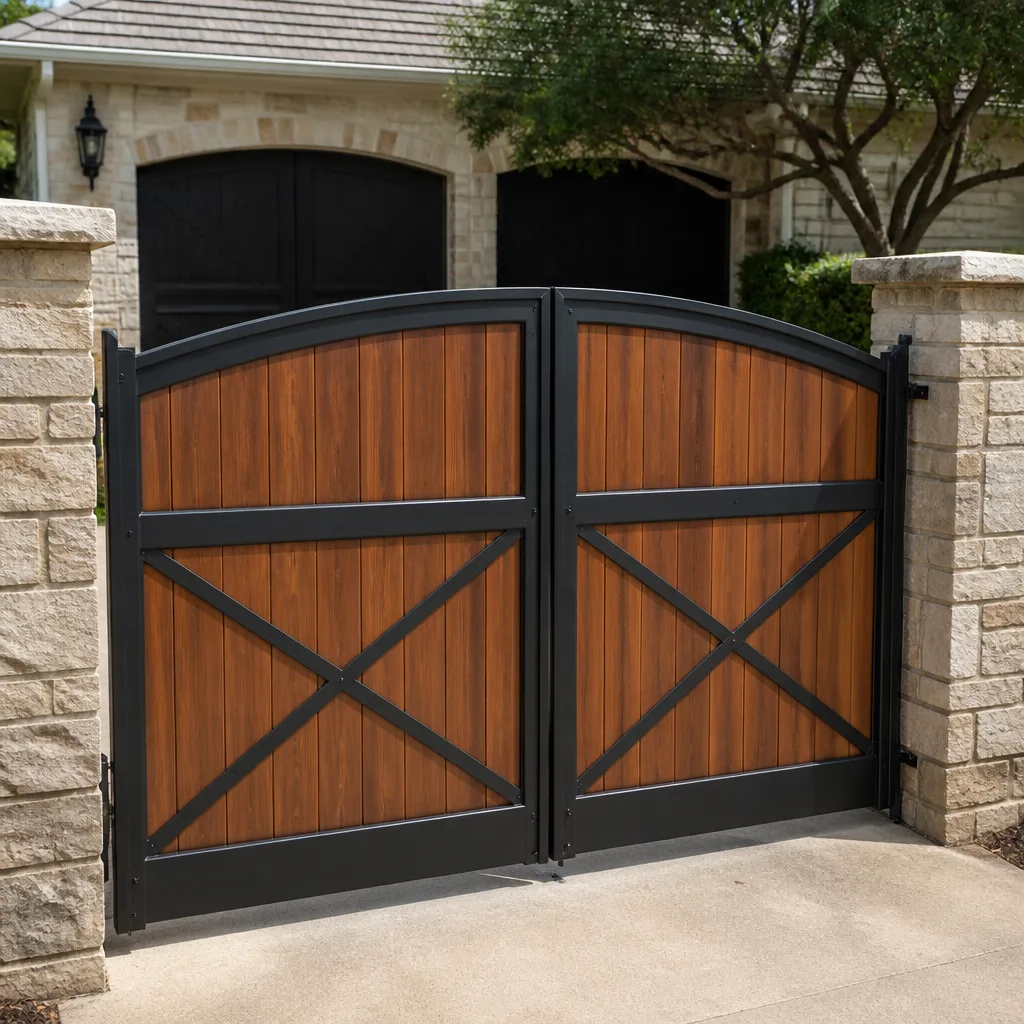
Farm & ranch
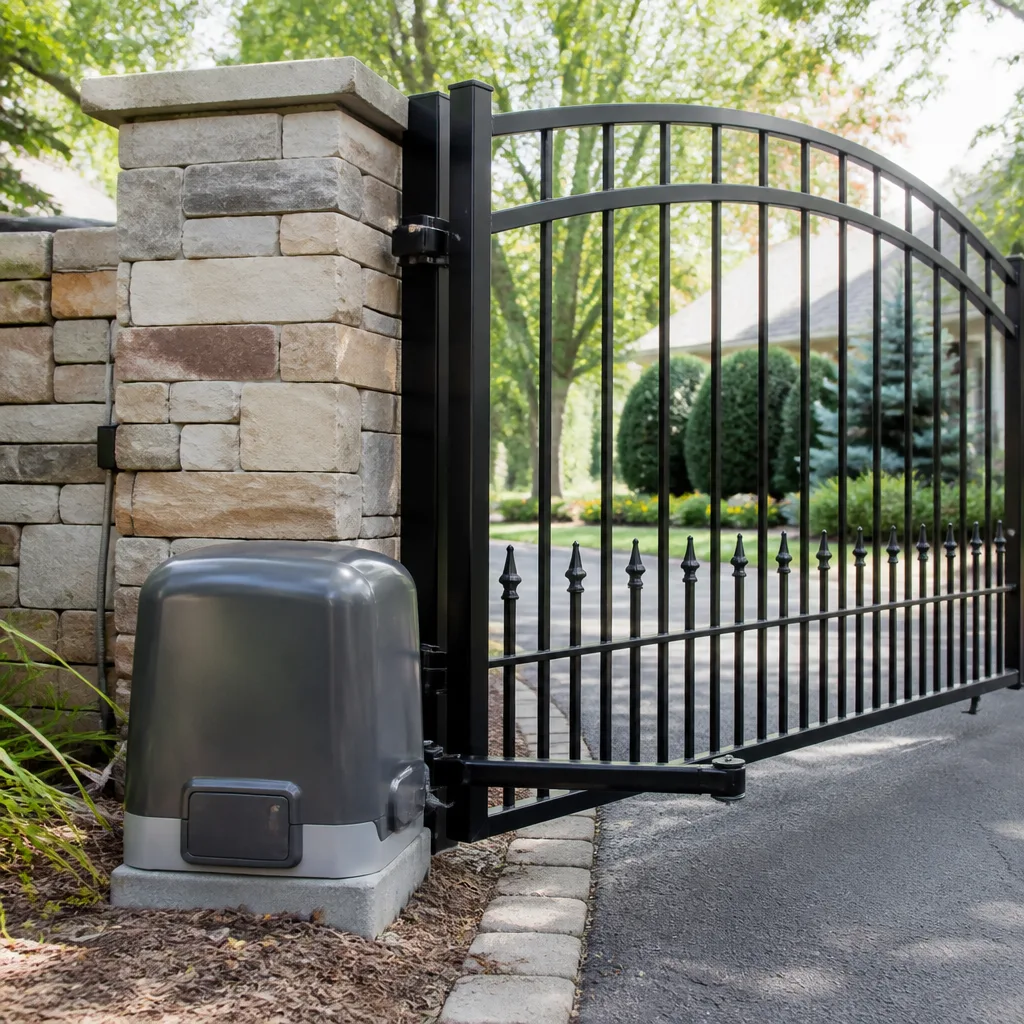
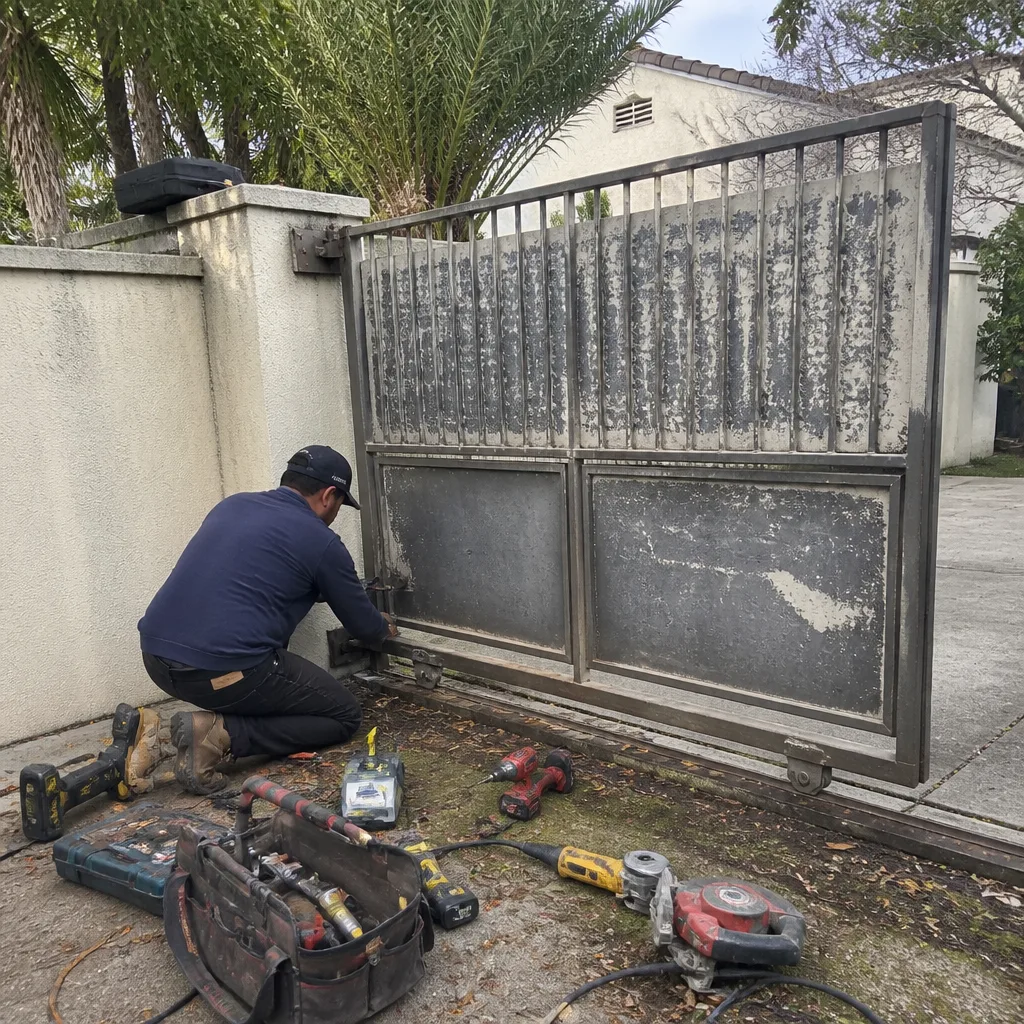 Before
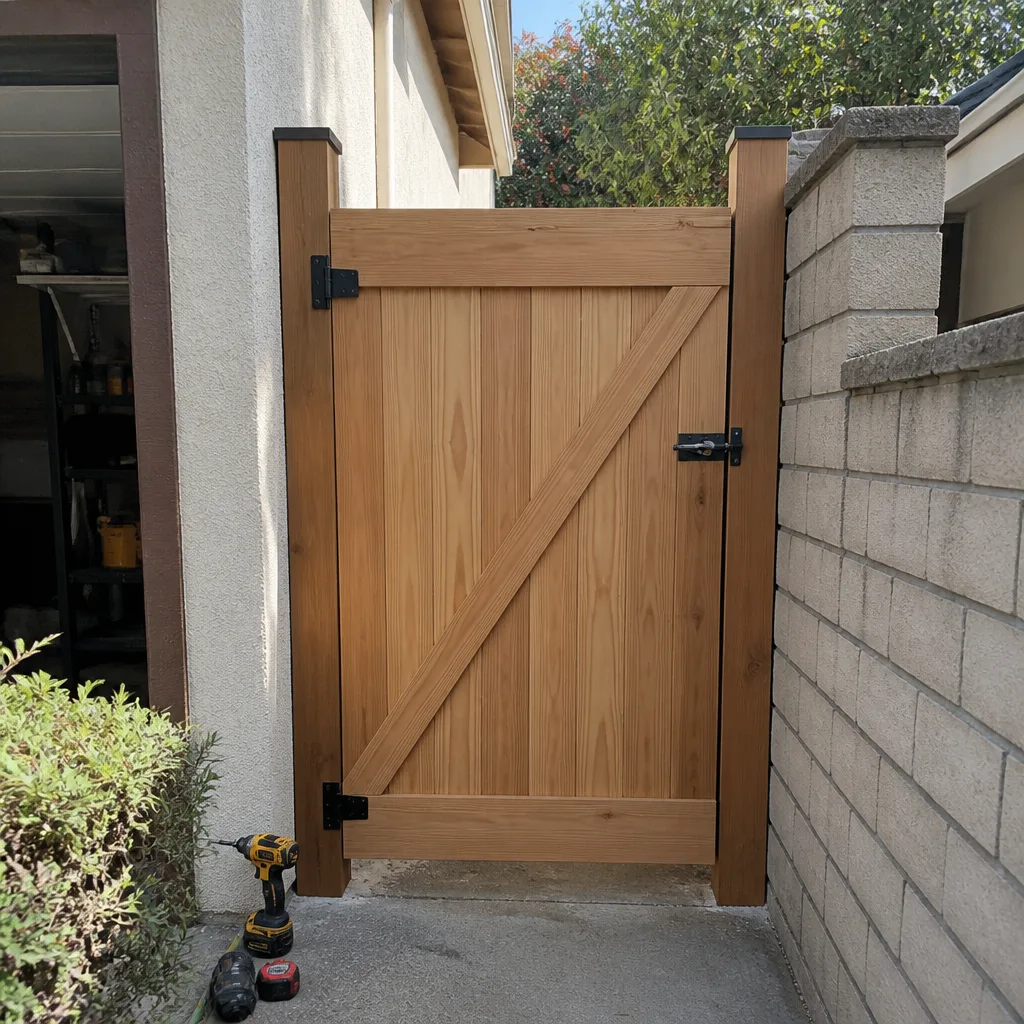 After
After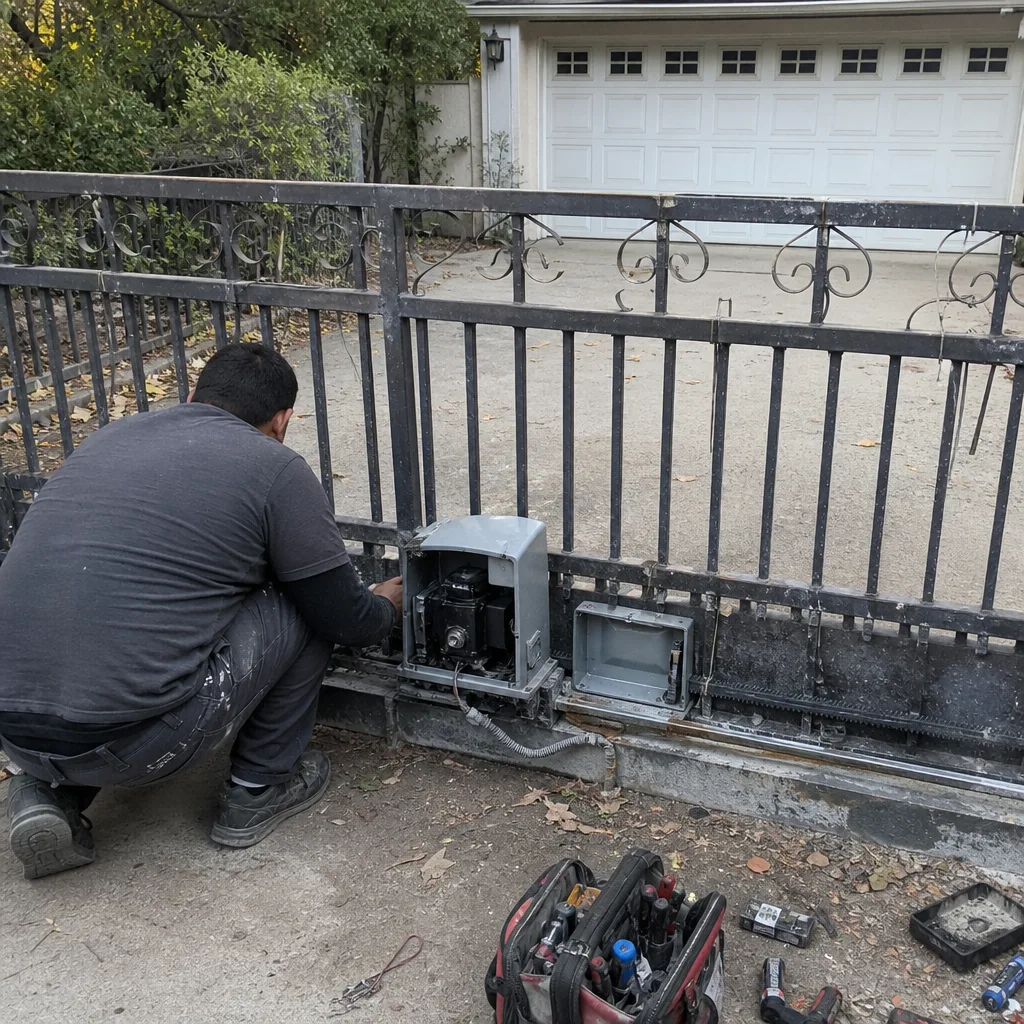 Before
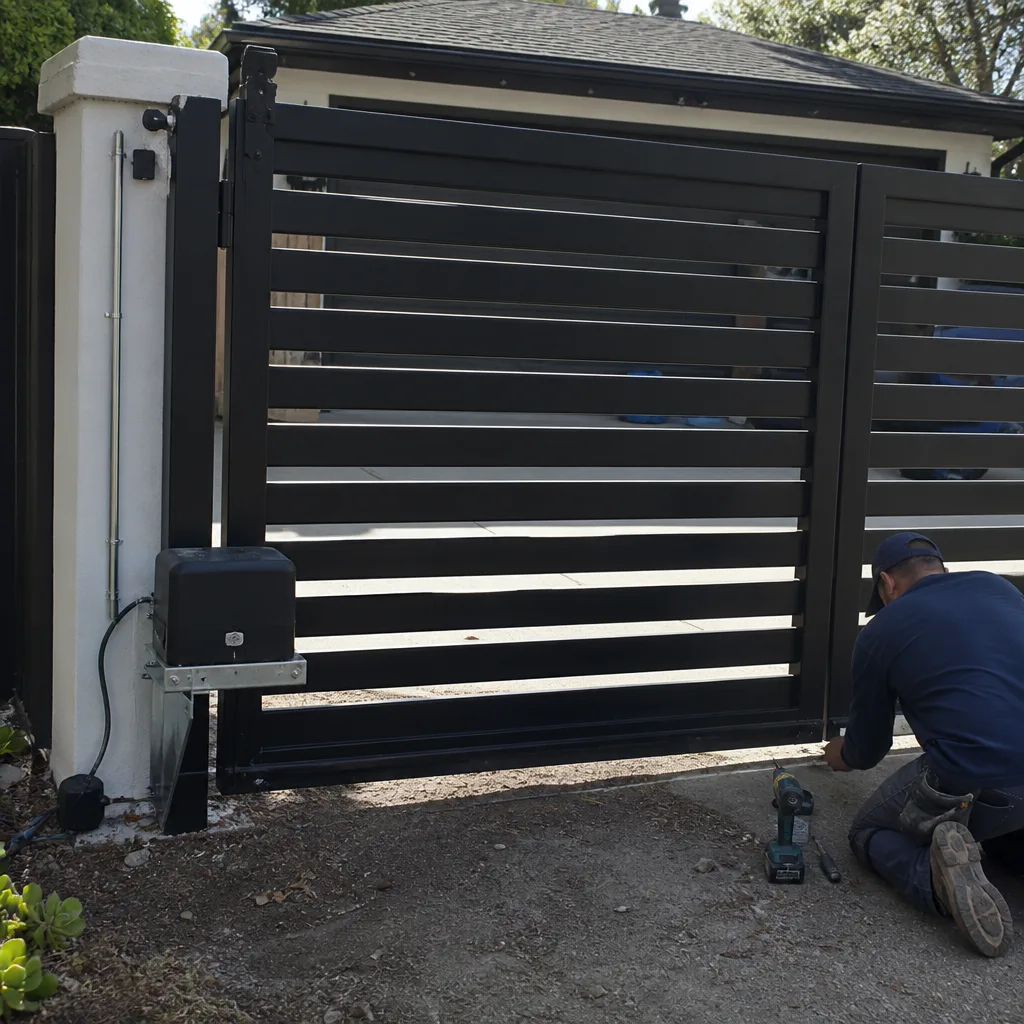 After
After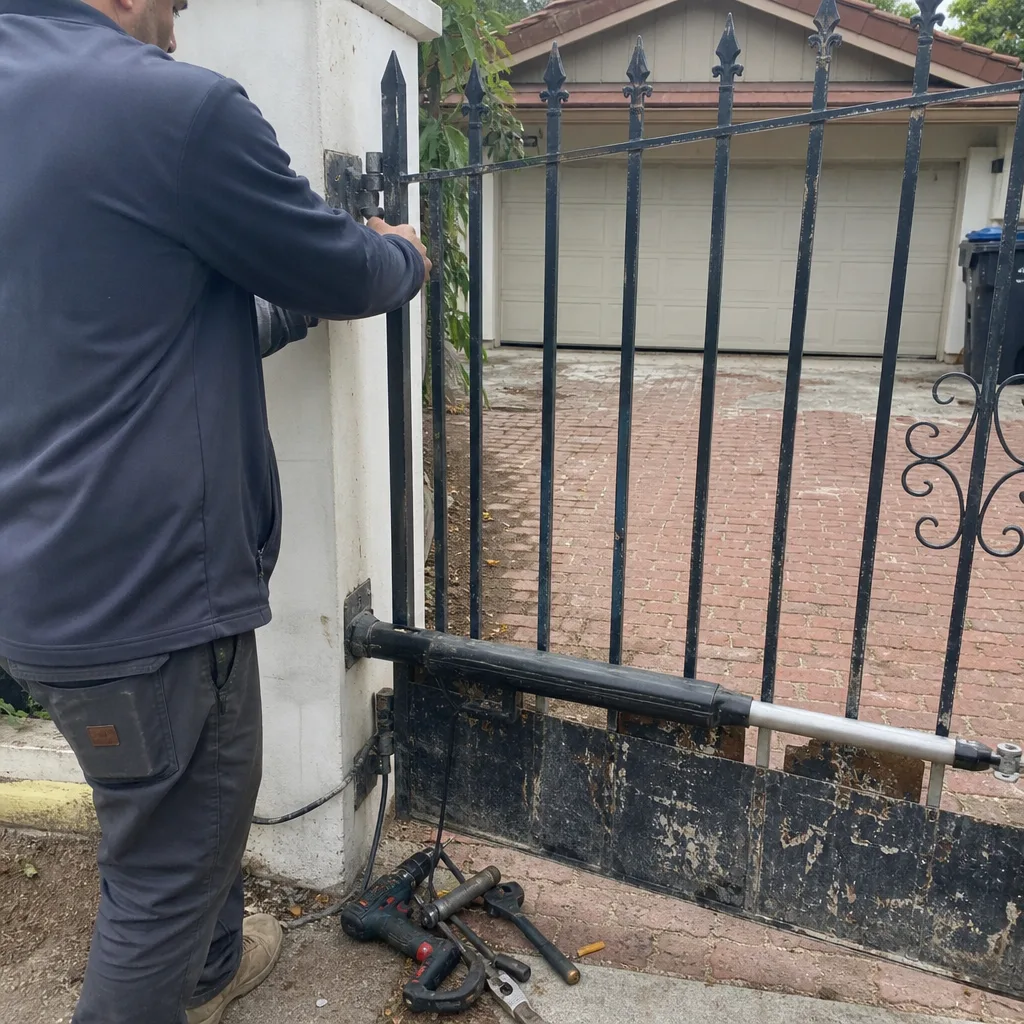 Before
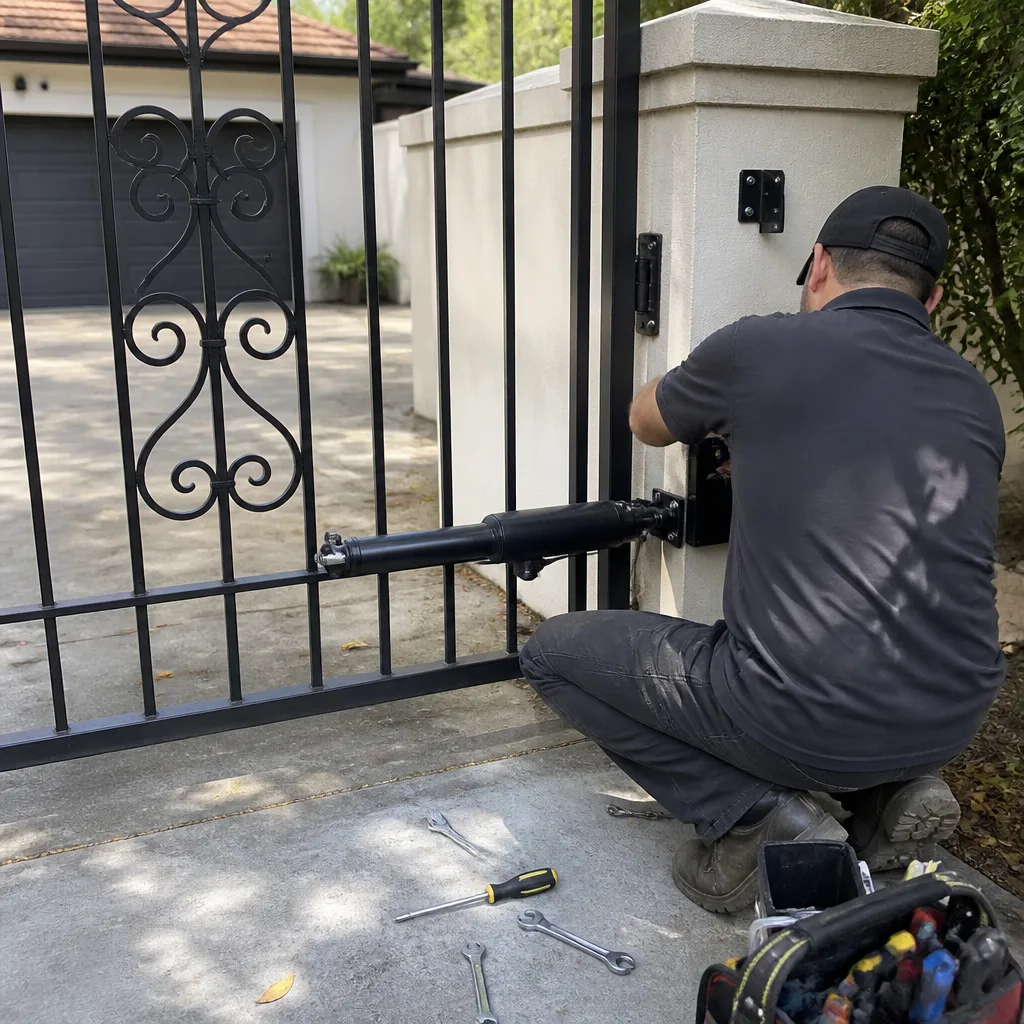 After
AfterDIY vs Professional Gate Repair: The Pasadena Homeowner’s Decision Guide
Most gate repair advice on the internet starts from the wrong question. It asks whether you’re handy enough to fix a gate. That’s not the line that matters. The line that matters is whether the repair touches a safety system governed by UL 325, because under California law, a homeowner who adjusts an entrapment sensor and then watches a gate strike a car, a child, or a delivery driver is not protected by “I did my best.” We’ve seen Pasadena homeowners spend a Saturday morning “fixing” a gate that then failed open at 2 a.m., or reversed onto a car bumper because the force setting was cranked up to overcome a mechanical bind nobody diagnosed. This guide lays out the framework we use at Vance Gate Repair Pasadena home when a homeowner calls and asks the honest question: should I try this myself, or should I pay you?
Quick Answer
DIY Gate Repair in Pasadena is defensible when the failure is isolated to a replaceable, non-safety component (a remote battery, a keypad code, a hinge bushing) and you know exactly what failed and why. It is not defensible when the repair touches the UL 325 safety loop: photo-eyes, safety edges, entrapment sensors, force settings, or the motor’s internal limits. Those systems exist to prevent injury, and under California law the liability for a misadjusted safety device lands on whoever touched it last.
Table of Contents
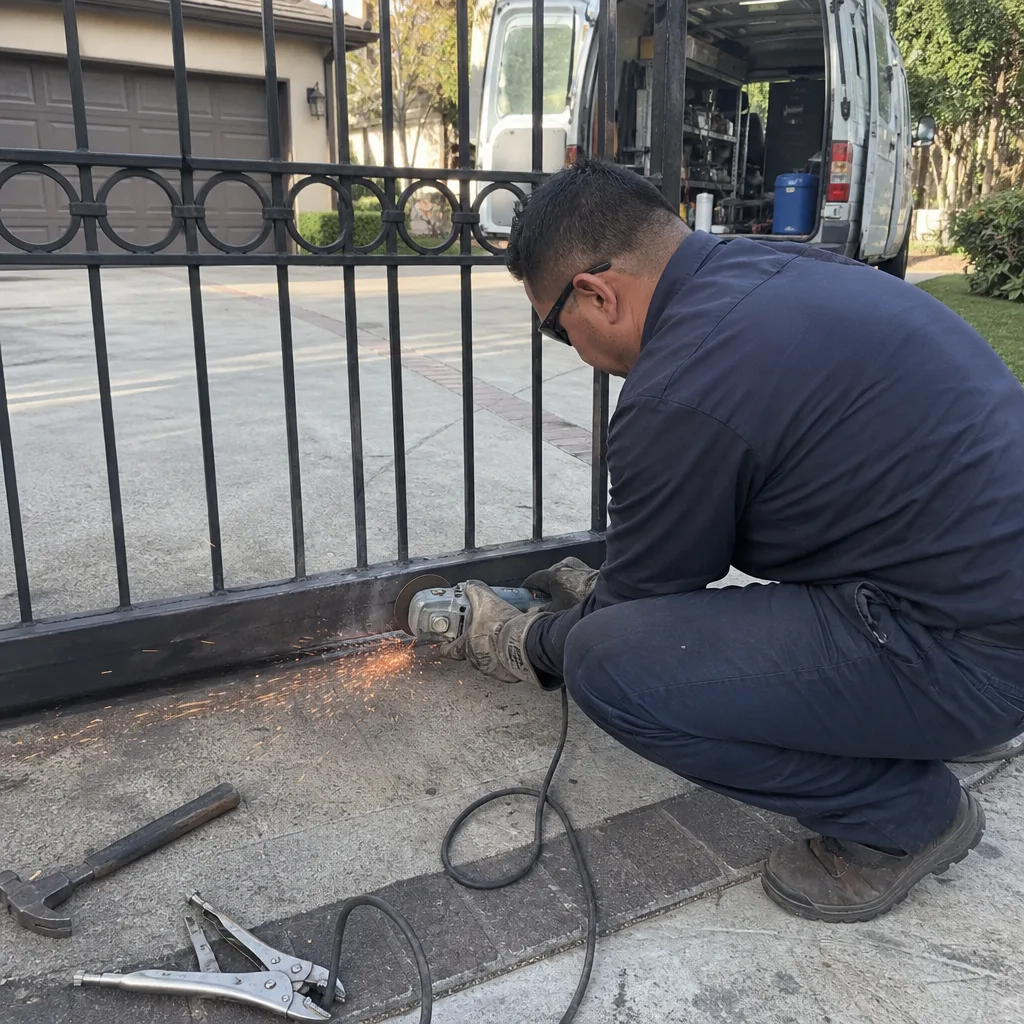
- The Legal Line: What California and UL 325 Actually Say
- UL 325 Explained in Plain English (and Why It Governs Your Gate)
- The Owner-Permissible Repairs: What You Can Safely Do Yourself
- The Five DIY Repairs with the Highest Callback Rate in Pasadena
- What a Failed DIY Repair Costs to Undo: Real Labor Scenarios
- How to Document a DIY Repair So a Future Technician Isn’t Guessing
- The Decision Framework: Diagnosis First, Tools Second
- Pasadena-Specific Context: Heat, Grade, and Gate Types
- Common Mistakes to Avoid
- When to Call a Professional
- Frequently Asked Questions
BeforeAfterThe Legal Line: What California and UL 325 Actually Say
California does not require a permit to repair most residential driveway gates. That fact gets cited constantly by DIY forums as a green light, and it’s half true. The permit question is a building department question. The liability question is an insurance and tort question, and it is not forgiving.
Here is the framework we give every Pasadena homeowner who asks where the line sits:
- Owner-permissible work: Replacing a remote battery, reprogramming a keypad entry code, lubricating a hinge, tightening visible hardware, replacing a wheel on a sliding gate’s truck assembly, cleaning photo-eye lenses. These do not alter safety function and involve no source voltage.
- Technician-only work: Adjusting force sensitivity, repositioning or rewiring photo-eyes, replacing or bypassing a safety edge, opening the motor housing to reset internal limits, modifying any wiring between the motor and a safety input. These directly affect UL 325 compliance.
- The legal test in a personal-injury claim: Did the last person who touched the gate’s safety system act with the standard of care a reasonable person would apply given the known risk of a 300- to 1,200-pound moving gate? “I watched a YouTube video” does not survive that test well in front of a Pasadena jury.
UL 325 is not a suggestion posted by a trade association. It is the safety standard written into the automatic gate operator provisions of California’s Health and Safety Code, and gate manufacturers design every residential opener to fail safe against it. When a homeowner overrides a force setting to keep a binding gate moving, that homeowner has not fixed a gate. They have disabled a safety system, in writing, in the physical configuration of the machine, and that configuration is discoverable in court.
UL 325 Explained in Plain English (and Why It Governs Your Gate)
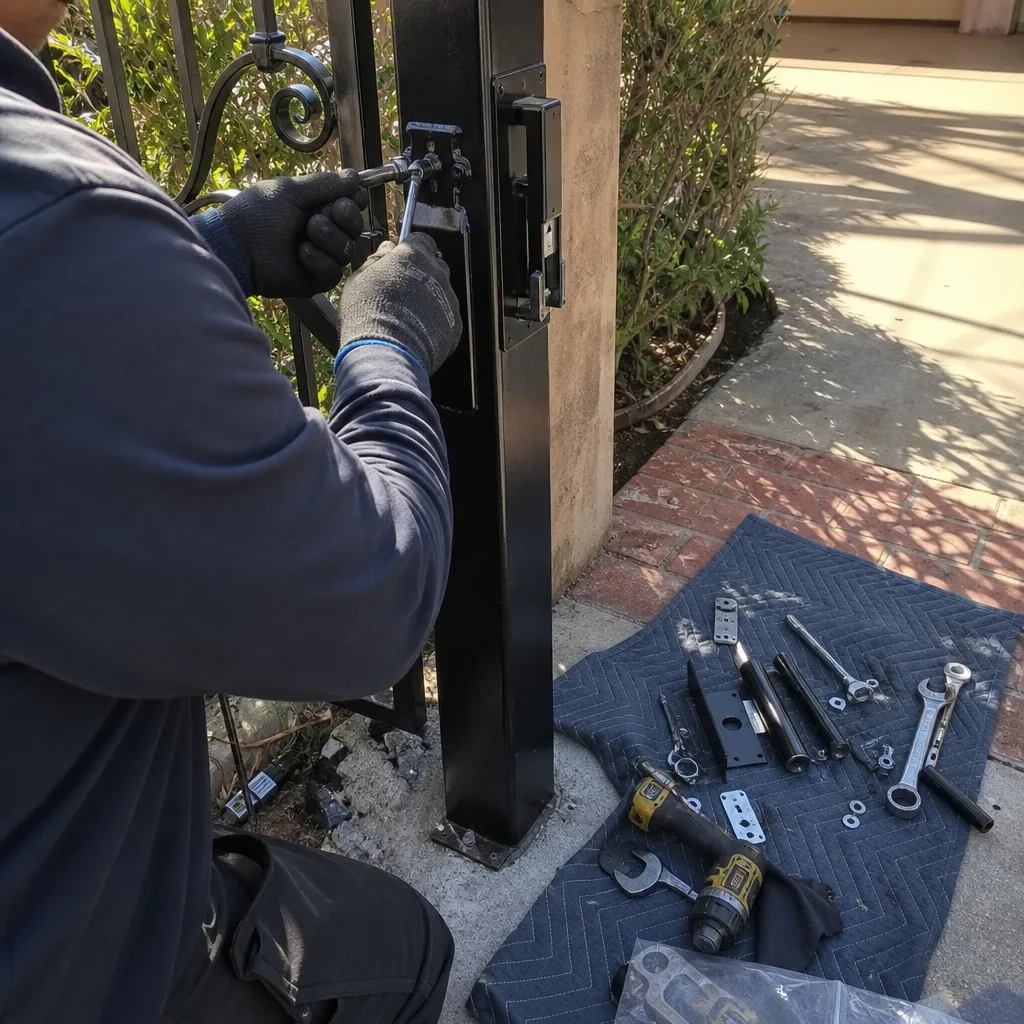
Every automatic gate opener sold in the United States since 2000 carries a UL 325 listing. That standard exists because gates kill people: entrapment deaths, crushing injuries, and strike injuries occur every year, disproportionately to children and to pedestrians who assume a gate will stop when touched.
UL 325 requires four things to be true of any installed automatic gate:
- Entrapment protection: The gate must have at least one monitored safety device (a photo-eye beam, a contact edge, or an inherent entrapment sensor in the motor) that reverses the gate if an obstruction is detected.
- Force limitation: The motor’s closing force must be set low enough that the gate stops and reverses before injuring a person. That threshold is calibrated to the gate’s weight, travel distance, and hinge or track condition.
- Warning signage: Specific warning placards must be mounted on both sides of the gate where they are visible to pedestrians.
- Control placement: Manual controls must be positioned so a user cannot reach through the gate while operating it.
What we see in Pasadena, over and over, is a homeowner who adjusts force upward to cure a gate that binds halfway through travel. The binding was caused by a sagging hinge or a wheel with a collapsed bearing. The force adjustment masks the bind for three weeks, then the gate binds harder, the owner adjusts force again, and by the third cycle the gate is closing with enough speed and force to break a leg. The underlying mechanical issue never went away. The safety margin did.
When we open a motor housing on a call like this, we photograph the force pot before touching it. That photograph goes into the job record, and a copy goes to the homeowner. Under the Haven Standard we apply to every job, Clause 4 (Evidence on every job) exists precisely because of this scenario: a homeowner should never have to guess what was set, what was changed, and what was left behind.
The Owner-Permissible Repairs: What You Can Safely Do Yourself
We are not here to scare a Pasadena homeowner off from ever touching their gate. Some work is genuinely DIY, and we will tell you exactly what it is.
The test: does this repair alter the gate’s safety behavior, introduce source voltage, or require realignment of a monitored sensor? If the answer to all three is no, and you can identify the failed component by name, it is owner-permissible.
Genuinely safe DIY gate repairs:
- Remote battery replacement: If the remote worked last month and stopped this month, replace the coin cell or 9-volt. If a new battery doesn’t fix it, stop. The problem is the receiver board or the remote’s programming, not the battery.
- Keypad reprogramming: Most Pasadena gates keypads (the common linear or Viking keypads on older homes, Ghost Controls on newer installations) have a simple code-change sequence in the manual. This changes access credentials, not safety parameters.
- Photo-eye lens cleaning: A lens covered in Pasadena dust or spider silk will make the gate refuse to close. Wipe it with a dry cloth. Do not reposition the eye itself.
- Lubricating hinges and wheels: A dry hinge squeaks. A few drops of light machine oil on swing-gate hinge pins or slide-gate wheels is mechanical maintenance, not safety work. If lubrication doesn’t quiet the gate, the hinge bushing is worn, and that is a replacement job.
- Visible hardware tightening: Loose bolts on a gate bracket, a rattling post cap, a loose chain on a ChainMaster-type operator. If the hardware is visible and the fix is “tighten this bolt,” that is fine.
The common thread: these are all consumable or mechanical fixes on parts that do not feed into the motor’s safety logic. None of them required opening a control board, handling 120V or low-voltage wiring, or changing a setting a technician set with a meter.
And we will say this plainly because it saves Pasadena homeowners money: most of the gate complaints we get that turned out to be a dead remote battery or a dirty photo-eye should have been a five-minute homeowner fix. The frustration is real when a $9 battery was the answer and a service call was the result. That is why we publish this guide and more guides & resources.
If you want a broader picture of what professional gate repair includes in Pasadena, our Gate Repair in Pasadena page walks through the full scope.
The Five DIY Repairs with the Highest Callback Rate in Pasadena
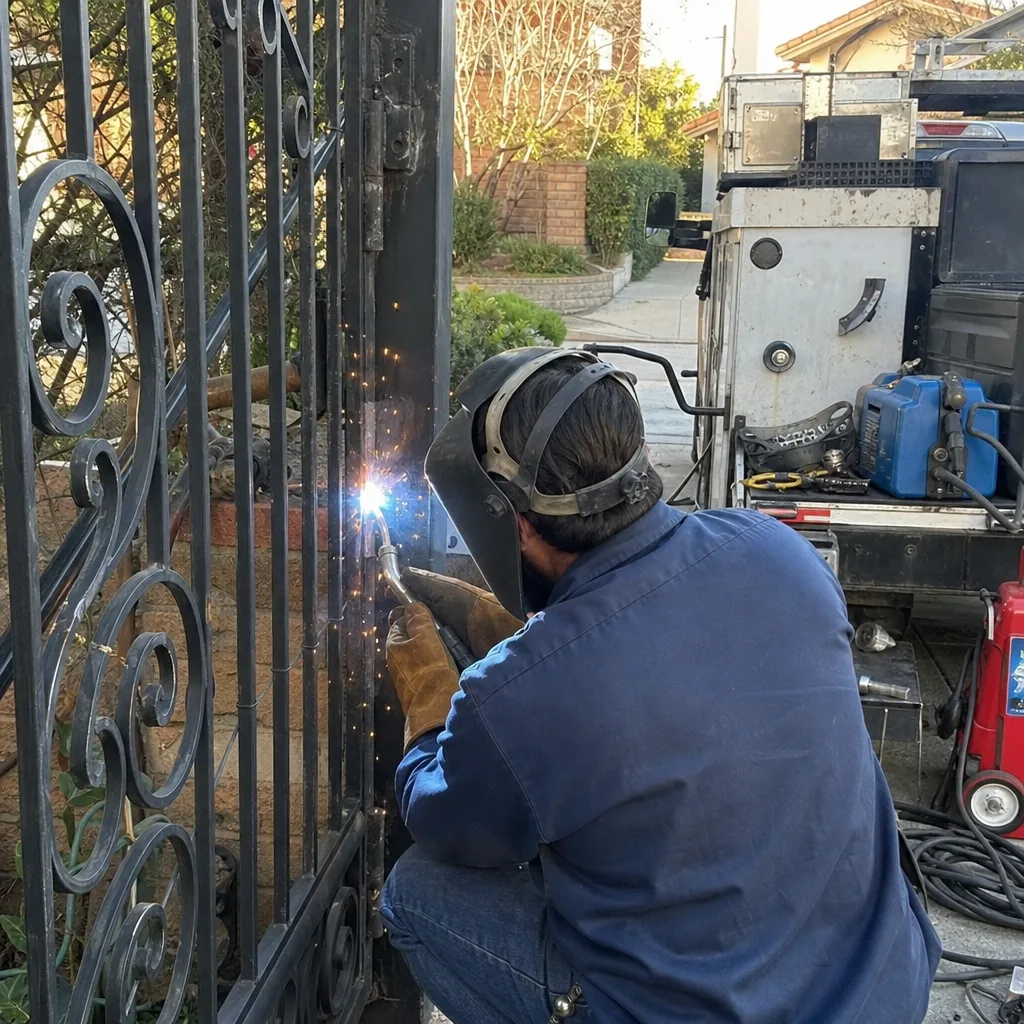
This section comes directly from our install and repair records in Pasadena, Altadena, and the surrounding foothill neighborhoods. These are the five repairs homeowners most commonly attempt themselves, and the reasons they call us afterward.
1. The Force Adjustment (Misdiagnosed Mechanical Bind)
A swing gate slows, then stalls, about two-thirds through travel. The homeowner opens the control board, finds the force potentiometer, and turns it up. The gate now makes it through travel for a few weeks, then stalls again or slams. What was actually wrong: a hinge bushing had worn oval, increasing the load on the motor as the gate passes through the angle of greatest mechanical disadvantage. We see this on South Pasadena and San Rafael Hills gates every summer when wood posts swell and hinge geometry shifts. The correct repair is bushing replacement or hinge re-shimming, not force adjustment. The homeowner’s adjustment must be reversed before the real repair can begin, which adds a minimum service hour.
2. Photo-Eye Repositioning to Stop a False Reverse
The gate reverses every time it tries to close. The homeowner notices one photo-eye is slightly angled and nudges it back. The gate closes. Two weeks later it reverses again, or it closes on a car because the beam was bounced off a reflective surface. We see this on estates in the Linda Vista area with long driveways where the beam path crosses landscaping that moves in the wind. The actual cause of false reverses is usually wiring, not alignment: a photo-eye circuit with a corroded splice, or a receiver eye on the edge of its voltage tolerance. If we diagnose a false reverse, we meter the eyes before we touch alignment, and we photograph the readings before and after.
3. The Limit Switch Reset (Without Finding Why the Limit Drifted)
A slide gate overshoots the close position and the motor grinds. The homeowner finds the limit cam (usually on an older BFT or Linear board with mechanical limits) and rotates it a few degrees. The gate now closes correctly, but closes six inches short of the post, or slams the post with increasing force each cycle. The real cause is chain stretch or a worn drive sprocket, not limit drift. On cantilever slide gates in Pasadena’s flat eastern neighborhoods, chain stretch is so predictable that we check it on every service call. The limit setting was the symptom. The chain was the disease.
4. Soldering a Broken Wire Without Replacing the Conductor
A wire running along a hinge flexes, breaks, and the gate stops dead. The homeowner finds the break, strips both ends, twists and tapes them, and the gate works. Six months later the same wire breaks again, a foot away. This is the Pasadena gate repair we undo most often because it looks like a fix and isn’t. Gate wiring on a swing gate flexes with every cycle. A spliced wire at a flex point will always fail again because the conductor was fatigued along its entire length, not just at the visible break. The correct repair is replacing the wire run with a properly rated stranded connector and protecting it in a flex conduit or service loop. We leave a photo of the repair and a note of the wire gauge in the job record so the next technician never guesses.
5. Replacing a Motor Without Diagnosing the Load
A homeowner decides the motor is “worn out” because the gate has grown slower over two years. They buy a compatible motor online, swap it in, and the new motor is just as slow. The actual cause was a failing capacitor or a wheel bearing seizing progressively. Now the homeowner has a new motor installed with the old problem still present, and the new motor’s warranty is void because it was not installed by a licensed contractor. Reversing this costs more than a correct diagnosis would have cost in the first place.
The pattern across all five: the homeowner fixed a symptom, not a cause. That is not a skill issue. It is a diagnostic sequencing issue, and it’s the most expensive mistake a Pasadena homeowner can make on a gate.
What a Failed DIY Repair Costs to Undo: Real Labor Scenarios
Pasadena gate service rates vary by company and by the complexity of the gate system. What we describe here are our honest observations from undoing DIY work, not a menu of fear.
Scenario A: Reversed force adjustment. A technician must meter the force setting, document the current (incorrect) value, reset it to a safe baseline, then diagnose the underlying mechanical bind. The diagnosis often requires cycling the gate under load and observing the hinge geometry. Time: 1 to 1.5 hours of labor, including documentation. The homeowner already spent three hours and a Saturday on the original adjustment, so total cost doubles.
Scenario B: Misaligned photo-eye that now closes on a vehicle. The technician must test the beam’s alignment at the controller, trace the wiring if voltage is marginal, and recalibrate. If a splice is corroded, the wire must be pulled and replaced. Time: 2 to 3 hours. This is one of the most common callbacks from DIY photo-eye nudges on Pasadena hillside gates.
Scenario C: Force-boosted gate that bent a hinge or sheared a bolt. A gate that was force-adjusted to overcome a bind eventually either stalls and trips a breaker or tears something. We have replaced hinge plates where the weld held but the bolt sheared, on a heavy iron gate in Altadena. The repair included welding, re-hanging the gate, replacing the hinge hardware, and then resetting force correctly. Time: half a day. Cost: significantly more than the original hinge bushing replacement would have been.
The economic truth is unglamorous: most DIY gate repairs that involve a safety-system adjustment cost more in total than a professional diagnosis would have cost on day one. That’s before considering the time lost and, in the worst case, the property damage or injury exposure.
For cost reference on professional work, our Gate Motor & Opener in Pasadena page lists service scope and what to expect in writing.
How to Document a DIY Repair So a Future Technician Isn’t Guessing
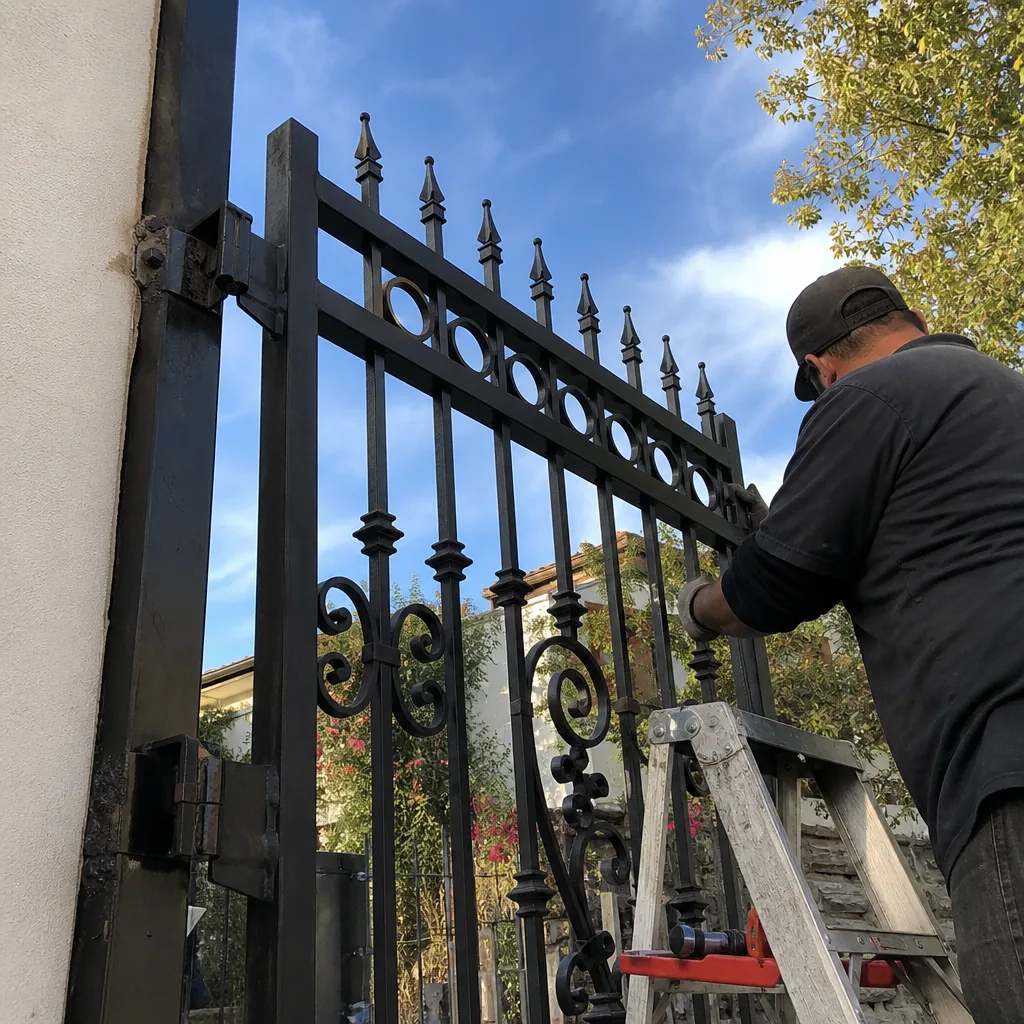
If you do perform an owner-permissible repair, leave a paper trail. The worst diagnostic hole is a gate that “someone worked on sometime last year” with no record of what was touched. A future technician either guesses or re-diagnoses from zero, and you pay for the second diagnosis.
Here is the minimum record a Pasadena homeowner should keep for any DIY gate work:
- Date and scope of the repair, in one paragraph. “Replaced two AA batteries in LiftMaster remote. Remote was intermittent for two days before replacement.” That sentence alone tells a technician whether the issue predates the repair.
- Part number, brand, and source of any component replaced. If you replace a photo-eye, write down the exact model. If the gate misbehaves later, the technician can check compatibility without opening the box.
- Photographs before and after, showing the area worked on. A phone photo costs nothing and can save a service call when the next symptom looks like a previous repair. This is the same principle we apply under Clause 4 of the Haven Standard on every professional visit.
- Settings observed but not changed. If you look at a force setting or a limit and decide to leave it alone, that is valuable information. “I saw the force dial at position 4 and did not move it” tells the technician what the baseline was before symptoms worsened.
- Anything you noticed but couldn’t explain. “Gate squeaks more after rain,” “remote only works within 10 feet,” “motor hums but gate doesn’t move for half a second.” These observations are diagnostic gold and cost nothing to record.
The documentation habit is not for us. It is for you. A gate is a long-lived machine, and Pasadena homes usually see two or three different technicians over a decade of ownership. Your records prevent every new technician from starting at zero.
The Decision Framework: Diagnosis First, Tools Second
Here is the entire decision in one paragraph, and it is the same test an honest gate technician applies before picking up a tool: Can you name the specific failed component and explain why it failed? If yes, and the component is on the owner-permissible list, DIY is reasonable. If no, and you’re working from a symptom (“the gate stopped closing,” “the remote doesn’t work”), you have not yet diagnosed anything. Picking up a screwdriver at that point is not repair; it is disassembly with hope.
Apply this framework:
- Symptom known, cause known, component identified, component is non-safety: Proceed with DIY. Document everything. Save the receipt.
- Symptom known, cause suspected, but the suspected component touches the safety loop or the motor’s internal limits: Stop. Call a gate contractor. A misdiagnosis in this zone creates liability, not just inconvenience.
- Symptom known, cause unknown: Do not open anything. Either call a professional for diagnosis or, if you are determined to learn, restrict yourself to observation and documentation for a week before touching anything.
- Cause known to be mechanical (hinge, wheel, chain, track), but repair requires welding, heavy lifting, or spring compression: This is the gray zone. Some homeowners in Pasadena do have the equipment and experience to replace a hinge bushing or a slide-gate wheel. Most do not. A 600-pound iron gate hanging on a single hinge while the second is unbolted is a crush hazard, not a weekend project.
We want to be clear about our bias, because you should know it before you read on: we run a gate repair company in Pasadena, and we make money when people call us instead of fixing things themselves. We still publish this guide, and we still tell the truth in it, because the customers we want are the ones who know exactly where the line is. They call us when the job is on our side of it, and they don’t burn a weekend on a guess.
For homeowners planning a full replacement rather than a repair, our Gate Installation in Pasadena page covers what a new gate project actually involves in this market.
Pasadena-Specific Context: Heat, Grade, and Gate Types
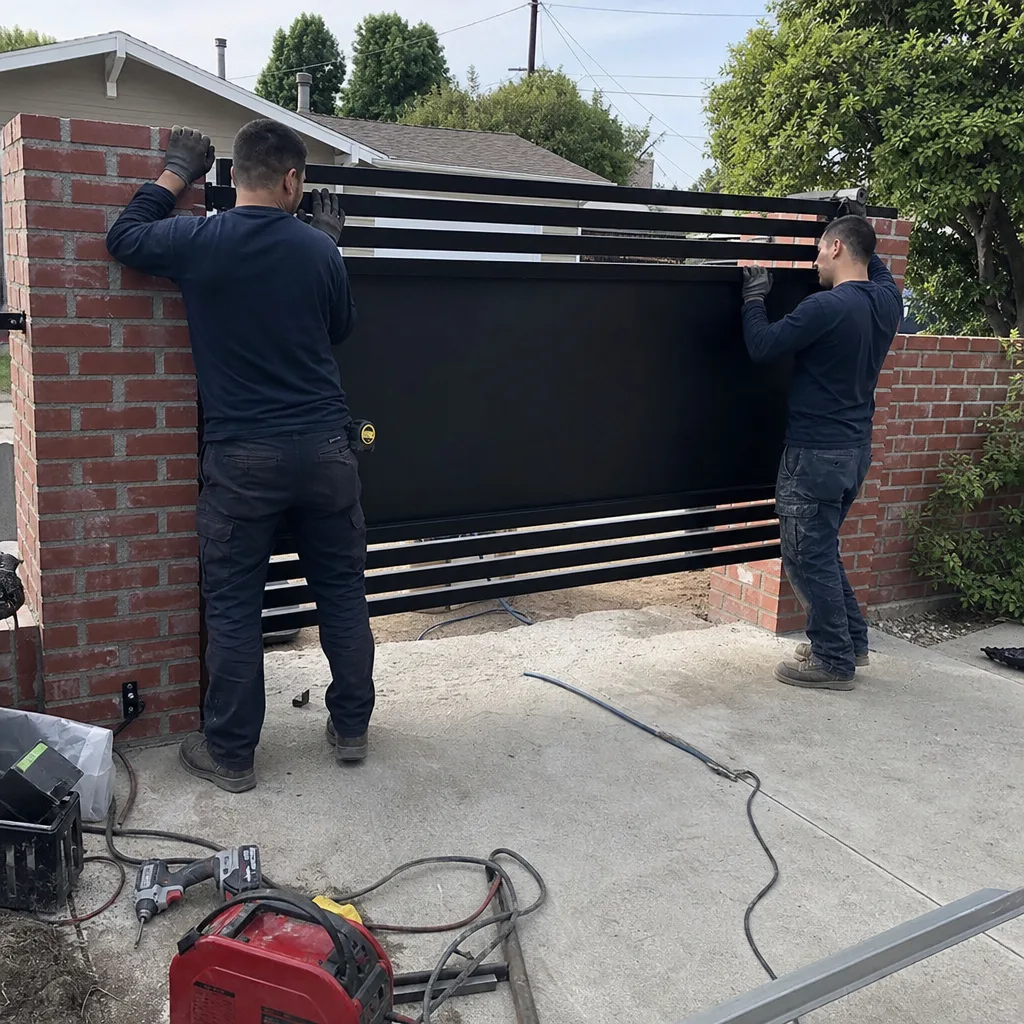
Gates in Pasadena age differently than gates in, say, the Bay Area or the Inland Empire. Three local factors drive most of the callbacks we undo:
Summer heat and thermal expansion. Pasadena regularly sees summer days above 95°F, and iron gates in full sun expand measurably. A gate that clears its stop cleanly in January may drag in August. A homeowner who “fixes” a dragging gate by adjusting the limit in summer is really tracking a seasonal dimension, and the gate will slam or fail closed when the iron contracts in winter. We see this cycle every year on south-facing gates in the San Gabriel Valley.
Hillside grade and swing-gate geometry. Pasadena’s hillside streets from the Arroyo Seco up through Hastings Ranch impose steeper grades than most flatland gate manufacturers assume. A swing gate on a 12-degree grade is fighting gravity on every close cycle. Force settings that work on a flat Altadena driveway will be inadequate, or excessive, on a Linda Vista hillside. This is not a judgment call; it is trigonometry.
The mix of old and new automation. Pasadena’s housing stock ranges from 1920s bungalows to 1990s tract hillside homes to new construction. That means we service everything from a Viking operator on a 40-year-old iron gate to a Ghost Controls kit on a brand-new steel gate. No single manual covers the range, and a homeowner who watches a modern-operator tutorial and applies it to an older Viking board is going to make an error.
When a gate behaves differently in August than in January, that is a data point, not an emergency. Record it. If the pattern repeats, it’s worth a professional look before a seasonal adjustment becomes a safety adjustment.
Common Mistakes to Avoid
- Adjusting force before diagnosing why the gate is binding. This is the number-one DIY error we see in Pasadena, and it turns a $200 hinge repair into a $900 motor replacement when the overloaded motor burns out.
- Replacing the motor when the capacitor is failing. A slow gate with a humming motor is often a capacitor, not a motor. Swapping a motor without testing the capacitor wastes $400 to $1,200 and doesn’t fix the gate.
- Touching photo-eye alignment on a gate that was working for years. If a photo-eye that has been fine suddenly causes false reverses, alignment is the least likely cause. Check for dirt, wiring, and voltage before moving the eye.
- Assuming a dead remote means a dead receiver board. In Pasadena’s heat, remote batteries die fast. Try the battery first, then try a second remote, then call someone. Don’t order a receiver board off a guess.
- Not photographing settings before changing them. Every adjustment you make without a “before” photo is an adjustment a future technician cannot reverse without re-diagnosing from scratch.
- Using household extension cords or wire nuts on gate wiring. Gates live outside, in the rain, in the sun, and in constant motion. Household-grade wire and connectors fail in this environment. Use weather-rated connectors and proper gauge, or don’t touch the wiring.
- Watching a generic YouTube video and applying it to a different brand. A LiftMaster adjustment video will not translate to a Viking board, or to a BFT board from 2009. Brand matters, and model year matters more.
When to Call a Professional
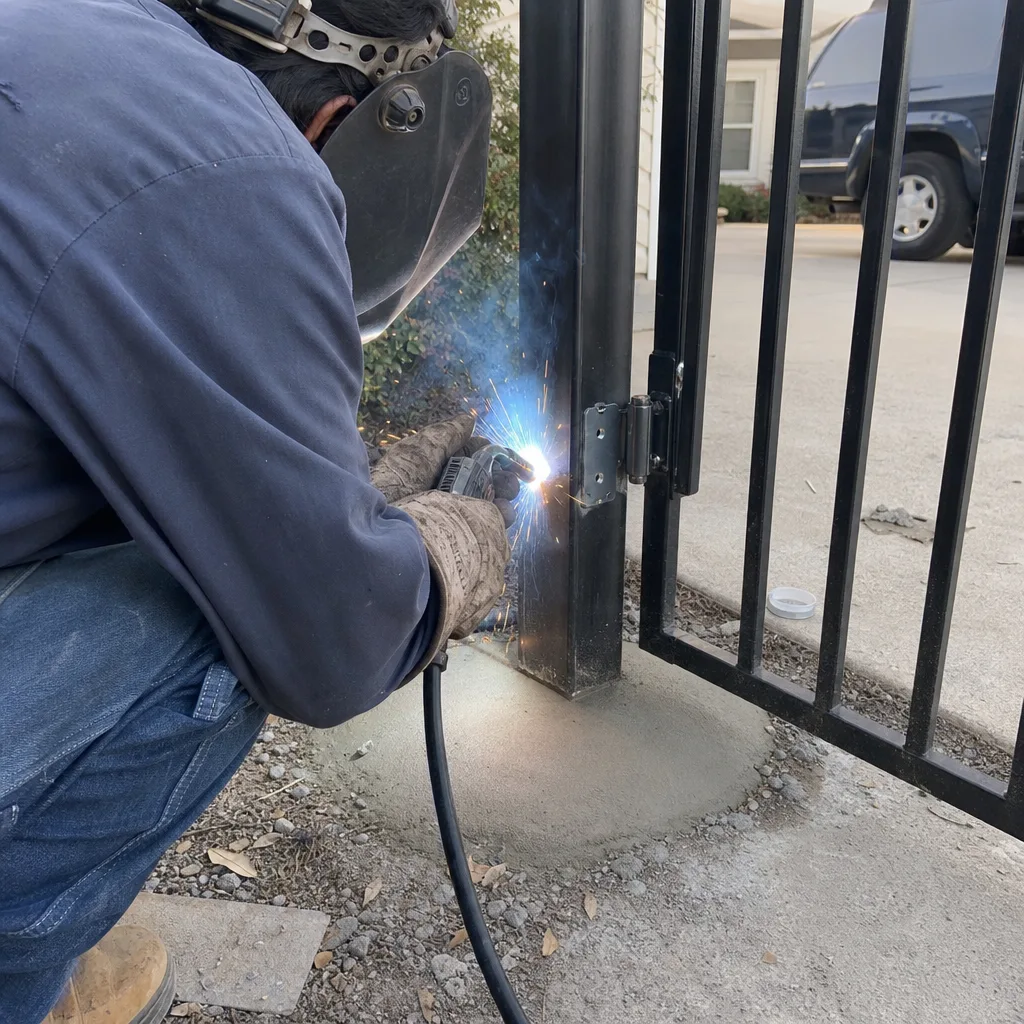
Call a gate contractor when the repair touches the safety loop: photo-eyes, safety edges, force settings, limit switches, or any wiring between the motor and a monitored input. Call when the gate is binding and you don’t know why. Call when the gate is a slide gate with chain tension or wheel-truck issues, because those systems store mechanical energy and a slipped chain can do real damage. And call when you have already tried an owner-permissible fix and the symptom returned, because that means the symptom was never the problem. Vance Gate Repair Pasadena home offers free estimates in Pasadena, and every job includes a written price before work starts under the Haven Standard. Call (626) 624-4196 and a live person answers.
Frequently Asked Questions
Yes, for non-safety components like remotes, keypads, hinge lubrication, and visible hardware. California does not require a permit for most residential gate repairs, but any alteration to UL 325 safety systems (force settings, entrapment sensors, wire between the motor and safety inputs) creates liability exposure and should be handled by a licensed gate contractor.
Most undone DIY repairs in Pasadena cost between $150 and $600 in labor, depending on the damage, because the technician must first reverse the DIY change, then re-diagnose the original problem. A force adjustment that masked a bearing failure and burned out a motor can exceed $1,000 in parts and labor.
Adjusting the force setting upward to overcome a mechanical bind. The bind gets worse, the gate gets more aggressive on each cycle, and eventually a hinge, wheel, or motor fails. The correct move is to find the bind, not to overpower it.
Only if you can name the motor’s failed component (not the motor generally) and the motor is not under warranty, and you are experienced with low-voltage wiring. Most “failed motor” diagnoses we see in Pasadena are actually failed capacitors, bad limit switches, or overloaded motors with an unresolved mechanical bind. If you replace a motor without fixing the underlying condition, you’ll burn out the new one too.
Look for the warning placards on both sides of the gate. Check that the gate reverses when it encounters an obstruction (test it with a sturdy object, not a person). If the gate doesn’t reverse or the placards are missing, the gate is out of compliance and any future DIY work compounds the problem. A professional inspection will document the gaps and the fix. Call (626) 624-4196 to schedule a free evaluation in Pasadena.
Ask one question: does the repair involve changing a setting, moving a sensor, or touching a wire? If the answer is yes to any of those, the repair affects the gate’s safety logic and it is not DIY-safe. If the answer is no, and you can name the failed part, you’re probably fine to proceed, with documentation.
The Bottom Line
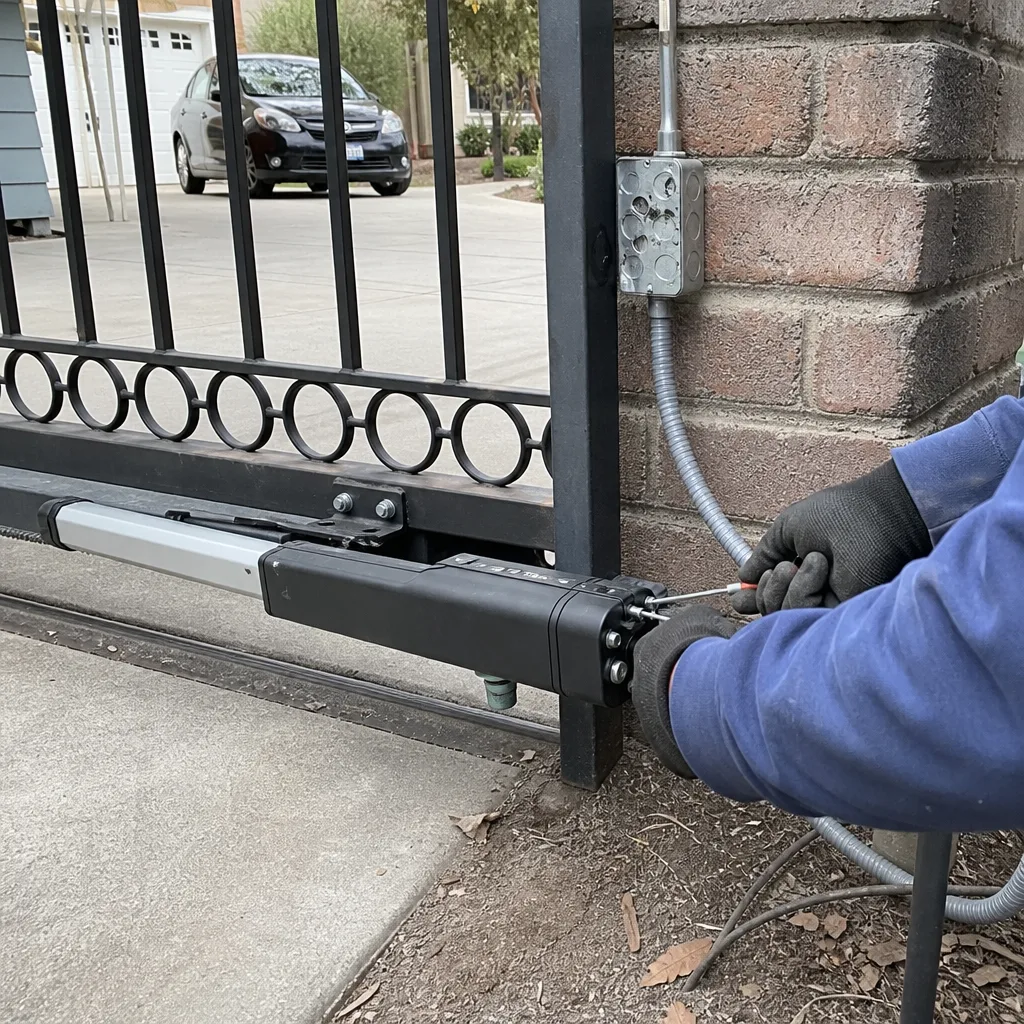
Pasadena homeowners who read this guide carefully already know the answer to the DIY question: it depends on which side of the UL 325 line the repair sits on. Replacing a remote battery is DIY. Adjusting a force setting is not, because the legal and physical consequences of being wrong are severe and one-directional. The most expensive gate repair is not the one a professional does correctly. It is the one a homeowner does hopefully, then pays a professional to undo before the real repair can start. Get it in writing, get it photographed, and when you’re unsure, call someone who can tell you what specifically failed before anyone picks up a tool.
Written by Adrian Vance, Owner at Vance Gate Repair Pasadena, serving Pasadena since 2014.