
Free on-site gate assessment - hinges, posts, and your LiftMaster or Nice gate operator checked before anything is quoted
The assessment is free and the quote is the invoice.
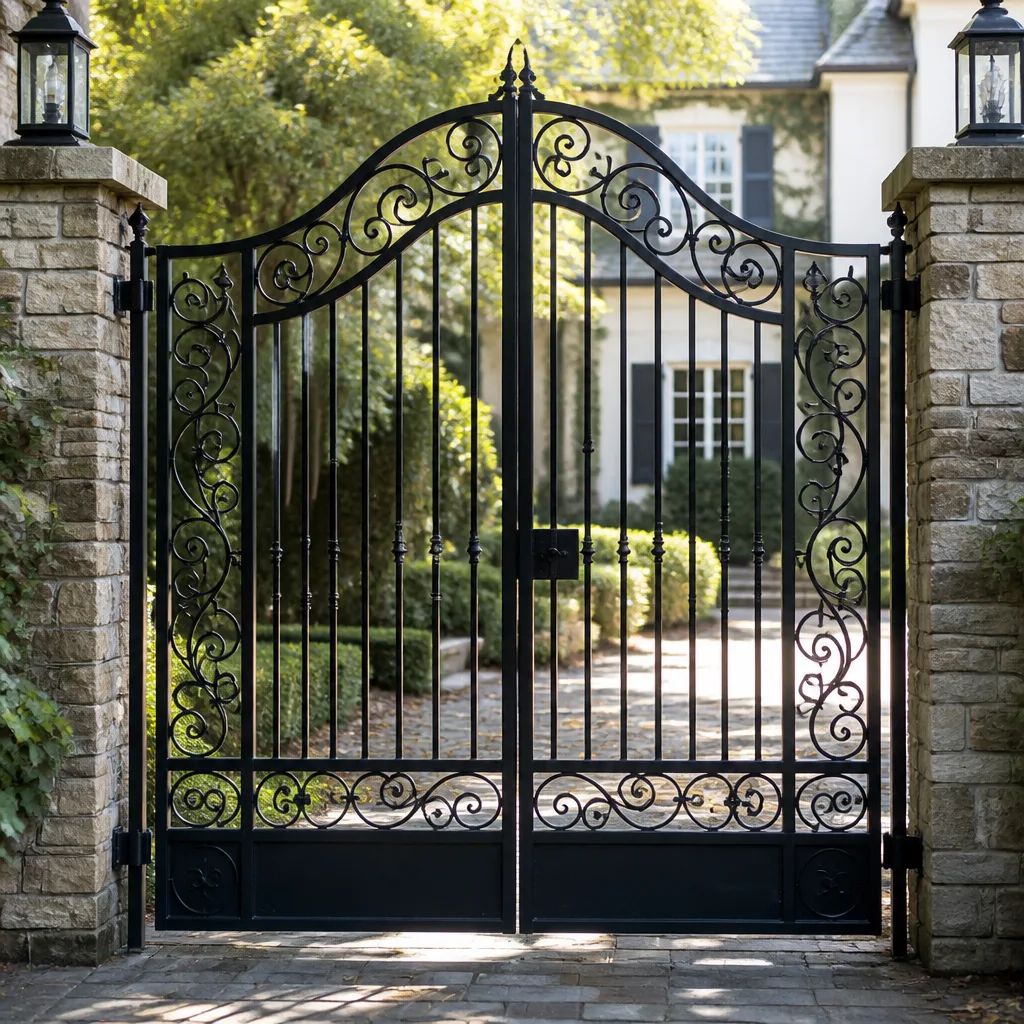
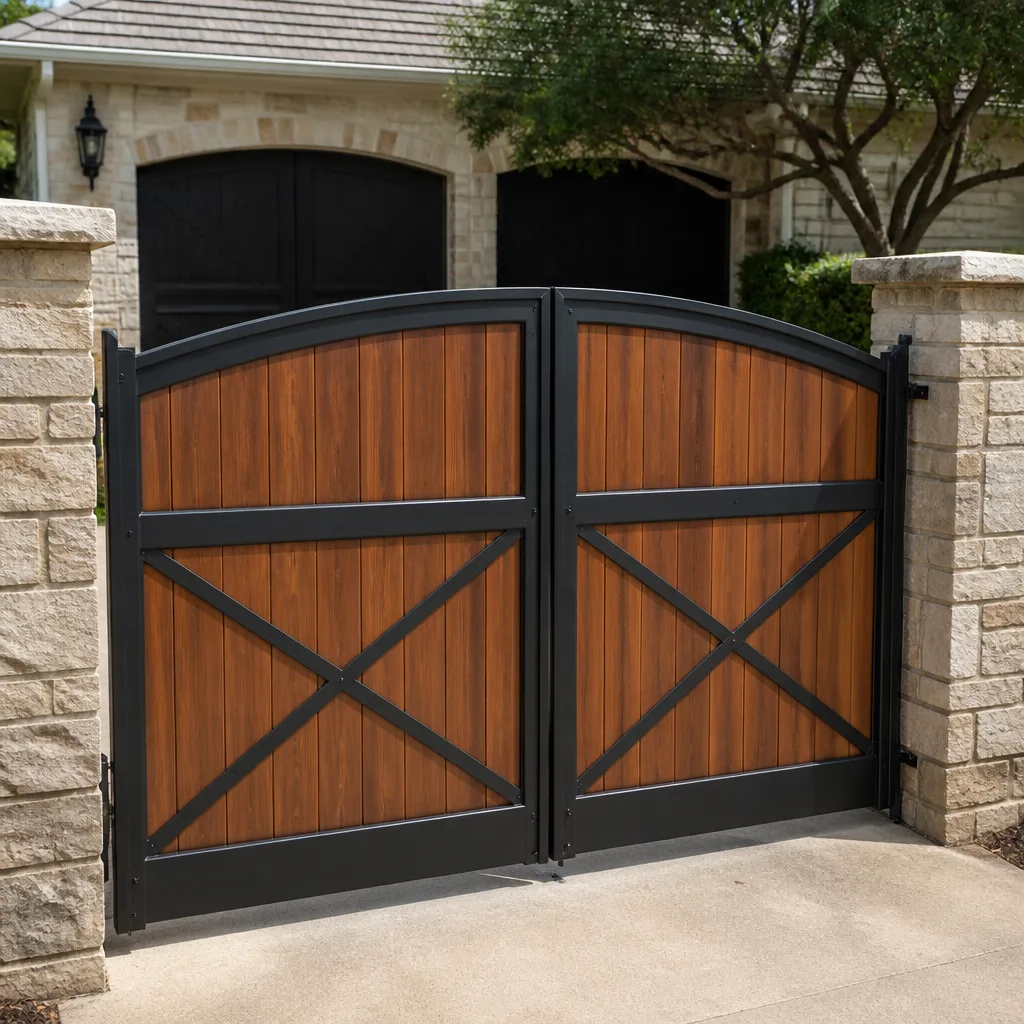
Farm & ranch
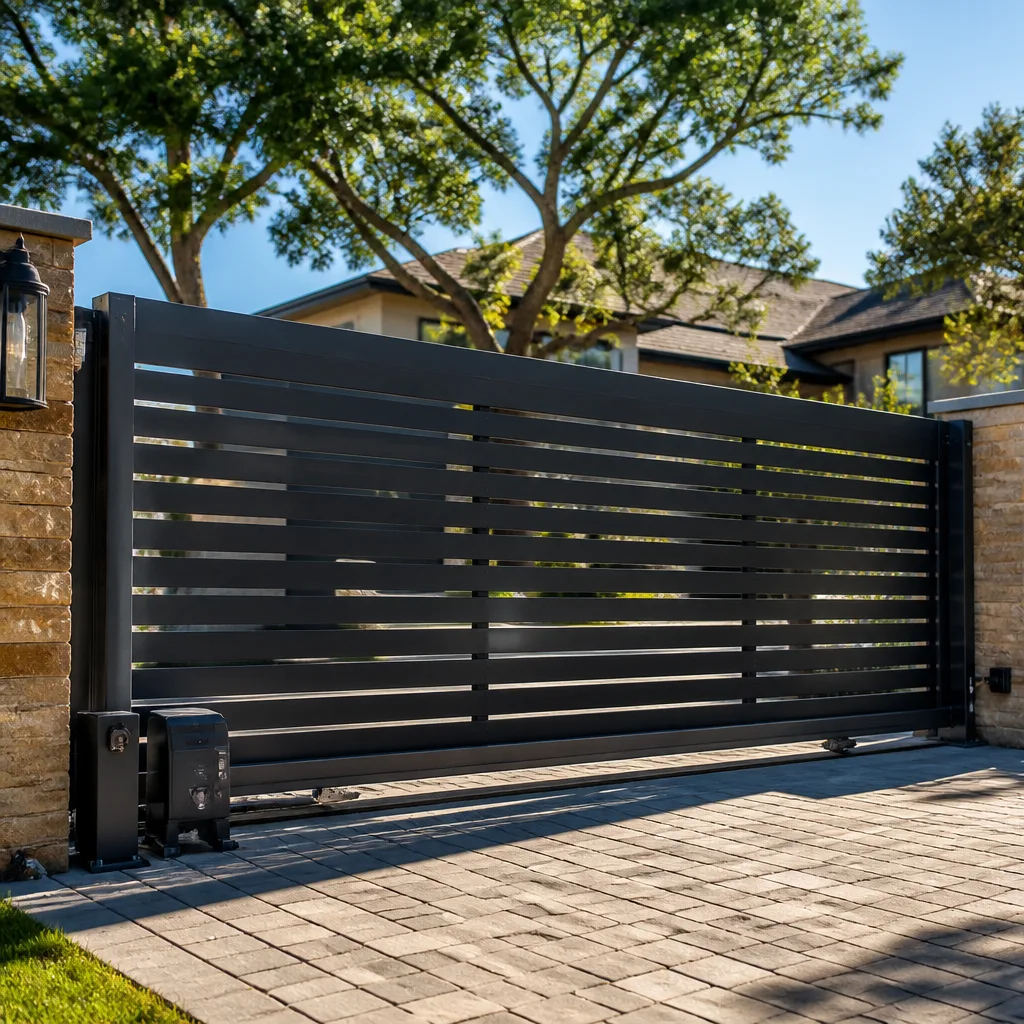
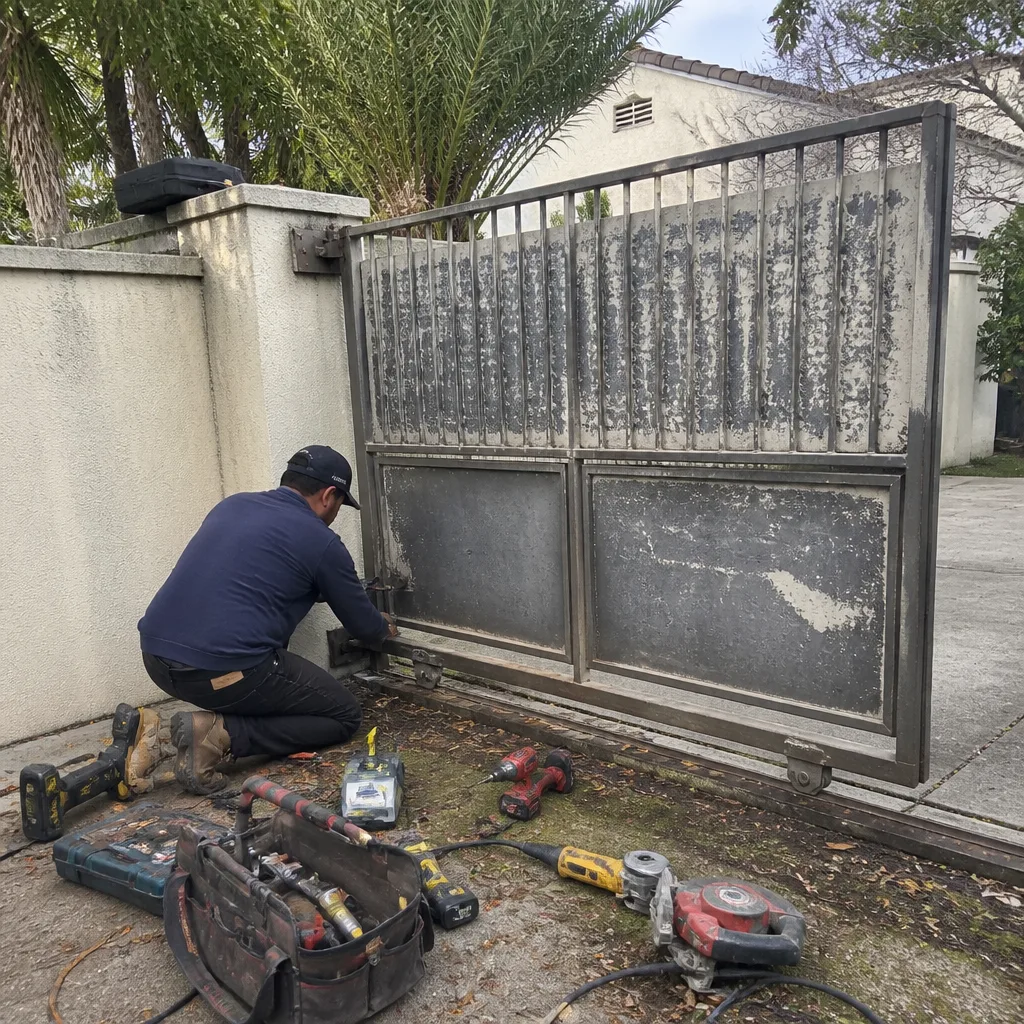 Before
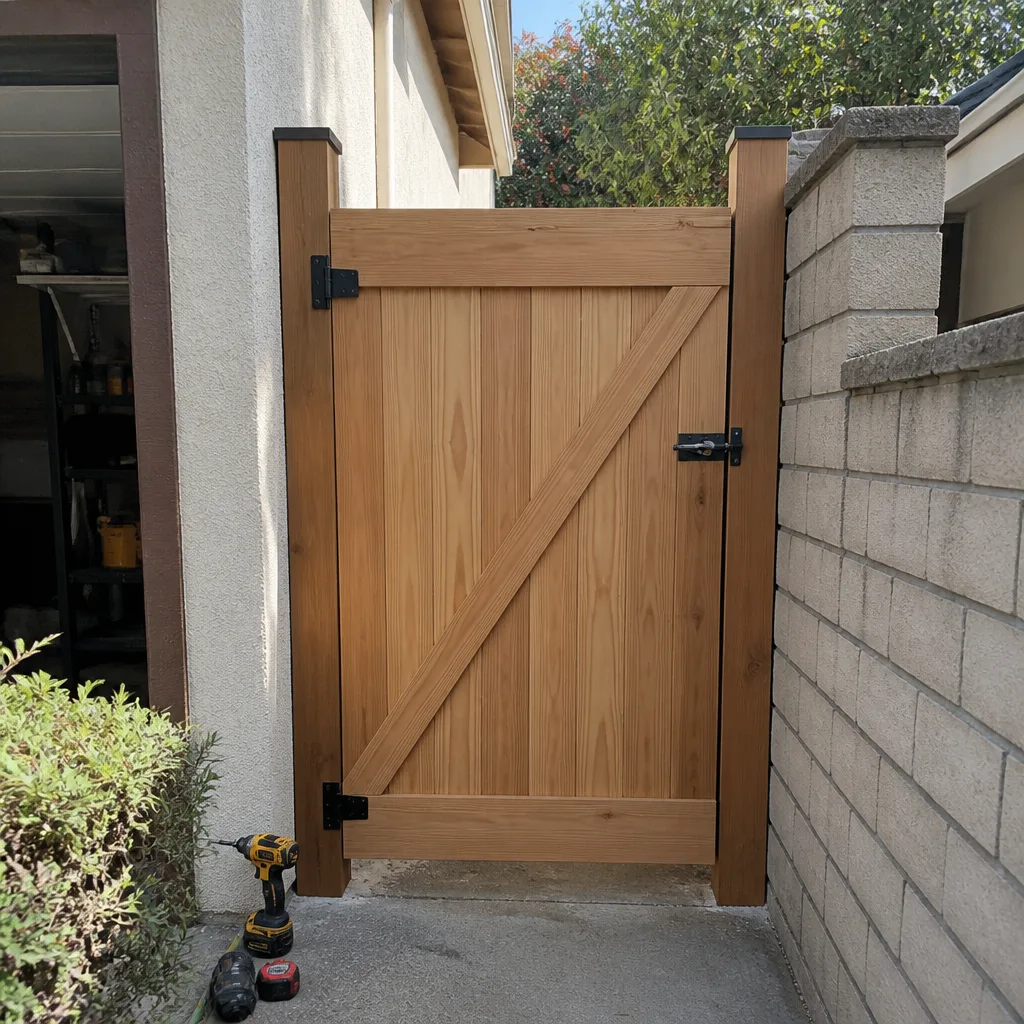 After
After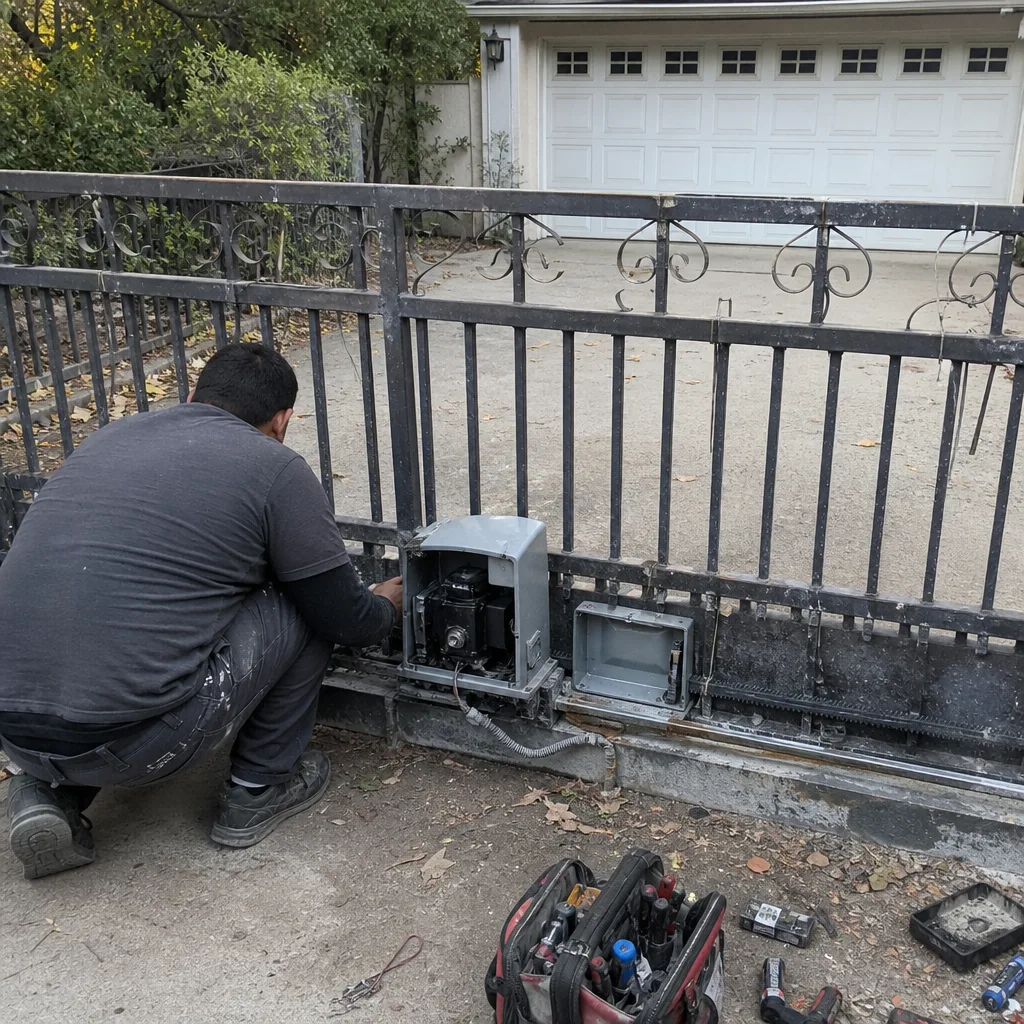 Before
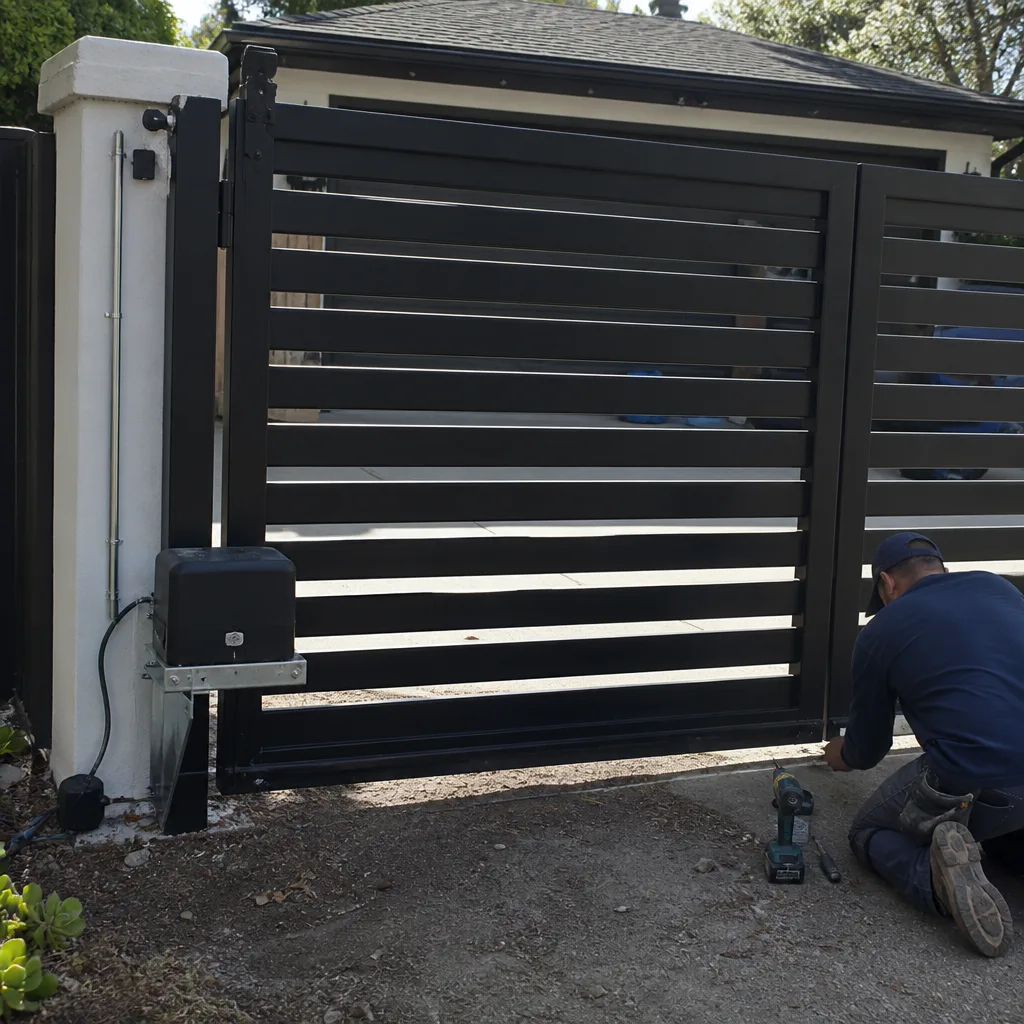 After
After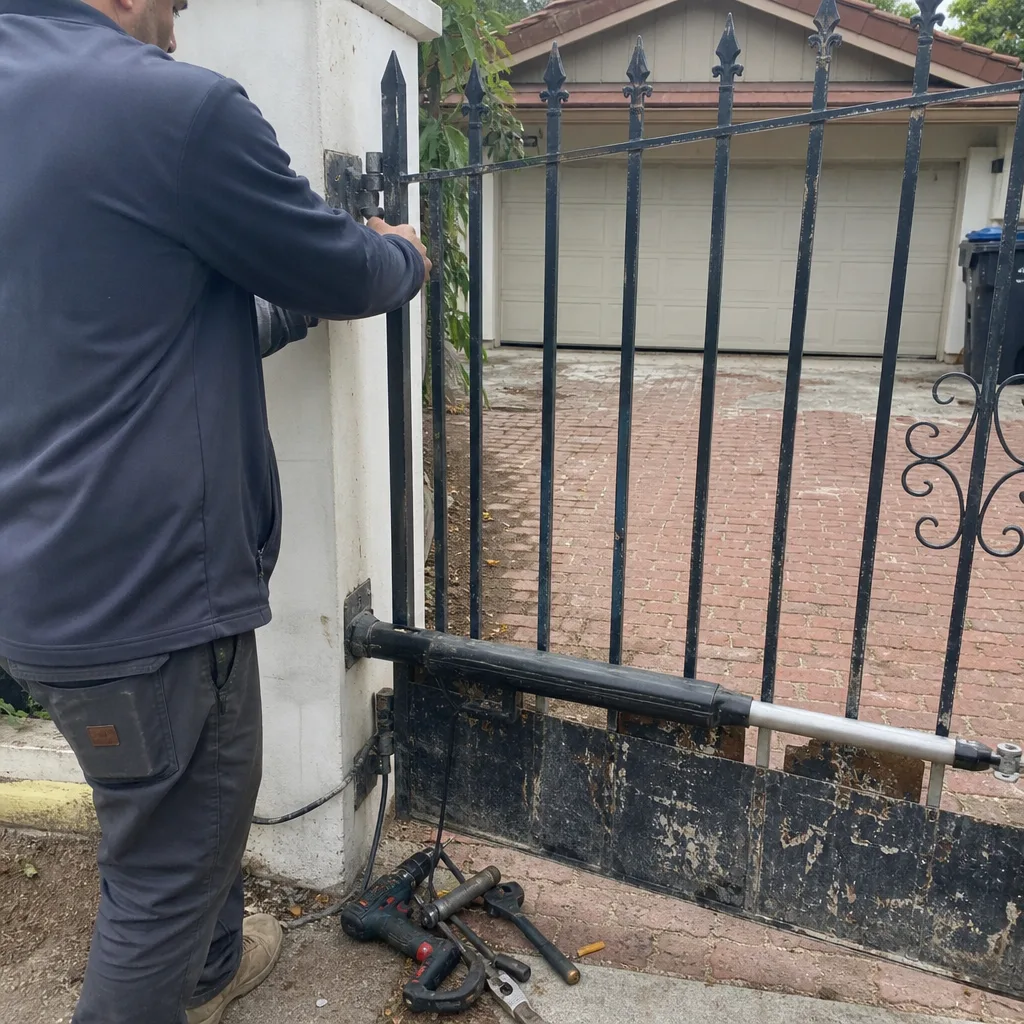 Before
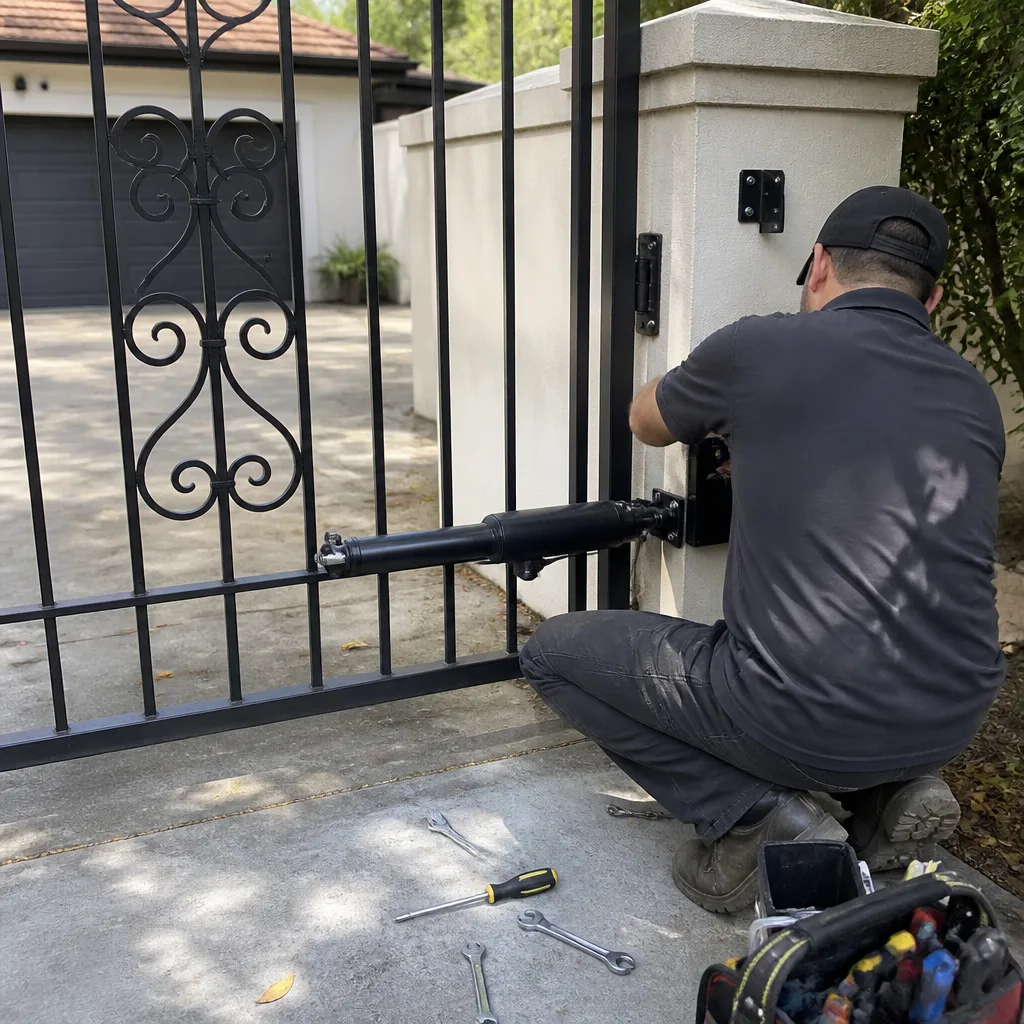 After
AfterFAAC Welding & Fabrication: The Pasadena Owner’s Guide
We stock and install FAAC-compatible weldments and fabricated gate components across Pasadena, with most fabricated repairs running between $240 and $680 installed. Typical lead time is one to two days for custom fabrication, since we measure on site and weld to the existing gate’s dimensions rather than forcing a generic bracket to fit. The reason most owners find this page is a specific failure: the gate still opens, but it sags, scrapes, or a hinge mount has cracked away from the post.
FAAC operators are solid. The fabricated steel around them usually is not. In Pasadena, where many homes along streets like San Rafael Avenue and Orange Grove Boulevard carry older ornamental swing gates from the 1960s through the 1990s, we repeatedly see the same three failures: hinge barrels worn oval, actuator mounting brackets cracked at the weld, and lower gate frames rusted through from years of sprinkler overspray. The motor keeps pushing until the hinge binds or the bracket shears, then the operator faults out. The control board is fine. The steel gave up first.
We are an independent gate repair company, not affiliated with FAAC. We work on their equipment every week and keep common weldment patterns on the truck, but when your gate needs a fabricated part, it gets built or repaired to match what’s already on your property.
Which FAAC Models This Applies To
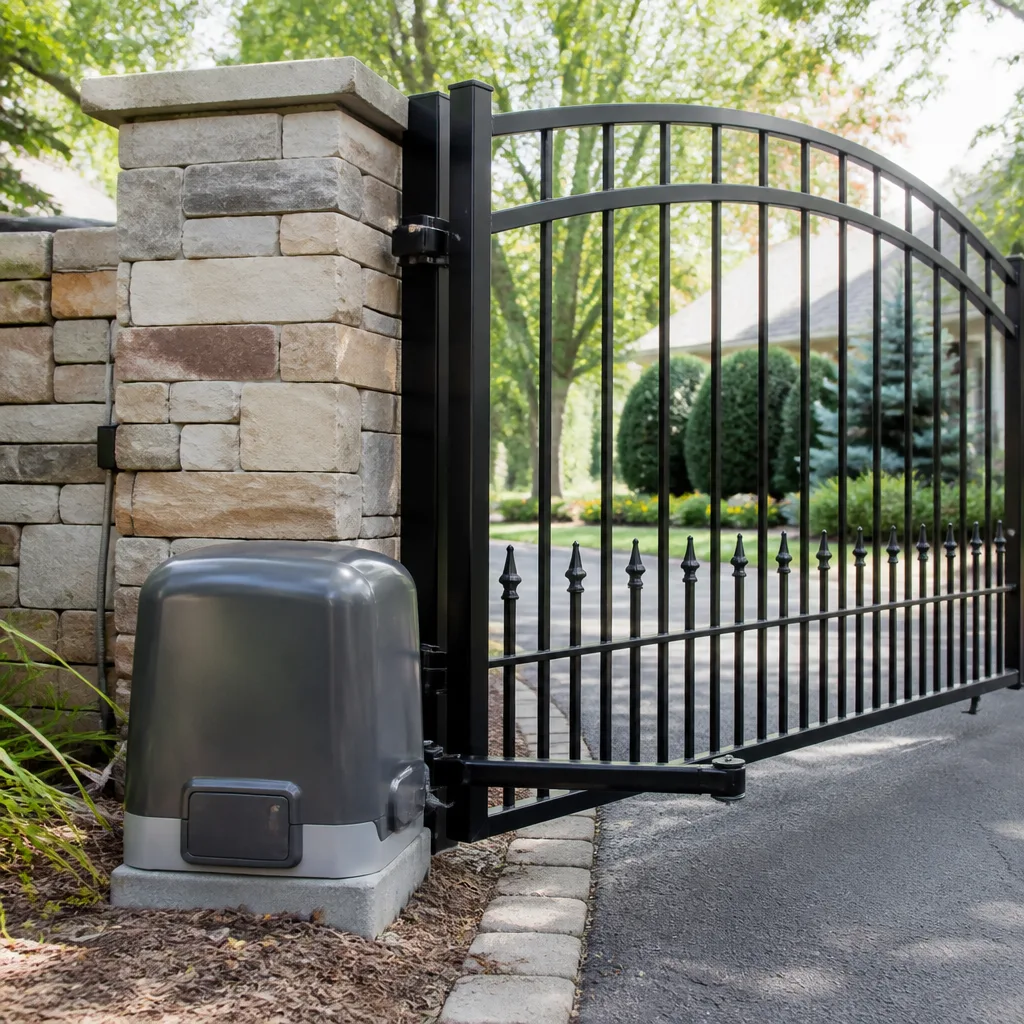
Most FAAC gate operators used in residential Pasadena fall into two families: the swing-arm actuators (the 400, 402, 412, and 415 series, plus the newer S418 and S450H) and the underground 750 and 770 series. The welding and fabrication needs differ sharply between them.
Underground FAAC operators, especially the 750 and 770, put unusual stress on the gate’s lower hinge because the drive force comes from below. The bottom hinge pin takes a twisting load that a top-mounted actuator never applies. On gates older than about 15 years, that lower hinge barrel is often the first thing to crack or seize. If you have a 750 or 770 and the gate has started grinding or leaning, the fix is usually a new hinge barrel welded in place, not a new operator.
For swing-arm models, the failure point is the actuator mounting bracket. FAAC ships a bolt-on bracket with each arm, but on a heavy gate or one where the post has shifted slightly over the decades, that bracket flexes with every cycle. Flex a piece of 3/16-inch steel plate enough times and it cracks, usually right at the bend line or at the weld. We fabricate a heavier replacement bracket with gussets and weld it to the post, which spreads the load instead of concentrating it at two bolt holes.
Identifying your model is straightforward: the model number is printed on a label on the operator housing. For underground units, the label sits inside the foundation box lid. For swing arms, it’s on the underside of the actuator body. If the label is gone, measure the arm: 400-series arms are noticeably slimmer at the pivot than the S-series. And bring us a photo before we come out if you can. It saves both of us a trip.
Signs Your FAAC Welding & Fabrication Is Failing
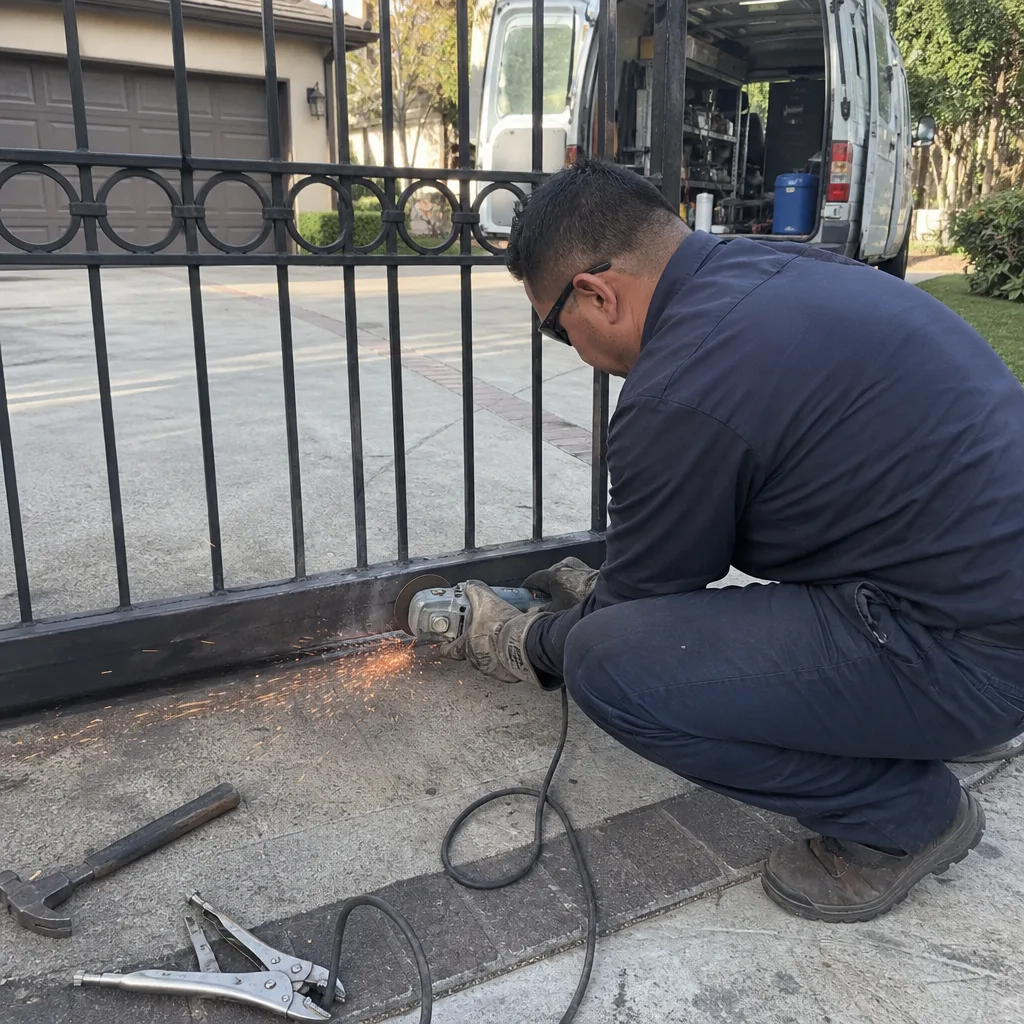
- The gate sags toward the latch side when fully open. This is almost always a worn lower hinge barrel or an elongated hinge pin hole. The hinge has been slowly hogging out for years, and now the gate’s weight is hanging on the latch and the actuator bracket instead of the hinge. Leave it long enough and the bracket cracks, which doubles the repair cost.
- The actuator arm lifts or jumps at the post mount when the gate starts moving. The mounting bracket bolts are still tight, but the plate itself is flexing or the weld has begun to fail. In Pasadena we see this often on gates with heavy wood infill that soak up water every winter, adding 40 or 50 pounds that the original bracket was never sized for.
- You hear a sharp pop or crack once per cycle, always at the same point. That is a cracked weld opening and closing. It may not be visible yet, especially if it is under a coat of paint, but it is only going to get louder. A cracked weld on a gate does not heal.
- The gate scrapes the driveway in one spot after years of clearing it fine. This is not a settling operator. It’s a hinge that has worn far enough to change the gate’s swing plane, which means the fabricated hinge assembly is no longer supporting the gate level. Scraping is the symptom; the cause is under the hinge cap.
- The lower corner of the gate frame shows rust blooms or bubbling paint at the bottom rail. Water gets in, sits, and rots the steel from inside. On Pasadena gates with landscaped edges that touch the bottom rail, we routinely cut out and replace the lower six to eight inches of the frame and weld in new material. It is standard work, but it has to happen before the section collapses.
BeforeAfterReplacement Cost & What’s Included
In Pasadena, most FAAC welding and fabrication jobs run between $240 and $680 installed, depending on what we are replacing. A single hinge barrel replacement typically runs $240 to $360 including the barrel, welding, and paint touch-up. A heavier-duty swing-arm mounting bracket, fabricated and welded on site, runs $350 to $520. A rotted lower frame section replacement is the broad range: $450 to $680 depending on how much rail we cut out, the profile of the existing steel, and how much of the surrounding powder coat needs matching.
What drives the range is steel thickness and access. A gate with decorative scrollwork takes longer to jig and align than a plain square-tube frame. A post with plantings on both sides means we weld from awkward angles. None of it is exotic; it just takes the time it takes.
Every quote is written and handed to you before the welder strikes an arc. That price is the price. The written quote includes the part description, the fabrication spec, labor, and any finish work. We do not add surprise line items at the end. The welded work carries our 365-Day Done Right Promise: if the weld or bracket fails within a year, we come back and fix it at no charge. Under The Haven Standard, you also get a photo record of the work, including close-ups of the finished welds before paint, so there is a record of what was done if you ever need it for a property sale or a future repair by someone else.
DIY or Call Us?
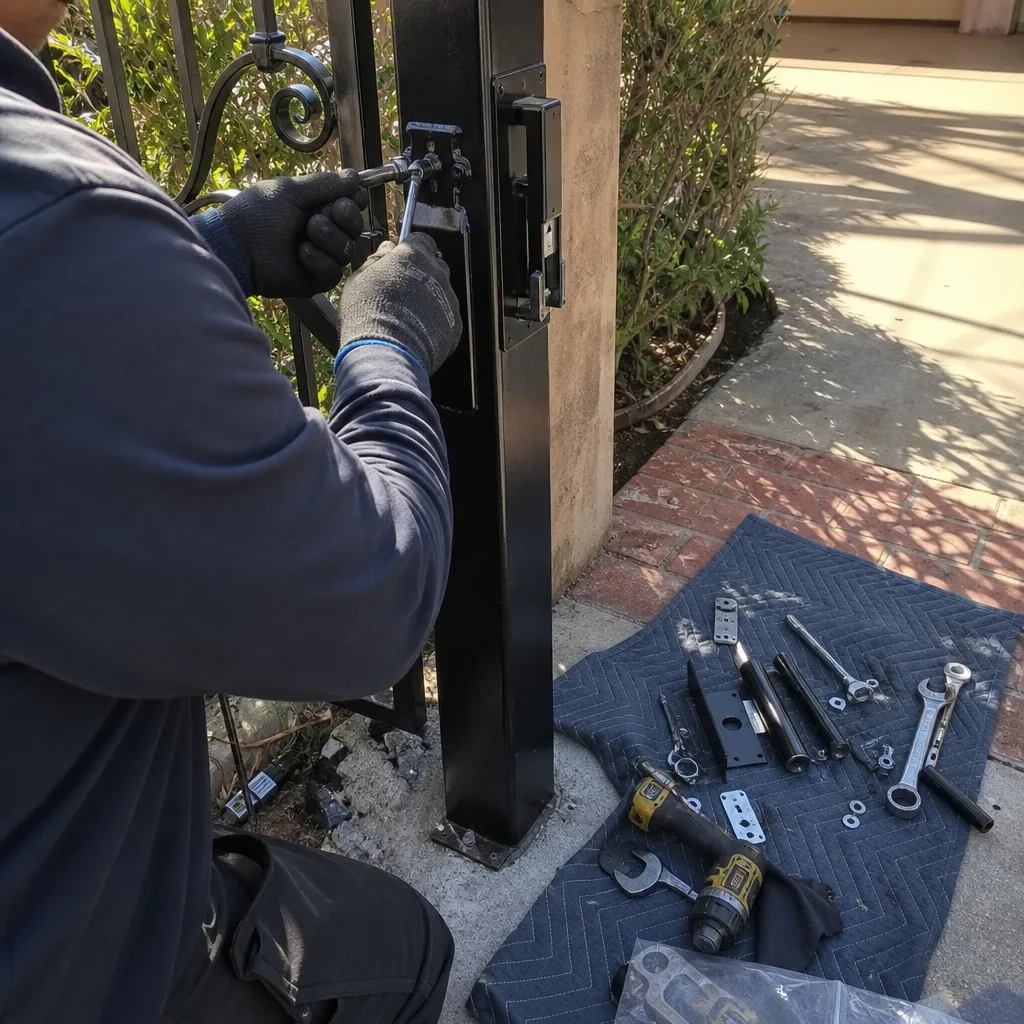
There are things worth checking yourself. If the gate scrapes, look at the gap between the gate leaf and the post on the hinge side. If the gap has grown significantly compared to the latch side, that is hinge wear and we can confirm it with measurements before any work begins. You can also photograph the actuator bracket and send it to us. That costs nothing and often tells us what we are walking into.
What we would not recommend is grinding, cutting, or welding on a gate that hangs from an active operator. Gate actuators store energy in their springs and gear trains. If the gate is under load when a hinge or bracket is cut, it can shift suddenly, and a 300-pound gate panel does not care about your reaction time. Welding on an automated gate also introduces heat near sensitive components: wiring looms, limit switches, and the actuator arm itself can be damaged by a stray ground clamp or spatter if you are not careful. It is not a judgment on anyone’s skill. It is just that most of what goes wrong in Pasadena backyards goes wrong because a well-meaning repair did not account for the operator still being connected.
If you are on the fence, call us at (626) 624-4196 and describe what you see. We will tell you what we think it is, what it costs, and whether it is something you want us to handle. No pressure, and the estimate is free.
FAQs
A properly welded, painted hinge barrel or bracket in Pasadena’s dry climate typically lasts 10 to 20 years, often outliving the operator it serves. The failure drivers here are not winter corrosion or salt; they are weight, cycle count, and water from over-watered landscaping. Gates that clear the ground and stay dry last decades. Gates with sprinklers hitting the same hinge every morning fail early, and that is not a welding problem, it is a water-management problem.
A clean crack in a fabricated bracket or hinge can usually be rewelded if the surrounding steel is sound, but the repair is only as good as the prep. We grind out the crack, weld it properly, and often add a gusset plate to keep it from re-cracking. If the steel around the crack is thinned from rust or the crack runs through a factory weld that already failed once, we typically recommend replacing the part with heavier steel. We will always show you the crack after grinding and explain which way we would go, with a written price for each path.
Most hinge barrel, bracket, and frame repairs are completed in one visit, usually three to four hours on site. If custom fabrication is needed, like a specially profiled lower rail section, we fabricate in our shop and return within one to two days to install. You will know the time commitment and the price before the first visit ends.
We stock common hinge barrel sizes, steel plate, square and rectangular tube stock, and gusset material. The specific fabrication is cut and welded to your gate’s measurements. We also stock parts for the other operators we service, including LiftMaster, Mighty Mule, and Ghost Controls, so we are not tied to any single parts source.
Written by Adrian Vance, Owner, Vance Gate Repair Pasadena at Vance Gate Repair Pasadena, serving Pasadena and nearby areas.
Need a FAAC part welded or replaced before it takes the gate down with it? Call (626) 624-4196 now for a free, written estimate. We answer live, any hour, and we will name what we find, name what it costs, and leave the gate working.