
Free on-site gate assessment - hinges, posts, and your LiftMaster or Nice gate operator checked before anything is quoted
The assessment is free and the quote is the invoice.
Farm & ranch
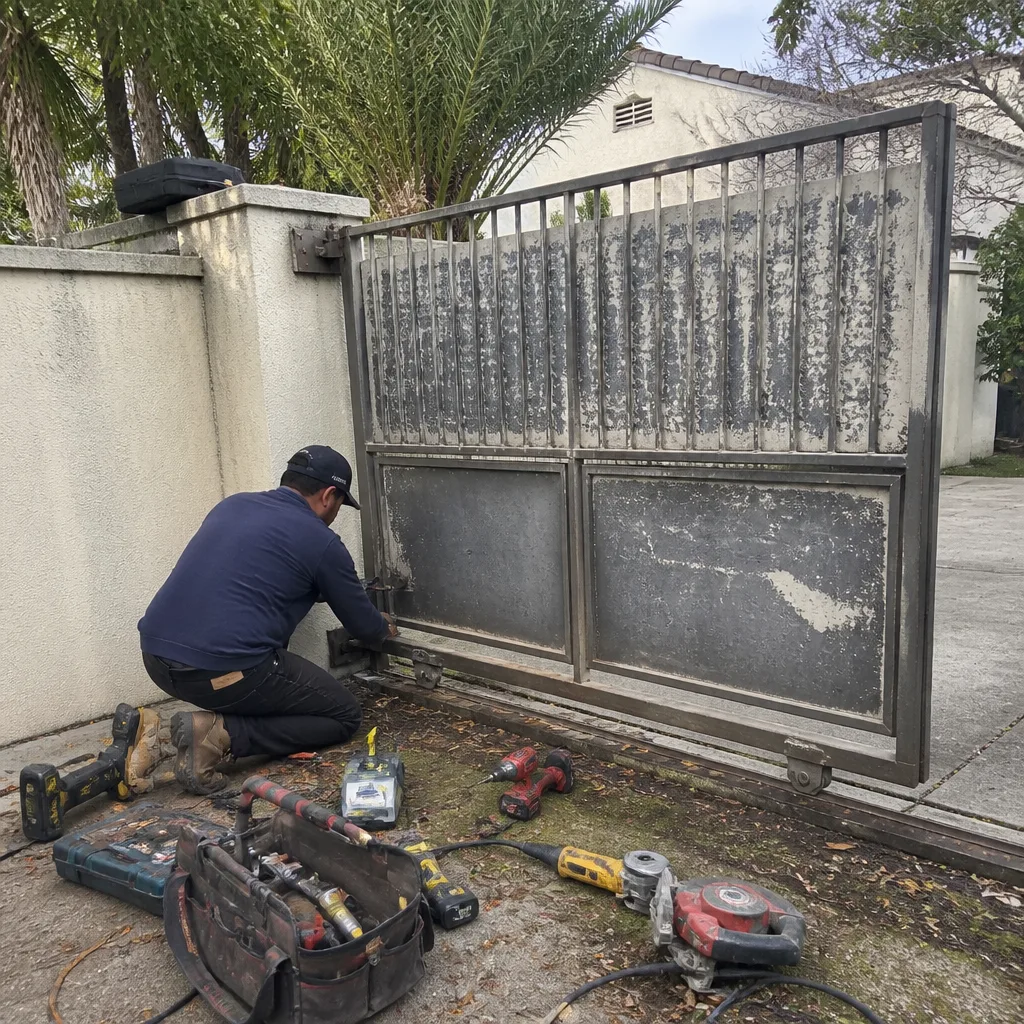 Before
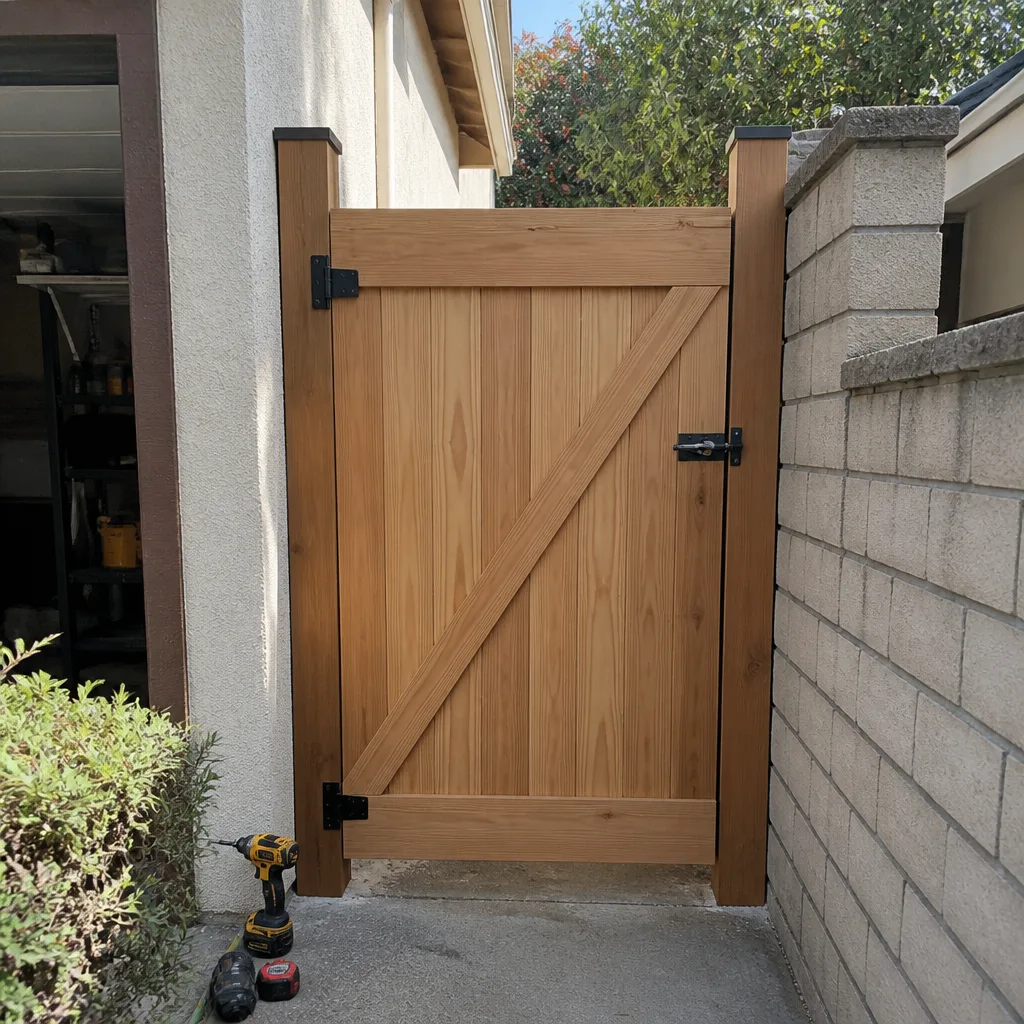 After
After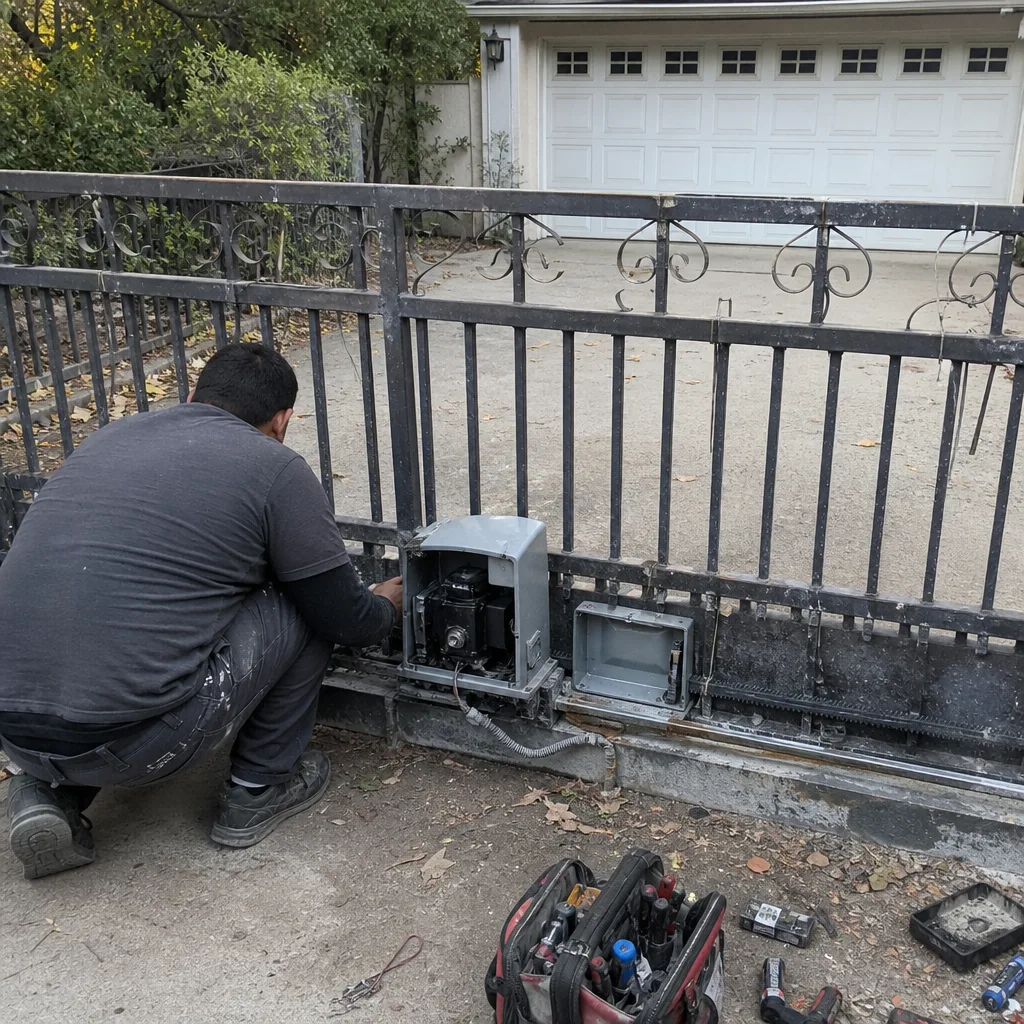 Before
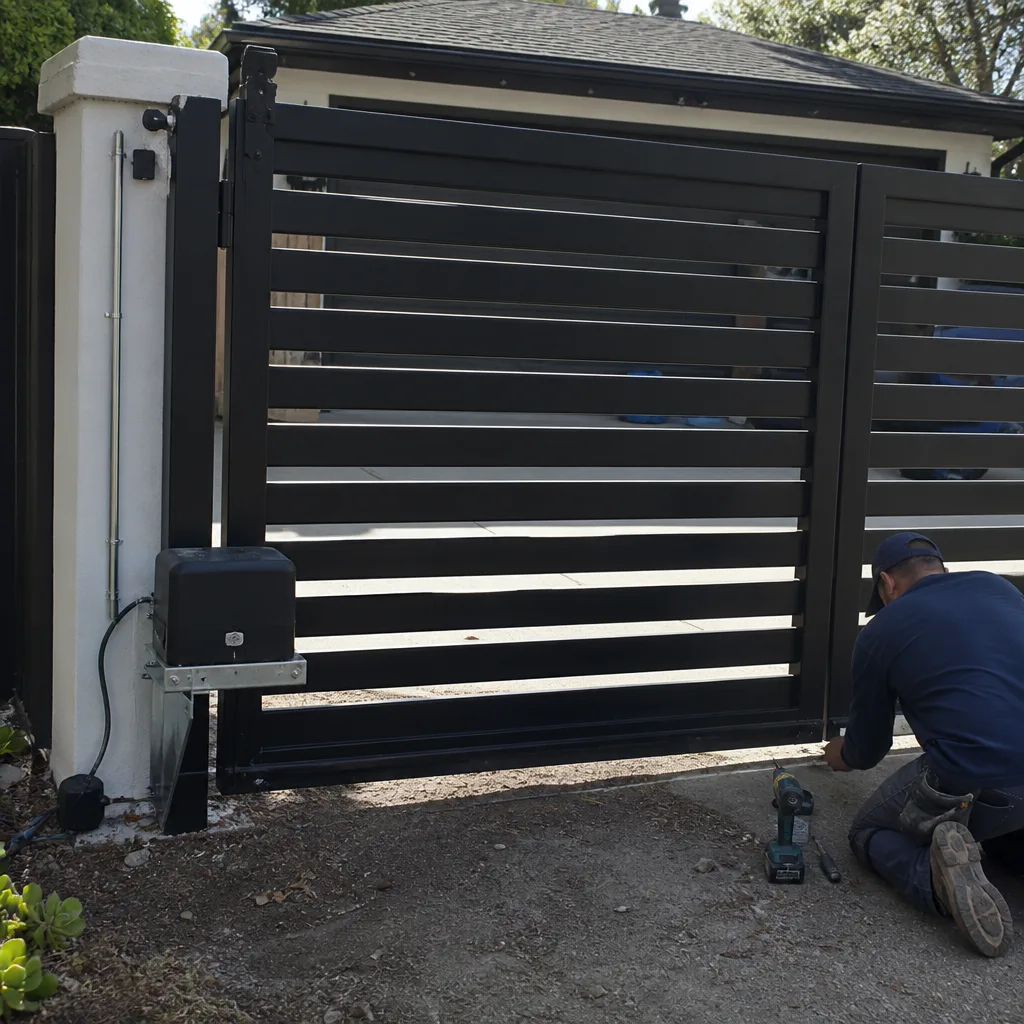 After
After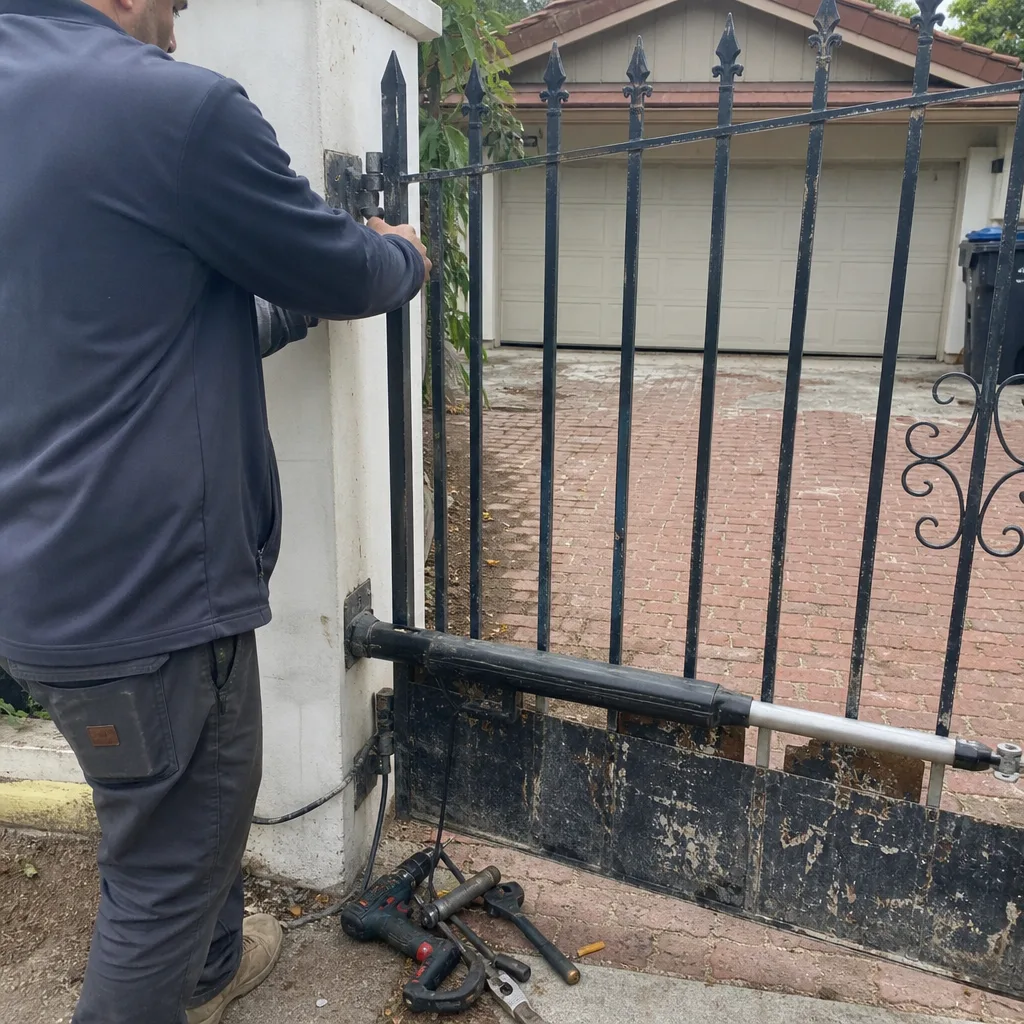 Before
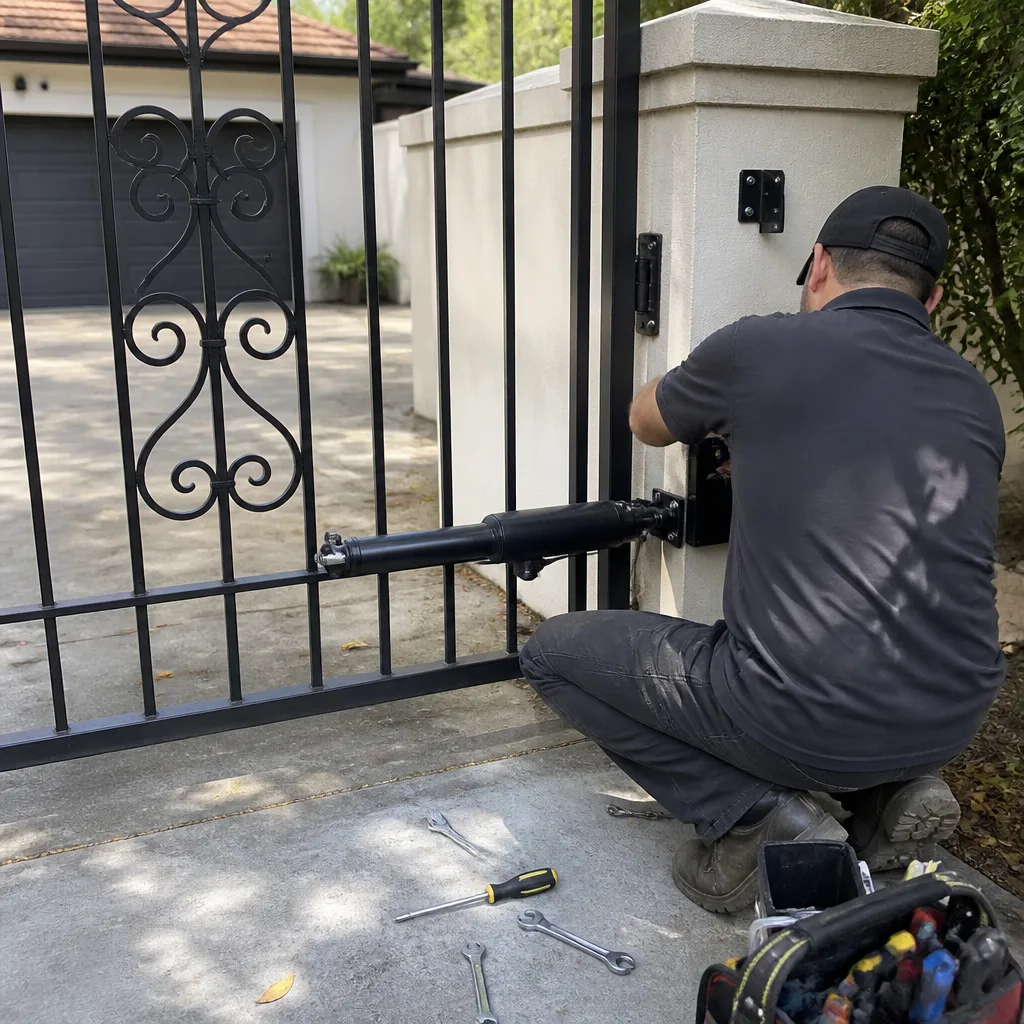 After
AfterDoorKing Access Control Installation: The Pasadena Owner’s Guide
A DoorKing access control installation in Pasadena typically runs between $425 and $1,850 installed, depending on whether you’re replacing a keypad, a telephone entry board, a receiver, or the full controller cabinet. We stock DoorKing parts on the truck for common failures and can usually complete the swap same-day. The way most people discover the part failed is not dramatic: the gate stops responding to a keypad code that worked last week, or the buzzer rings but the gate does not move, or every remote in the house stops opening the gate at the exact same time. That last one is almost never a remote problem. It’s the receiver board.
Here’s what we’ve learned doing DoorKing work in Pasadena: the hardware itself is generally solid, but the boards, keypads, and housings live outside, and Pasadena’s summer UV plus the marine-layer moisture off the Arroyo does predictable things to them. This page covers what fails, what it takes to fix it, and what you’ll pay before we touch a screwdriver.
Which DoorKing Models This Applies To
Most of the DoorKing access control we install in Pasadena falls into three families: the 6000-series and 9000-series telephone entry systems (the metal faceplates with the call buttons near the driveway), the 1600-series keypads and stand-alone controls, and the MicroCLIK and MicroPLUS receivers that handle remote access. If you have a DoorKing gate operator, the access control component is usually a separate board or keypad wired into the operator’s inputs, not the operator itself.
To identify your part, look for the model sticker inside the cabinet or on the back of the keypad face. DoorKing stamps a model number and often a revision letter (A, B, C) on the board. The revision matters: a 1603-080 board from revision A is not always a drop-in replacement for revision C, because DoorKing changed a few connector pinouts along the way. If your label is missing, we can usually identify it from a photo of the board and the connector layout. We’ll never order a replacement part without confirming the revision first. That swaps the problem around, and the customer still has a dead gate.
For OEM versus aftermarket: on DoorKing specifically, we stick with OEM for the control boards and telephone entry logic. The aftermarket boards we’ve tested do not hold programming reliably and some have voltage regulation that drifts when temperatures drop below 45 degrees, which is not a concern in Pasadena often, but a few of our clients live up near the foothills where it does happen. For peripheral items like keypad faceplates and some enclosure parts, quality aftermarket equivalents are fine and can save you 30 to 40 percent.
One more Pasadena-specific note: if your gate is on a property built before 1990 off San Rafael Avenue or similar older streets, the original install often wired the access control through a run of buried telephone cable rather than proper low-voltage control wire. When we replace a controller we check that wire run. Sometimes that’s the actual failed component, and no new board will fix a corroded wire.
We are an independent service provider, not affiliated with DoorKing. We repair DoorKing equipment because it’s still one of the most common access control brands on existing Pasadena gates, and parts are available without a long wait.
Signs Your DoorKing Access Control Installation Is Failing
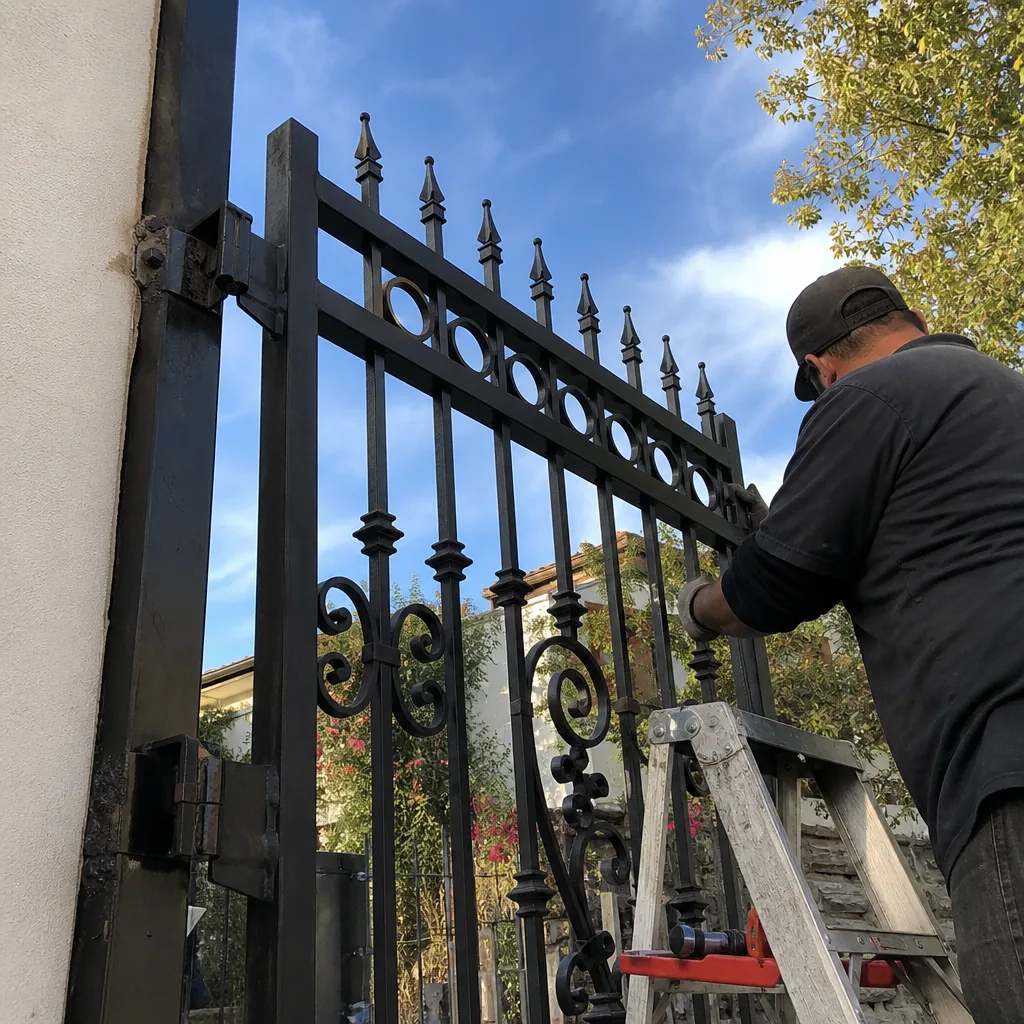
- Every remote stopped working at once. This is the receiver board, not the remotes. When each MicroCLIK remote fails individually, you replace a transmitter. When all of them die together, the receiver on the board has failed or lost its programming. We can test the receiver output in about five minutes.
- The keypad beeps but the gate does not move. The keypad is receiving your digits and usually the output relay is closing, but the signal is not reaching the operator’s open input. Sometimes that’s a failed relay on the controller; often it’s the wire run between the keypad and the operator that corroded. Pasadena’s mineral-heavy water speeds up that corrosion more than people expect in a dry climate.
- The buzzer rings at the house but the gate release button does nothing. On telephone entry systems, the voice path and the relay path are separate circuits. A relay can burn out while the buzzer still works fine. You hear the call; you press the button; nothing happens at the gate. That’s a board-level relay failure, which is replaceable in most 6000-series and 9000-series cabinets without replacing the entire unit.
- The display shows garbage or the keypad backlight flickers. Flickering backlight is typically a failing power supply or a corroded ground connection inside the cabinet, not the keypad itself. We check voltage before ordering anything.
- The gate opens for some codes and not others. If only one or two codes fail, we clear and reprogram those codes first. If codes randomly disappear after a power cycle, the memory chip or backup capacitor on the board is dying. That’s a board replacement, and it’s one of the more common DoorKing failure modes we see on systems older than about eight years.
BeforeAfterReplacement Cost & What’s Included
In Pasadena, here’s the honest math on installed DoorKing access control pricing. A replacement MicroCLIK receiver board runs roughly $325 to $475 installed. A 1600-series keypad replacement lands around $425 to $650. A full telephone entry board swap, depending on model and revision, is typically $850 to $1,450. A complete access control cabinet with new telecom-grade wiring into the operator is $1,500 to $1,850, and that’s when the old enclosure has been so compromised that replacing the guts means you’re mounting new components into a rusted shell.
Every one of those prices is parts plus labor, quoted in writing before we start. The range exists because the condition of the cabinet, the length of the wire run, and the version of the existing board all affect labor time. We’ll give you the flat number once we’ve opened the cabinet and seen what’s actually there, not before. And under our 365-Day Done Right Promise, if that repair is not right within a year, we make it right at no additional charge. The price does not change after the quote. That’s the whole point of our written-price policy.
DIY or Call Us?
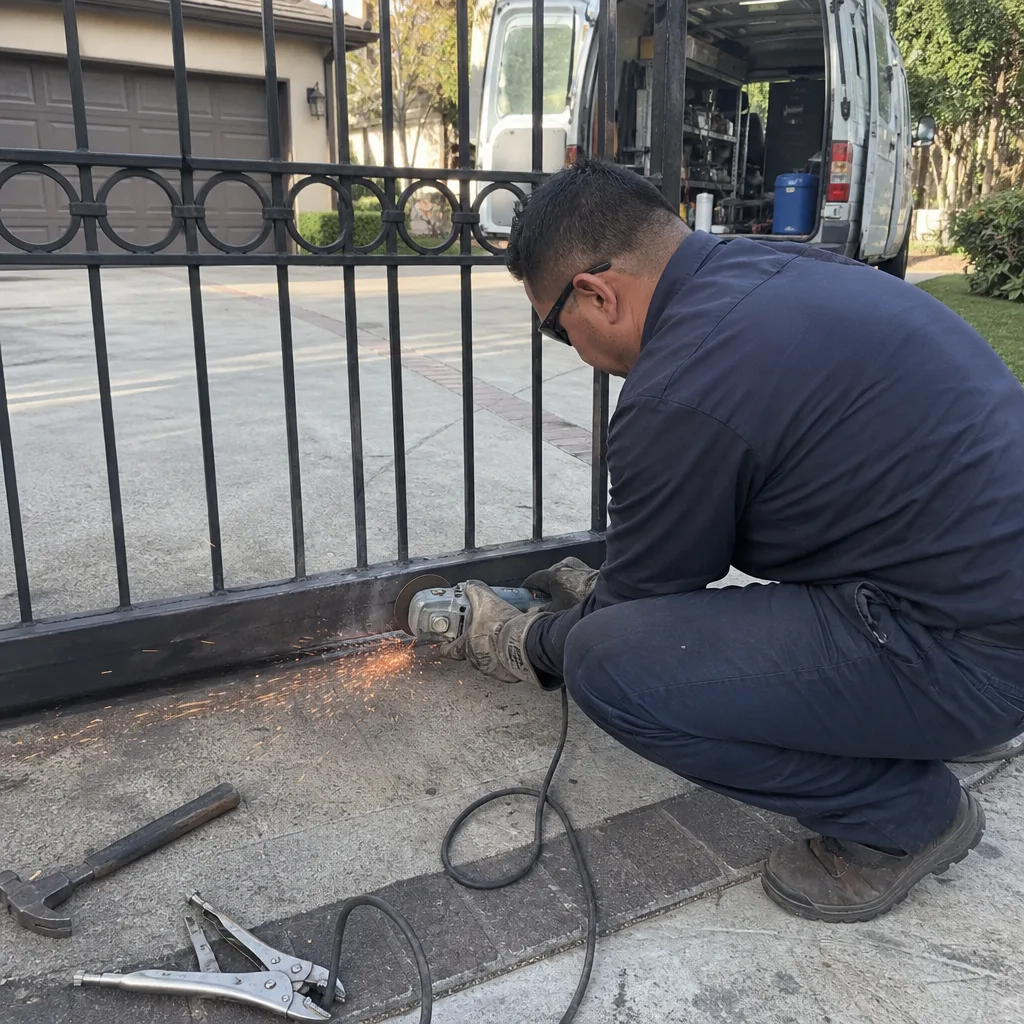
There’s a difference between checking and fixing. You can safely check the obvious: open the cabinet if you have the key and look for ants, rust, or a corroded battery on the board. You can test whether your breaker tripped. You can write down the model and revision numbers so you’re not guessing. What you should not do is re-wire the board based on a YouTube video or swap components while the operator is still powered. Access control runs on low voltage, but the gate operator it controls runs on line voltage, and the two meet inside that same cabinet. A wrong wire landed on the wrong terminal can send 120 volts into a low-voltage board, and that failure is more expensive than any service call.
The DIY path on DoorKing access control goes wrong in predictable ways: the owner replaces a board but does not transfer the revision-specific jumpers, so the gate works but the safety loops do not. Or the programming is entered correctly but the relay contact is wired to the wrong operator input, so the gate opens when you press the buzzer button and does nothing on the code. If you’re replacing a simple keypad and you’re confident with a multimeter, it’s doable. If you’re opening the cabinet and you see more than six wires, call us at (626) 624-4196 and we’ll come look at it.
FAQs
A DoorKing control board in Pasadena generally lasts 8 to 12 years before something on it fails, with the backup capacitor and the relay contacts being the two most common failure points. Gates that sit in direct afternoon sun or inside enclosures with poor gaskets trend toward the lower end. Boards with good cabinet integrity and shaded mounting locations often go longer.
Yes, some failures are repairable, and we’ll tell you when they are. Blown relay contacts, corroded terminal blocks, failed backup capacitors, and cold solder joints on the power input are things we repair. A smoked microcontroller, water-damaged traces, or a failed flash memory chip are board replacements. We will not repair a board in a way that leaves reliability unanswered just to save you money short-term. If the repair is marginal, we’ll say so and give you both prices. Call (626) 624-4196 and we’ll take a look at your specific board.
A straight board or receiver swap takes 45 to 90 minutes on site. A keypad replacement with wire-run verification runs about an hour and a half. If we have to pull new control wire or rebuild a compromised cabinet, that’s a half-day job. We’ll give you the number before we start and we’ll be on time.
We stock the most common DoorKing parts on the truck: MicroCLIK receivers, 1600-series keypads, relay assemblies, backup capacitors, and common cabinet hardware. Less common revision boards we can usually source in one to two days from a local supplier. We also keep parts for the other major brands on the property: LiftMaster, Mighty Mule, and Ghost Controls among them, so if the issue turns out to be cross-brand, we do not have to stop and wait on a second part.
Written by Adrian Vance, Owner, Vance Gate Repair Pasadena at Vance Gate Repair Pasadena, serving Pasadena and nearby areas.