
Last updated September 20, 2026
Free on-site gate assessment - hinges, posts, and your LiftMaster or Nice gate operator checked before anything is quoted
The assessment is free and the quote is the invoice.
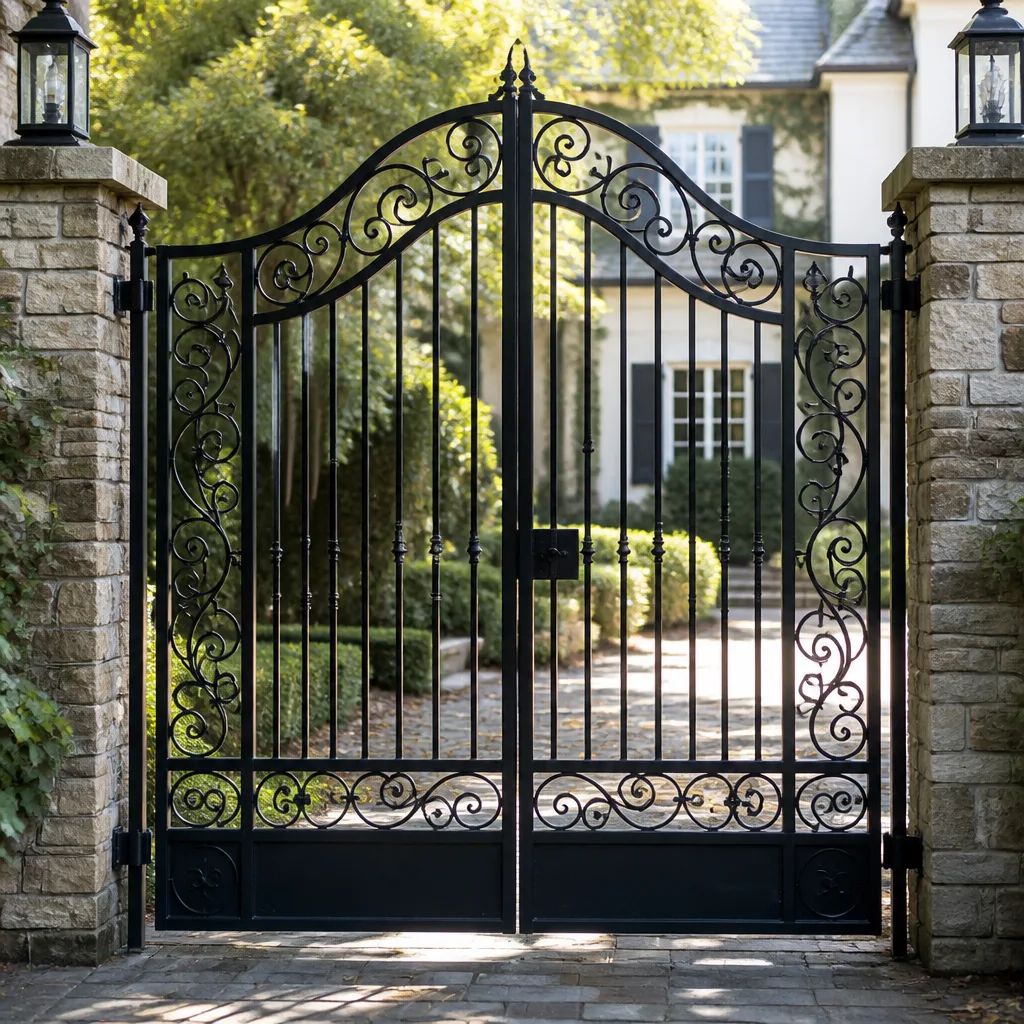
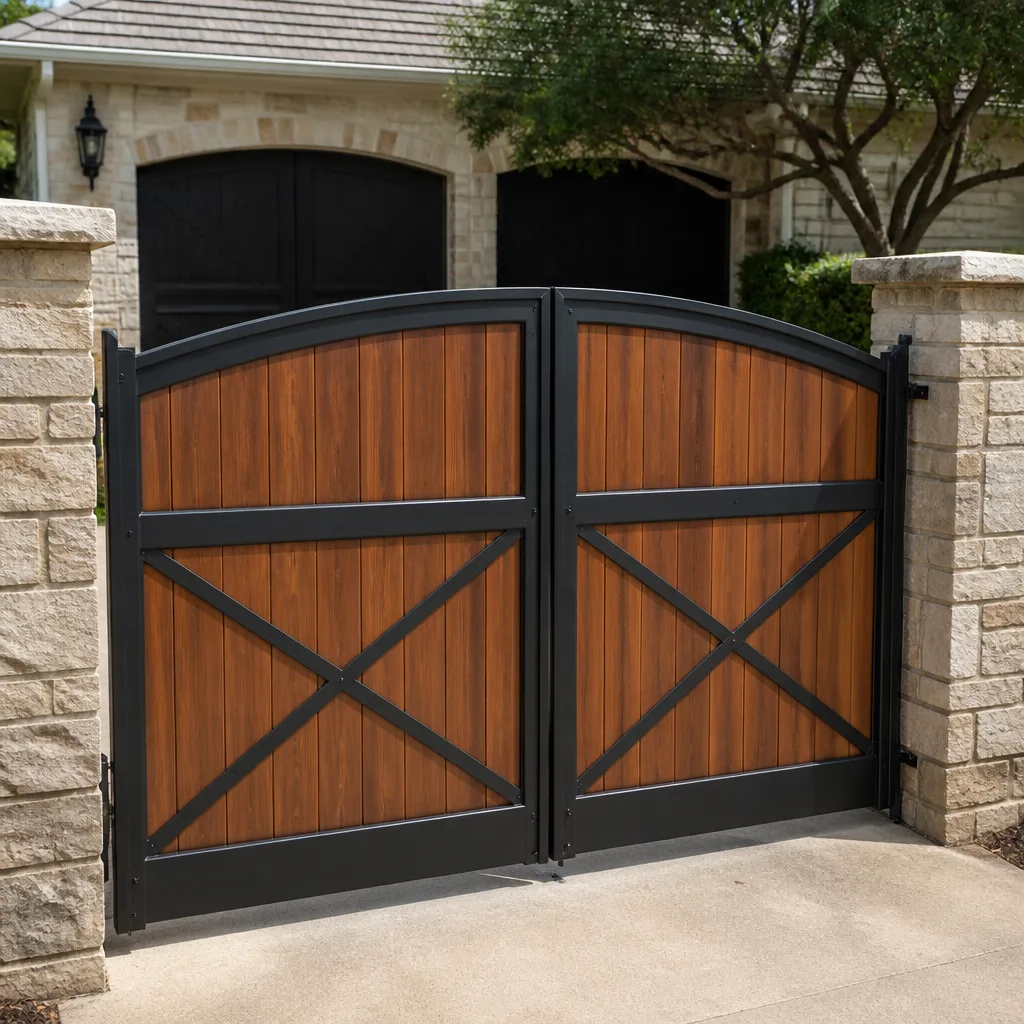
Farm & ranch
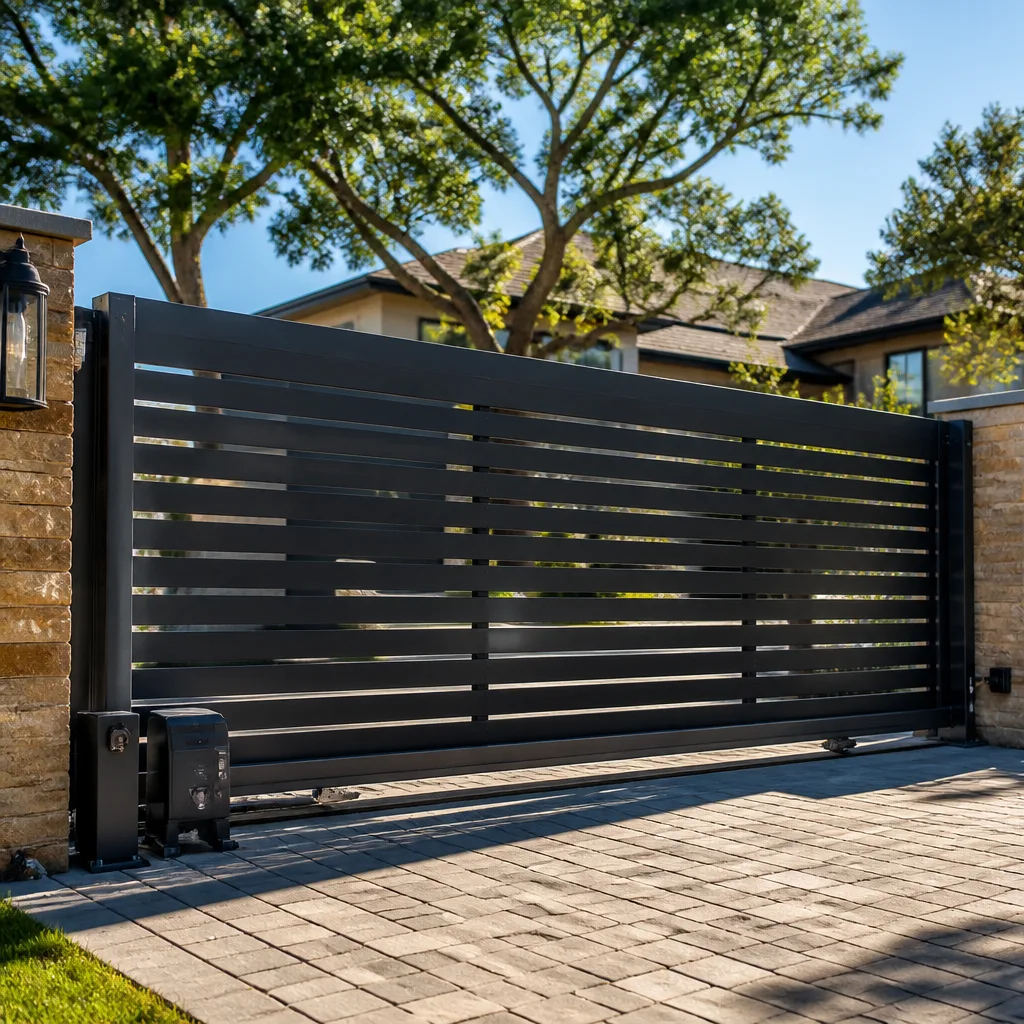
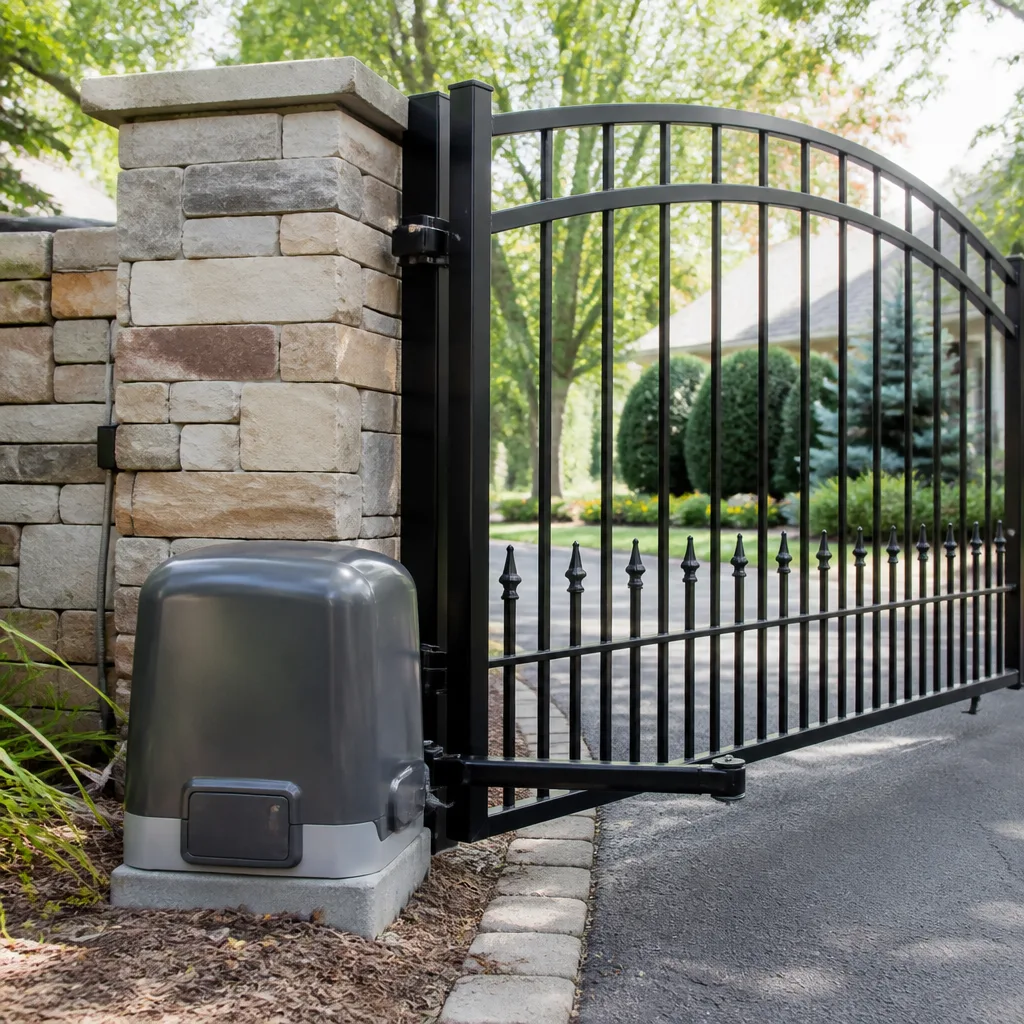
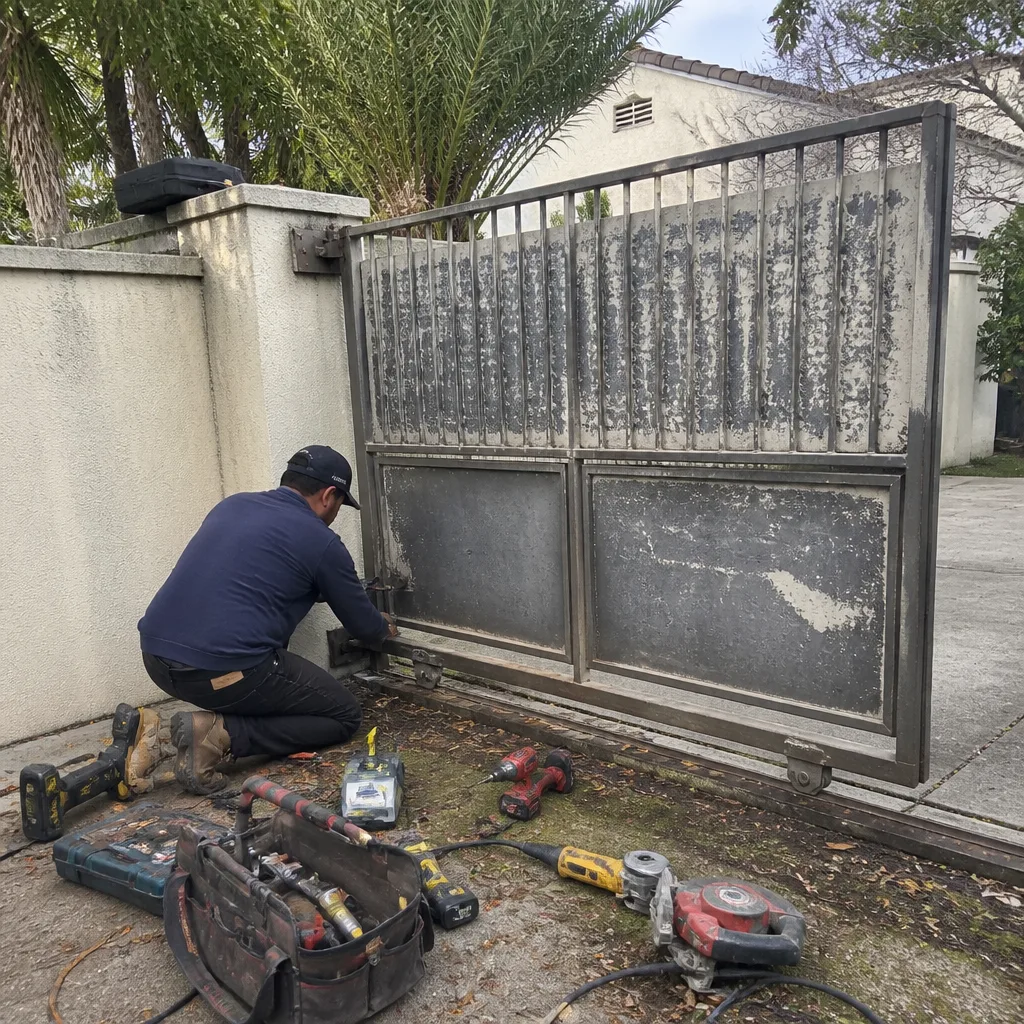 Before
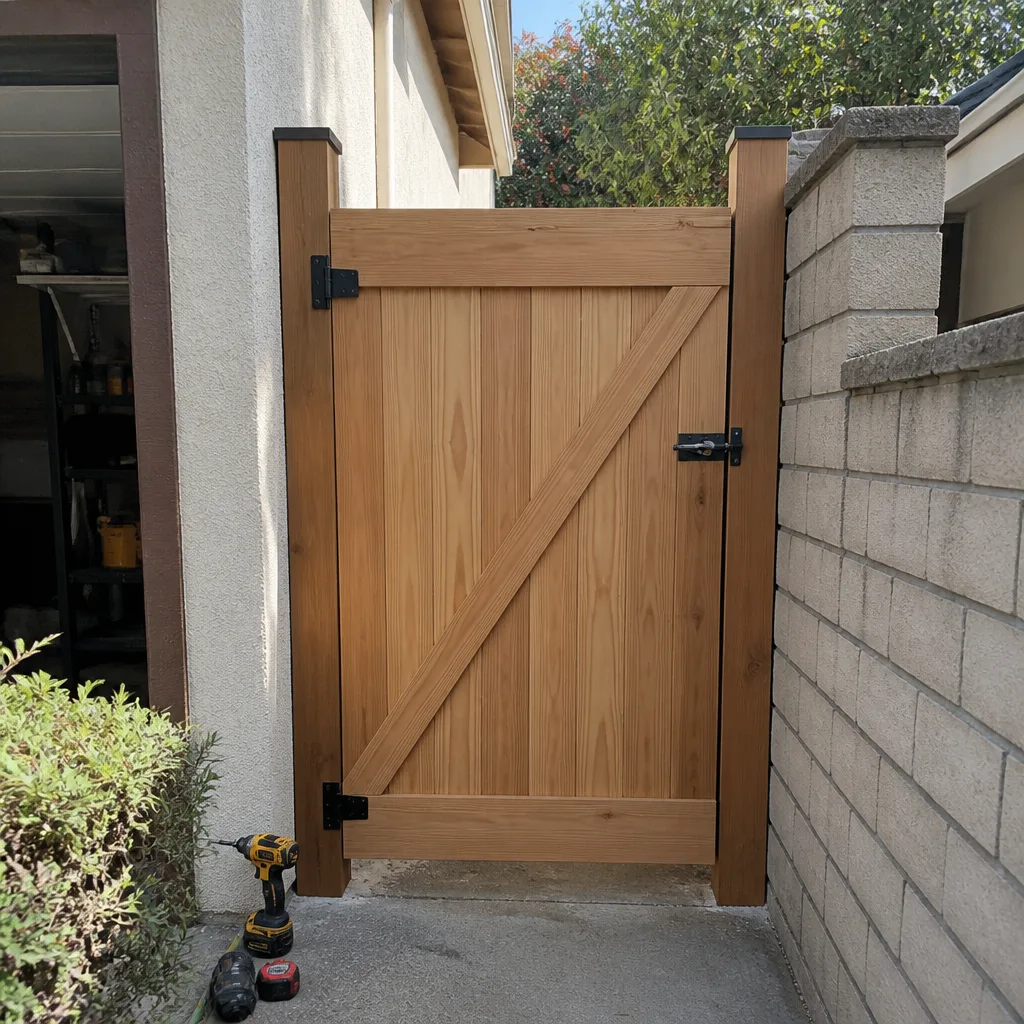 After
After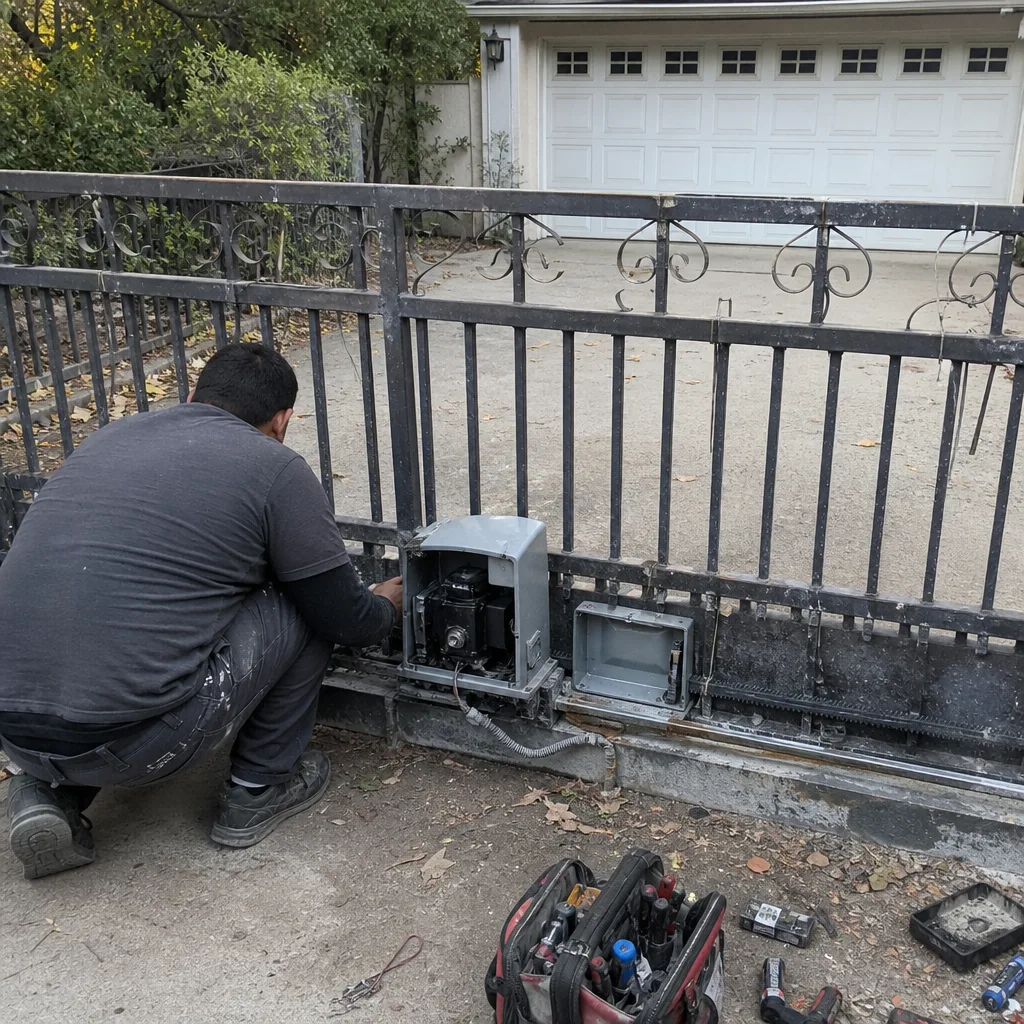 Before
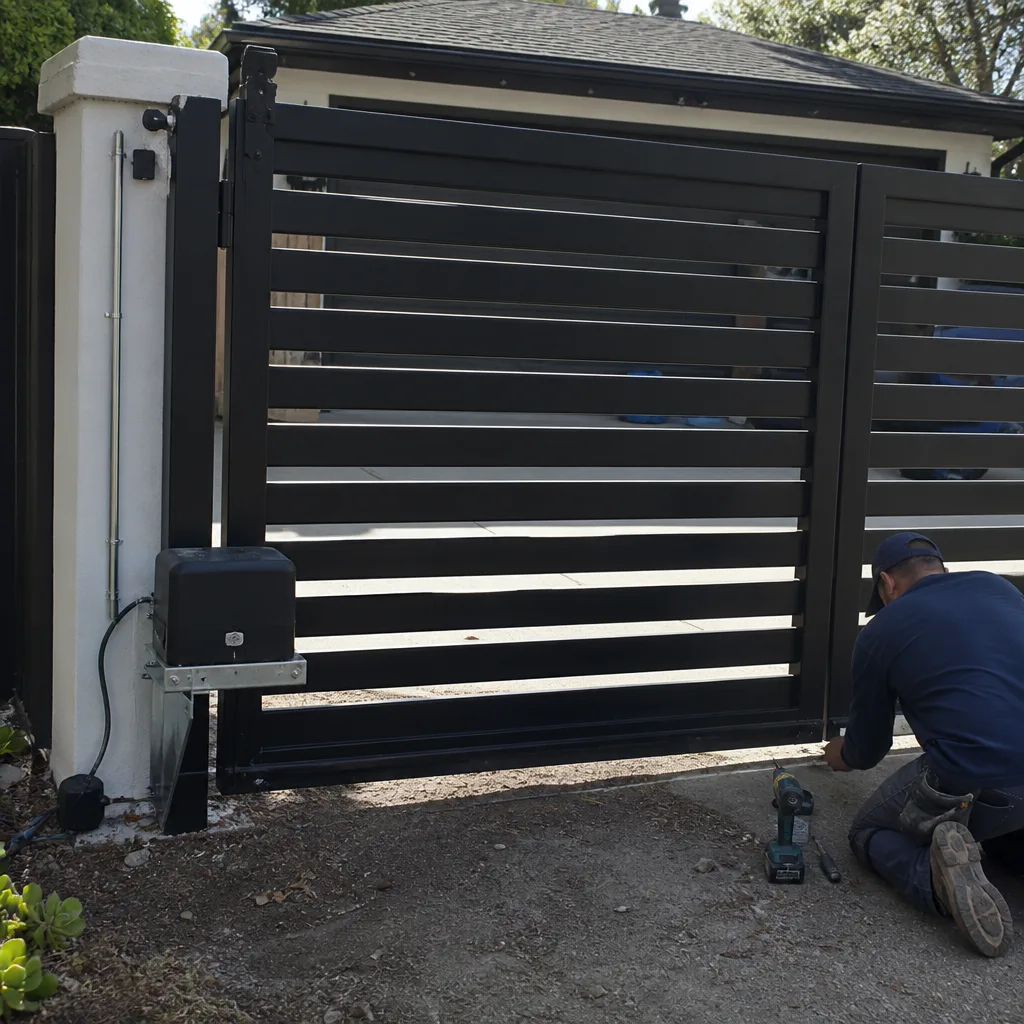 After
After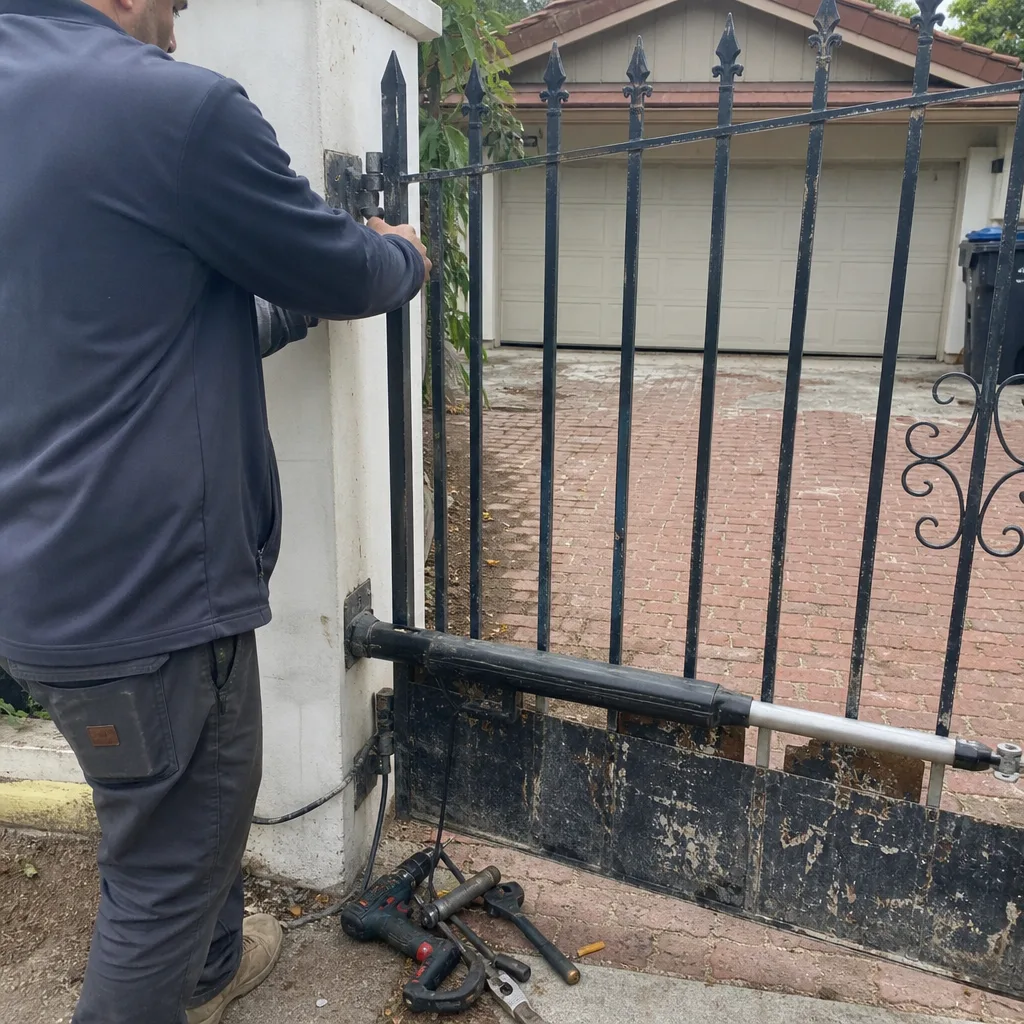 Before
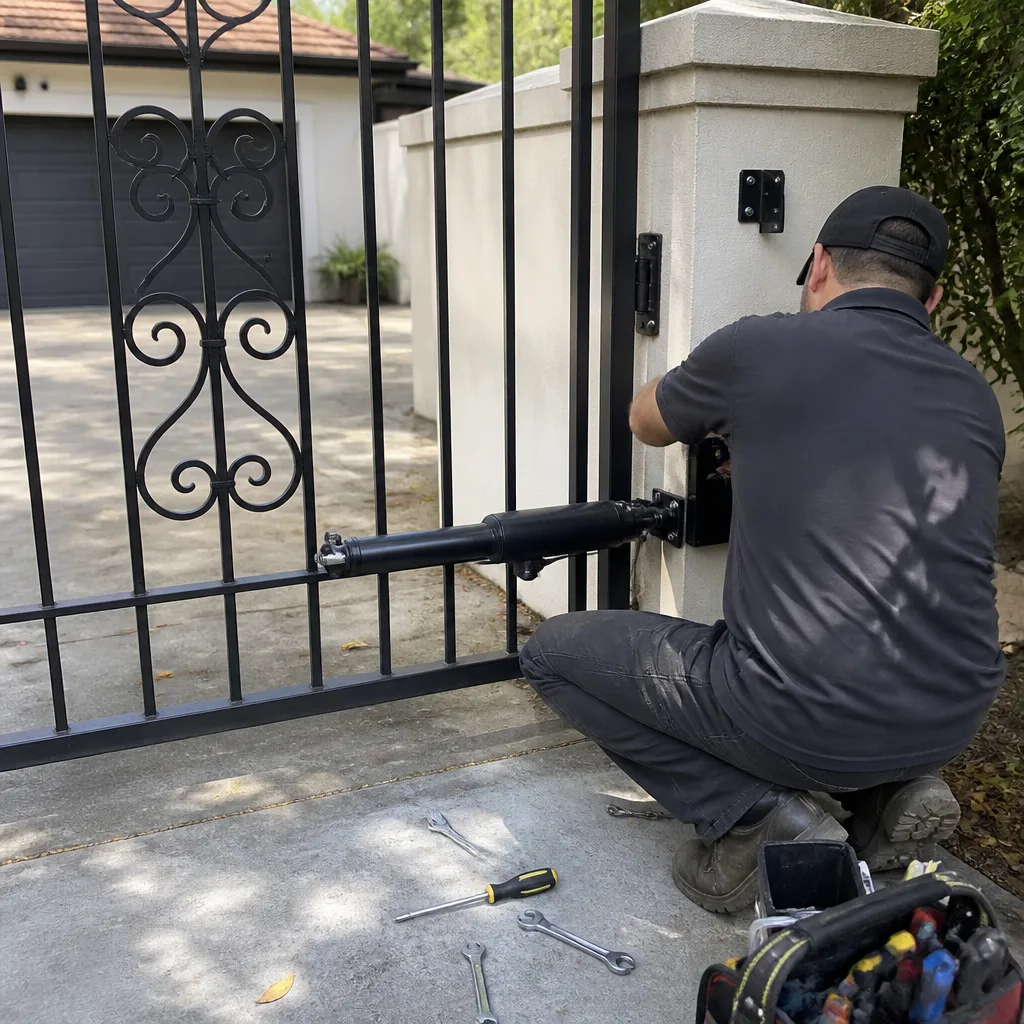 After
AfterGate Repair Warning Signs: A Pasadena Homeowner’s Reference Guide
Every gate repair guide published in the last decade lists “unusual noises” as a warning sign. None of them tell you which specific noise maps to which failure, what it costs to fix now versus later, and how many weeks you have before a $40 adjustment becomes a $1,400 operator replacement. This guide is different. It’s built from 22,000 gate service records, written by a Pasadena company that documents every limit-switch reading, every hinge measurement, and every weld inspection the same way a commercial access-control contractor would. By the time you finish reading, you’ll be able to stand at your own driveway in Pasadena, listen to your gate for twenty seconds, and know whether you’re hearing an adjustment, a repair, or a countdown.
Quick Answer
A gate needs professional attention when it takes more than 18 seconds to complete a full swing, reverses without a visible obstruction twice in a day, makes a grinding or clicking noise that wasn’t there last month, or shows a hinge gap wider on one side than the other. In Pasadena, where summer heat and clay soil movement stress gate hardware year-round, these thresholds are the earliest reliable predictors of failure. Most warning signs caught in the first 30 days cost under $200 to fix; the same signs ignored for six months typically become $900 to $2,800 replacement jobs.
Table of Contents
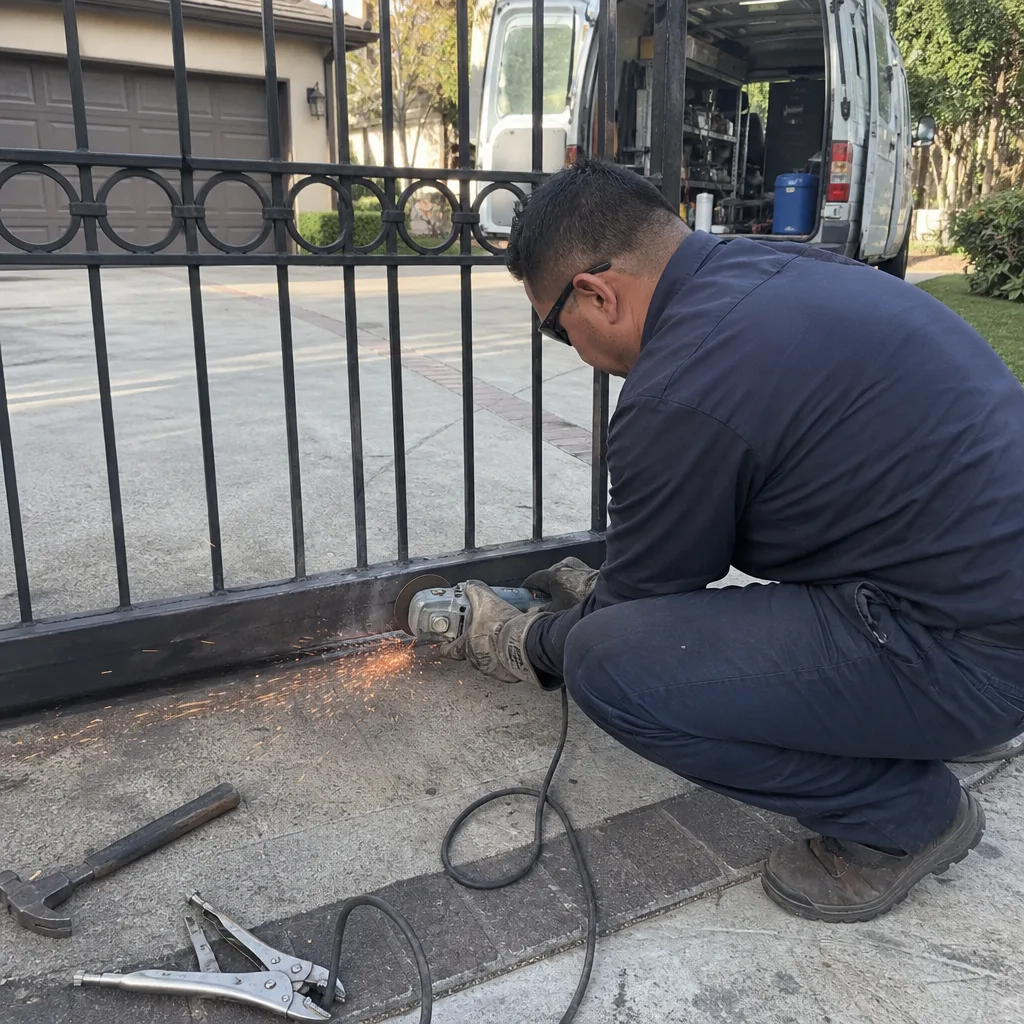
- The Noise-by-Noise Diagnostic Index
- Performance Thresholds That Predict Failure
- Adjustable or Failing: How to Tell the Difference
- Visual Warning Signs on the Gate Structure
- The Warning Signs Pasadena Homeowners Dismiss for Months
- How to Photograph Gate Wear So It Shows Progression
- Why Your Gate Reverses Mid-Cycle: A Diagnostic Walkthrough
- Remote Response Delay: What the Numbers Mean
BeforeAfterThe Noise-by-Noise Diagnostic Index
Your gate motor makes noise. That’s not the warning sign. The warning sign is a change in character, pitch, timing, or volume. Here’s what each specific sound indicates, based on what our technicians document in Pasadena driveways every week.
Grinding or scraping during travel
This is almost always the drive chain or belt dragging across a worn tensioner, or the gate wheel running dry on its track. If the sound is constant while the gate moves, look at the chain first. If it’s intermittent, cycling with each wheel revolution, it’s the wheel bearing. Addressed now: chain tension adjustment or wheel bearing replacement runs between $120 and $240 in Pasadena. Ignored for 3 to 6 months: the chain strips, the tensioner seizes, and the operator burns out attempting to pull against it. That’s a $900 to $1,600 operator replacement.
Clicking at the end of travel
A click is the limit switch engaging, and it’s the least expensive sound on this list because it’s often a calibration issue, not a parts failure. The limit switch tells the motor where to stop. When it drifts out of position, the gate may stop short or slam into the post. A technician re-sets the limit, photographs the new position, and the problem is resolved. Cost: $85 to $150 in Pasadena. But a clicking that happens repeatedly in rapid succession, like a machine-gun burst, is a failing limit-switch microswitch inside the operator housing. That’s a $180 to $290 part replacement.
Humming without movement
A motor that hums but doesn’t turn is the classic capacitor failure. The capacitor is the electrical kick-start component that gets the motor spinning. In Pasadena’s summer heat, capacitors in gate operators fail more frequently than in coastal climates, because sustained temperatures above 95 degrees accelerate dielectric breakdown. Replacing a capacitor runs $140 to $220. If you keep pressing the remote while it hums, you’re forcing current through a dead component, which overheats the motor windings. That turns a capacitor job into a full motor replacement at $700 to $1,400.
Squealing during the first two inches of travel
A sharp squeal right at startup is usually the drive belt slipping on the pulley, or the gearbox running dry. On LiftMaster operators, the gearbox is a known wear item, and it announces itself with exactly this sound. Gearbox replacement on a LiftMaster in Pasadena runs $250 to $450, depending on the model. Belt tensioning is an $95 to $125 adjustment. The tell: if the squeal fades as the gate picks up speed, it’s the belt. If it’s consistent through the entire cycle, it’s the gearbox.
Thumping or knocking from the post
When you hear a dull thump as the gate passes the halfway point, the gate leaf is shifting on its hinge. The sound is metal-on-metal movement that shouldn’t exist. This is structural, not mechanical. Tightening the hinge bolts and shimming the gate leaf back to plumb typically runs $180 to $280. Left for another season, the hinge welds fatigue, the post leans, and the repair becomes a $900 to $1,800 post-reset and weld job.
Performance Thresholds That Predict Failure
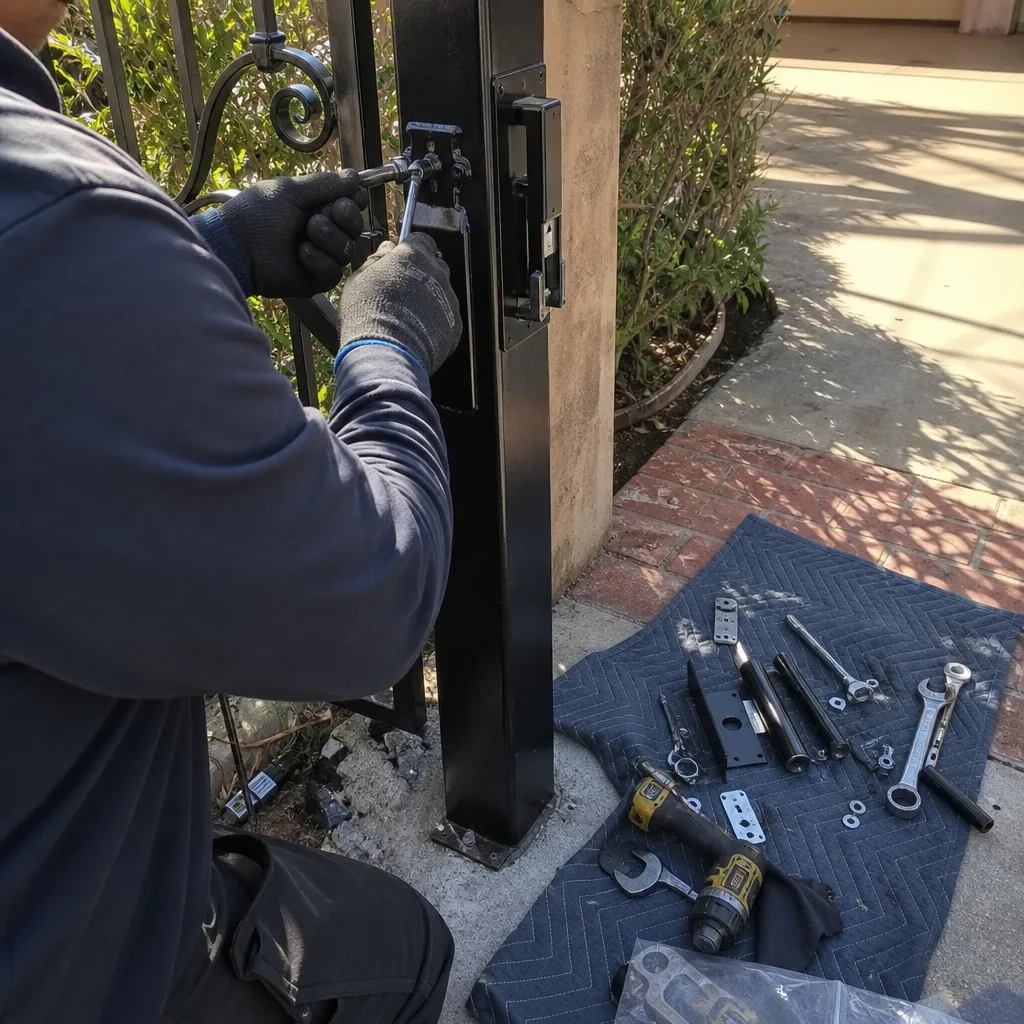
A guide that says “a slow gate is a warning sign” is not useful. Slow compared to what? Here are the specific numbers we use when we document gate health on service calls in Pasadena. Measure your own gate against these thresholds.
Full cycle time: 18 seconds
For a standard 12-foot residential swing gate leaf, 14 to 16 seconds is a healthy full-open or full-close cycle. At 18 seconds or more, the operator is working harder than it was designed to work. The cause is usually one of three things: low operator output from a degrading capacitor, increased mechanical resistance from hinge wear or track debris, or a misaligned drive system. All three are repairable if addressed when the threshold is crossed. Repair costs at this stage run $150 to $400. If the cycle time keeps climbing past 20 seconds and the problem is ignored, the operator’s duty cycle gets abused, the control board overheats, and the replacement bill lands between $900 and $1,800, not including labor.
Reversal frequency: twice a day
Every automatic gate has a safety reversal mechanism, typically a photo-eye beam pair or a contact edge, that stops and reverses the gate when something crosses the path. False reversals, when the gate reverses with nothing there, are the earliest sign of a failing photo-eye alignment, a dirty lens, or an obstruction-sensor circuit going bad. One false reversal a week is noise. Twice a day is a pattern. In Pasadena’s dry season, dust accumulation on photo-eye lenses is the most common cause, and cleaning plus realignment costs $95 to $140. If the sensors are clean and the reversal persists, the photo-eye circuit or the control board is at fault, and that’s a $220 to $450 repair. Ignoring it until the gate refuses to close at all converts a small repair into an emergency service call and often a circuit board replacement at $450 to $800.
Remote response delay: 2 seconds
Press the button. Count. A healthy gate operator responds in under one second. When the delay stretches to two seconds or more, or when the gate sometimes doesn’t respond to the first press, you’re looking at a failing receiver board, a weak remote battery, or interference. Battery replacement is trivial and costs less than $10. Receiver board degradation is not trivial: it’s typically a $180 to $320 repair on brands like DoorKing and Elite. The threshold matters because receiver boards rarely fail instantly. They fade. Two seconds becomes three, then intermittent, then dead. Catching it at two seconds keeps the repair in the hundreds. Missing it until the gate won’t open at all is how Pasadena homeowners end up with their car trapped in the driveway at 7 a.m., which is not a cheap service call.
Adjustable or Failing: How to Tell the Difference
The single most expensive mistake in gate repair is paying for a calibration when a part is failing, or replacing a part that only needed calibration. Both errors happen constantly in Pasadena because the symptoms present identically to an untrained eye. Here’s the difference.
The limit-switch calibration scenario
Your gate stops three inches short of the post. Or it slams into the post and bounces back. On most operators, including Mighty Mule and Ghost Controls models, this is a limit-switch drift issue. The limit switch is a small mechanical or magnetic sensor that tells the control board where the gate is. It drifts out of position over time, especially in Pasadena where temperature swings between summer and winter shift metal components by measurable fractions of an inch. A technician opens the operator housing, checks the switch position against the gate’s actual travel, re-sets it, and photographs the new reading. Cost: $85 to $150, and often included as part of a broader service call. No parts are replaced.
The worn-motor-capacitor scenario
Same symptom: the gate stops before it reaches the post. Different cause: the motor is losing torque because the capacitor is worn, so the gate gives up before completing the cycle. An untrained eye sees a gate stopping short and assumes the limit switch. But the distinction is audible if you listen for it: a limit-switch problem stops quietly, while a capacitor problem often hums or buzzes right before the gate stops. A technician with a meter checks the capacitor’s microfarad reading against the manufacturer’s spec. If it’s out of range, the fix is a $140 to $220 capacitor replacement, not a limit-switch adjustment.
The $0 diagnosis that pays for itself
Here’s the practical takeaway: if your gate stops short, slams, or acts erratic, the correct first step is measurement, not replacement. A documented diagnostic visit in Pasadena costs between $85 and $125 for the labor hour, and it tells you whether the next step is a wrench adjustment or a parts order. We’ve seen homeowners replace entire operators, $1,200 or more, when the actual problem was a limit switch that took 20 minutes to re-set. This is why our Gate Repair in Pasadena service always includes a written diagnostic with the specific readings taken, so you can see the evidence for whatever repair we recommend.
Visual Warning Signs on the Gate Structure
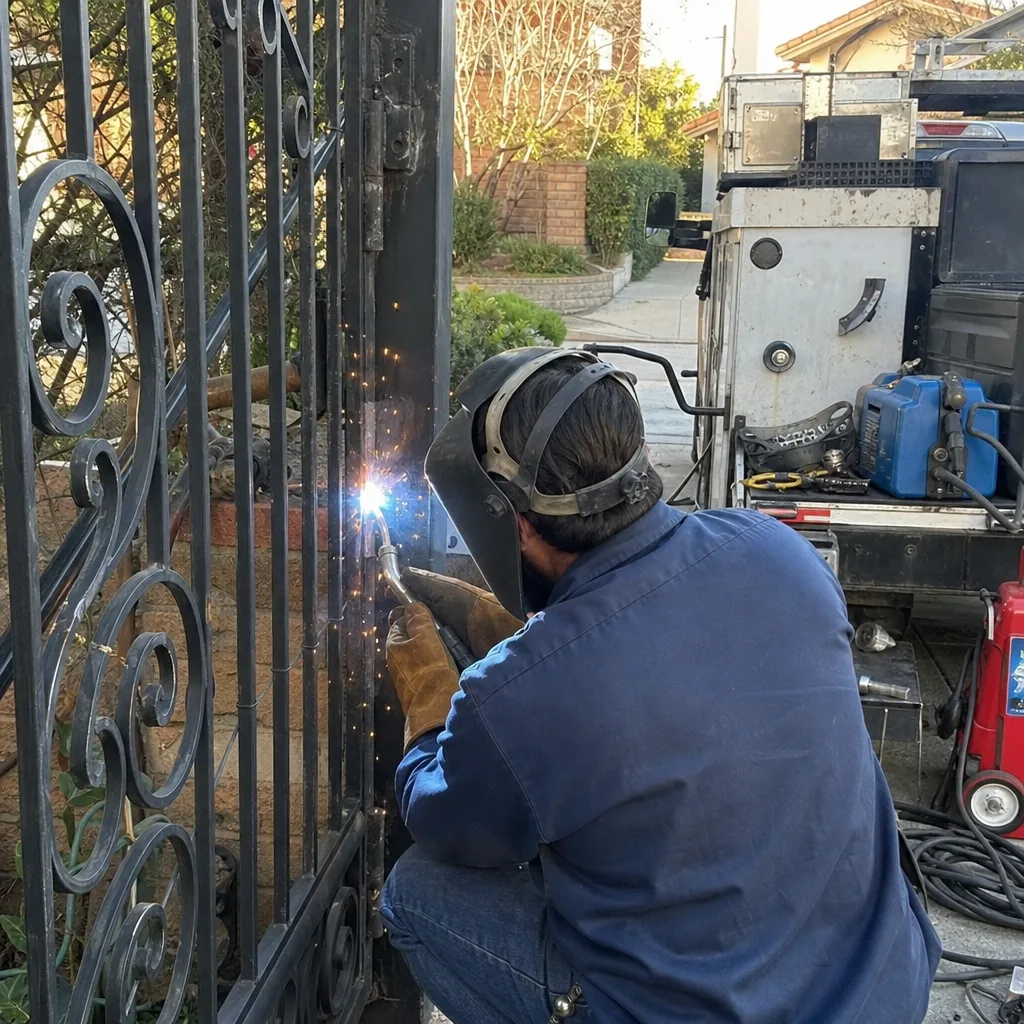
Not all warning signs are audible. Some are visible, and the most serious ones involve the gate structure itself, not the motor. Structural warning signs cost less to fix than mechanical ones only if they’re caught in the first months. Miss them, and the repair becomes a replacement.
Hinge gap asymmetry
Stand back and look at the gap between the gate leaf and the post, top to bottom. Is the gap wider at the top than at the bottom? Or vice versa? A gate that is properly hung has a consistent gap, typically a quarter-inch to half-inch, along the full height of the hinge side. Gap asymmetry means the gate leaf is sagging, which means the hinge or the post is moving. On a welded steel gate, the fix is shimming, bolt tightening, or re-welding a hinge plate, typically $180 to $350 in Pasadena. If the post itself is leaning, the fix involves digging out the post footing, re-setting it in concrete, and re-hanging the gate: $900 to $1,800. The visual check takes 30 seconds and the difference in cost between stage one and stage two is the price of an entire gate motor.
Weld-point rust patterns
Rust at a weld joint is different from surface rust on the gate body. Weld-point rust is orange, flaky, and follows the weld seam specifically. It means moisture has penetrated the weld and is spreading along the joint. In Pasadena’s occasional winter rain, weld-point rust on steel gates appears quickly, especially at the bottom hinge weld and where cross-members meet the frame. Surface rust can be wire-brushed and sealed for $200 to $400. Weld-point rust requires grinding out the old weld, re-welding the joint, and re-coating, typically $350 to $600 per joint. If the rust has caused visible metal loss, that section of gate must be replaced, pushing the cost to $1,000 or more. This is one of the most frequent findings on older steel gates in Pasadena’s Craftsman-era neighborhoods.
Post lean
Use the edge of your house or a fence line as a visual reference. A gate post should be perfectly plumb. If it leans even slightly outward or inward, the post footing is shifting. In Pasadena, clay soil expands and contracts with moisture changes, and over years, this movement works gate posts loose. A post that is simply loose can sometimes be stabilized with additional concrete and a re-set, costing $450 to $900. A post that is actively leaning and swinging the gate with it is a structural hazard and needs a full footing re-set. This is the most expensive structural repair on the list, at $1,200 to $2,200 in Pasadena, and it’s the one most likely to be discovered during a gate opener inspection rather than by the homeowner, because the change happens so gradually.
Ground clearance change
Watch the bottom edge of the gate as it opens and closes. Does the clearance gap stay consistent? If the gate scrapes the driveway at certain points in its travel, the hinge block is worn or the gate has sagged. A gate that scrapes at the same spot every cycle is applying constant lateral force to the hinge, which accelerates the wear. The fix at this stage, a hinge block replacement, runs $150 to $300. The ignored version, a hinge that shears off and drops the gate leaf, is a four-figure repair and possibly a damaged vehicle.
The Warning Signs Pasadena Homeowners Dismiss for Months
We track our own service records, and the pattern in Pasadena is consistent. Homeowners dismiss certain warning signs for six to twelve months, usually because the gate still opens and closes, and eventually the repair invoice lands at four or five times the original cost. Here are the most frequently dismissed signs and what they cost when they’re finally addressed.
The gate that slowly gets slower
Dismissed because: “It still opens.” Over six to twelve months, the cycle time creeps from 15 seconds to 22 seconds, and the operator is running at roughly 150% of its designed load. By the time the homeowner calls, the control board has been overheated, the capacitor is gone, and the motor is damaged. The original fix, a hinge adjustment or capacitor replacement at $120 to $220, is now a full operator replacement at $1,100 to $1,700. In Pasadena, where many homes have custom steel driveway gates that require operator sizing, the replacement cost can run higher if the original operator was undersized to begin with.
The gate that chatters at the latch
Dismissed because: “It’s just a little rattle.” The latch, the striker, or the close-stop is out of alignment, and every cycle hammers the misalignment deeper. Six months later, the latch has torn loose from the gate frame or the post, and the repair is a weld job and re-alignment for $400 to $800 instead of a $95 latch adjustment. In older Pasadena gates with original bronze or iron latch hardware, finding matching replacement parts can add weeks to the timeline.
The gate that doesn’t close on the first try
Dismissed because: “I just press the button again.” Each failed close cycle is the control board receiving a command and failing to execute it, usually due to photo-eye misalignment or a failing safety circuit. The repeated command attempts stress the board’s output relays. When the relay finally burns out, the board is dead, and the repair is $450 to $800. The original fix was a photo-eye realignment at $95 to $140.
The gate that is loud in cold weather
Dismissed because: “It only happens when it’s cold.” Pasadena’s winter mornings are not harsh, but the temperature drop is enough to thicken old grease and expose wear in bearings and gearboxes. The complaint resolves when the day warms up, so the homeowner forgets about it. But the underlying wear continues. Ten months later, the gearbox seizes on a January morning, and the operator replacement cost is $1,200 or more. A gearbox lubrication and seal replacement at the first cold-weather squeak would have run $180 to $300.
How to Photograph Gate Wear So It Shows Progression
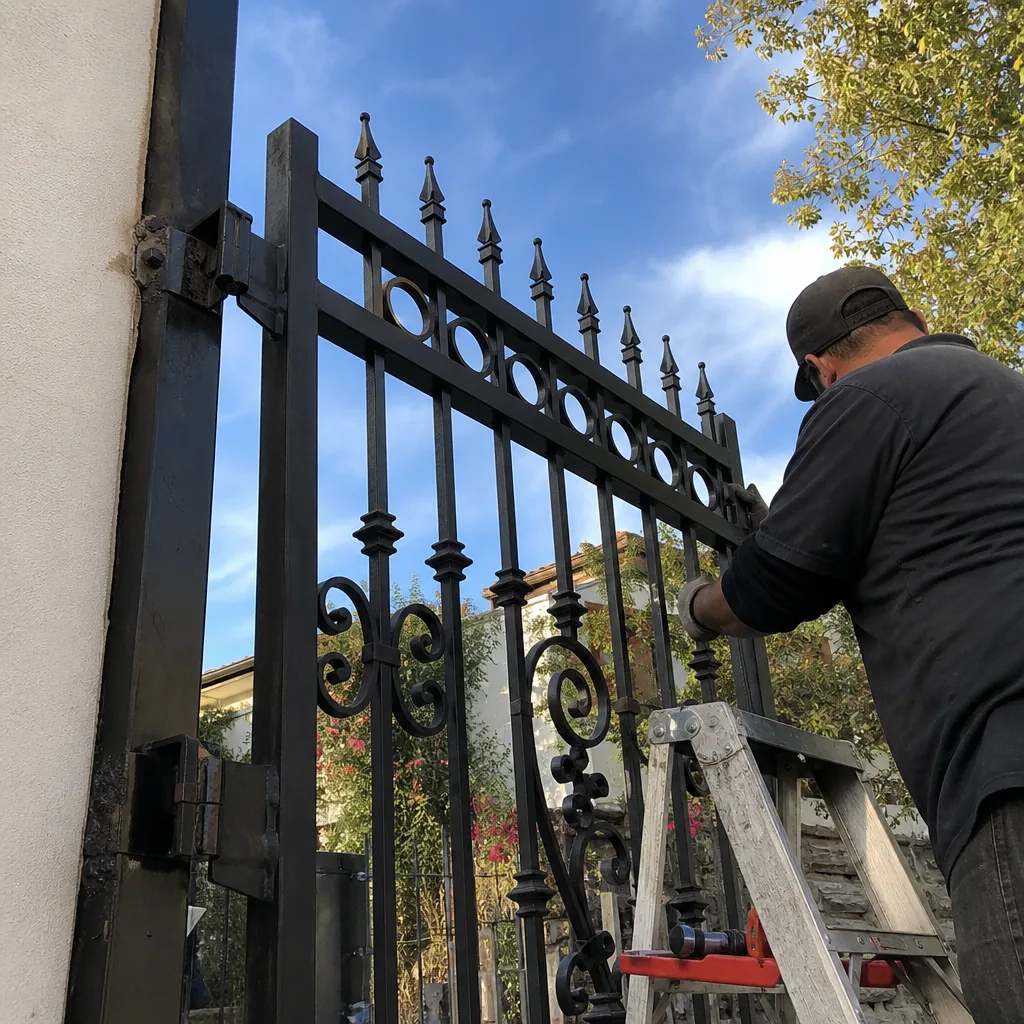
You don’t need a technician’s eye to document gate wear. You need a consistent camera angle and a reference point. This is exactly what our technicians do on every service visit in Pasadena, and it’s the same standard we leave with every homeowner, under Clause 4 of our Haven Standard: documented photo evidence on every visit.
- Stand in the same spot every time. Pick a location, mark it mentally or with a piece of tape on the driveway, and photograph from there. Hinge gaps and post lean are impossible to compare across photos taken from different angles.
- Photograph the hinge side first. Include the full height of the post and the gate edge in one frame. This is the money shot for tracking gap asymmetry.
- Photograph the latch side second. The gap between the latch and the striker is your alignment indicator. If it changes week to week, the gate is shifting.
- Photograph the motor or operator housing. Open the cover and photograph the capacitor, wiring, and any visible wear on the drive belt or chain. Don’t touch anything inside. Just document.
- Photograph any rust or paint cracking at the weld joints. Use your phone’s zoom, but don’t use digital zoom past 2x. A physically closer photo is always sharper.
- Store photos in dated folders. Six months of dated hinge-gap photos is diagnostic evidence that is as useful to a technician as a service history. It tells us whether the gap opened gradually or suddenly, which changes the diagnosis.
This habit costs ten minutes a month and transforms a vague “my gate seems different” complaint into a documented progression that any qualified repair shop in Pasadena can act on immediately. It’s the difference between paying for diagnostic time and paying for a repair with a known start point.
Why Your Gate Reverses Mid-Cycle: A Diagnostic Walkthrough
A gate that reverses mid-cycle is one of the most common complaints we hear in Pasadena, and one of the most misdiagnosed. The standard assumption is that the photo-eye is blocked. Sometimes that’s true. Often it isn’t. Here’s the full diagnostic sequence, in order of likely cause.
- Check the photo-eye lenses. Dust, spider webs, and Pasadena’s dry-season airborne grit coat these lenses quickly. Wipe both lenses with a dry cloth. If the gate closes normally after cleaning, the fix was free. If this keeps happening every few weeks, the photo-eyes need re-aiming, $95 to $140.
- Check for physical obstruction. A tree branch, a trash can, a parked car bumper, even a large leaf can cross the beam path. Remove the obstruction and test.
- Check the safety-contact edge. If your gate has a rubber contact edge on the leading face, run your hand along it and press at several points. A contact edge that’s been compressed too many times can develop a flat spot that triggers the circuit falsely. Replacement: $150 to $300.
- Check the close-force setting. If the operator’s close force is set too low, the gate will reverse whenever it meets normal resistance, like wind or a tight hinge. Re-setting the close force is a $95 to $125 adjustment.
- Check the control board. If the first four steps are clean and the gate still reverses, the board’s obstruction circuit is failing. This is the most expensive diagnosis in the sequence, at $350 to $800 for board replacement, but it’s also the least common. Most reversals in Pasadena are dirt or adjustment.
The value of this sequence is that it prevents you from replacing a $500 control board when the real problem is a $3 cleaning cloth and ten minutes of your time. But if you run through the first two steps and the reversal persists, the next step is a service call with a documented diagnostic, not a parts order.
Remote Response Delay: What the Numbers Mean
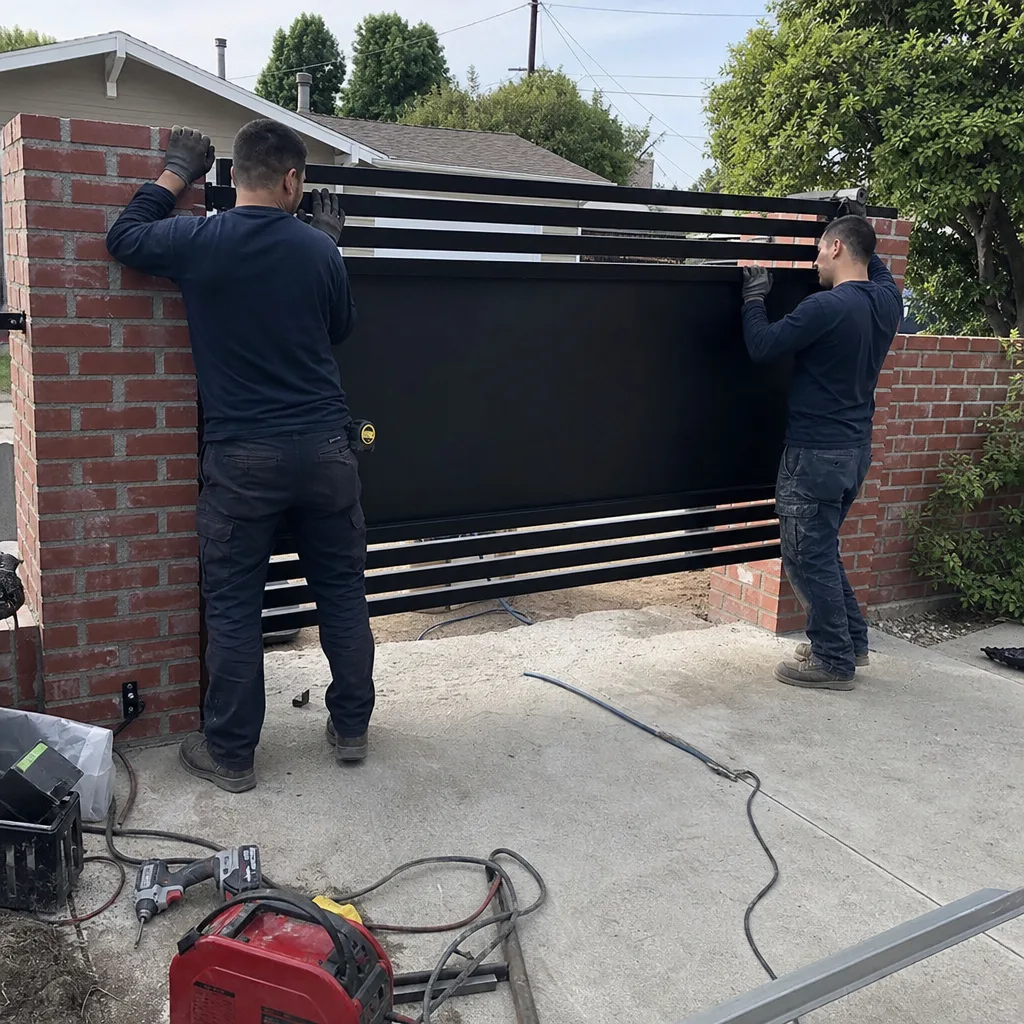
Your gate remote talks to your operator through a radio receiver. The time between pressing the button and watching the gate move is a measurement, not a feeling. Here’s what the numbers tell you.
Under 1 second: normal
The system is healthy. The receiver board is processing the signal, the control board is executing the command, and the motor is responding within spec.
1 to 2 seconds: monitor
This is the first sign of receiver aging, weak remote battery, or signal interference. Change the remote battery first. If the delay persists, note whether it’s consistent or intermittent. A consistent delay suggests a receiver board issue. An intermittent delay suggests interference, possibly from a new wireless device in the house or a neighboring system on a similar frequency.
2 to 3 seconds: service
At this point, the receiver board is degrading. On DoorKing and LiftMaster operators we service in Pasadena, this stage typically responds to receiver board replacement at $180 to $320. Continuing to use the gate at this stage is not damaging the motor, but it’s signaling that the receiver will fail completely, usually within a few months.
Over 3 seconds, or intermittent no-response: emergency
The receiver is failing. The gate may open but not close, or close but not open, or go completely unresponsive. When this happens on a Pasadena home where the driveway gate is the only vehicle access point, it’s a four-figure inconvenience: the car is stuck in or out until the gate is manually released. At this stage, the fix is usually receiver replacement plus a service call at emergency rates.
The takeaway: delay is never normal. If you’ve noticed that your gate takes longer to respond than it did when it was installed, the clock is already running. A diagnostic visit in Pasadena costs less than the receiver board you’ll eventually replace if you wait.
Common Mistakes to Avoid
- Pressing the remote repeatedly when the gate doesn’t respond. Each button press sends a current spike through a circuit that may already be failing. The repair bill doesn’t care how many times you pressed; it cares that the board burned out.
- Ignoring a gate that is slightly slower than it used to be. Speed loss is the earliest performance warning sign we see in Pasadena service records, and it’s the one most often waved off as “it still works.” It won’t for long.
- Spraying the gate hinges with WD-40 as a long-term fix. It quiets the squeak for a few days, but it doesn’t restore lubrication, and it can trap grit in the hinge that accelerates wear. Proper hinge service means cleaning, greasing, and checking the pin fit.
- Calling a general handyman for a gate operator problem. Gate automation involves low-voltage wiring, safety circuits, and brand-specific programming. Most general handymen in Pasadena do fine work on fences, but gate operators are a different discipline. A miswired safety circuit is a genuine safety hazard.
- Waiting until the gate completely fails to call anyone. The most expensive gate repair in our Pasadena service database is always the one that waited. Complete failures remove the option of repairing a component and force replacement instead.
- Replacing the operator without checking the gate structure first. If the gate leaf is sagging, a new operator will burn out the same way the old one did. A structural inspection should always precede an operator replacement, and any shop that skips it is selling you a repeat failure.
When to Call a Professional
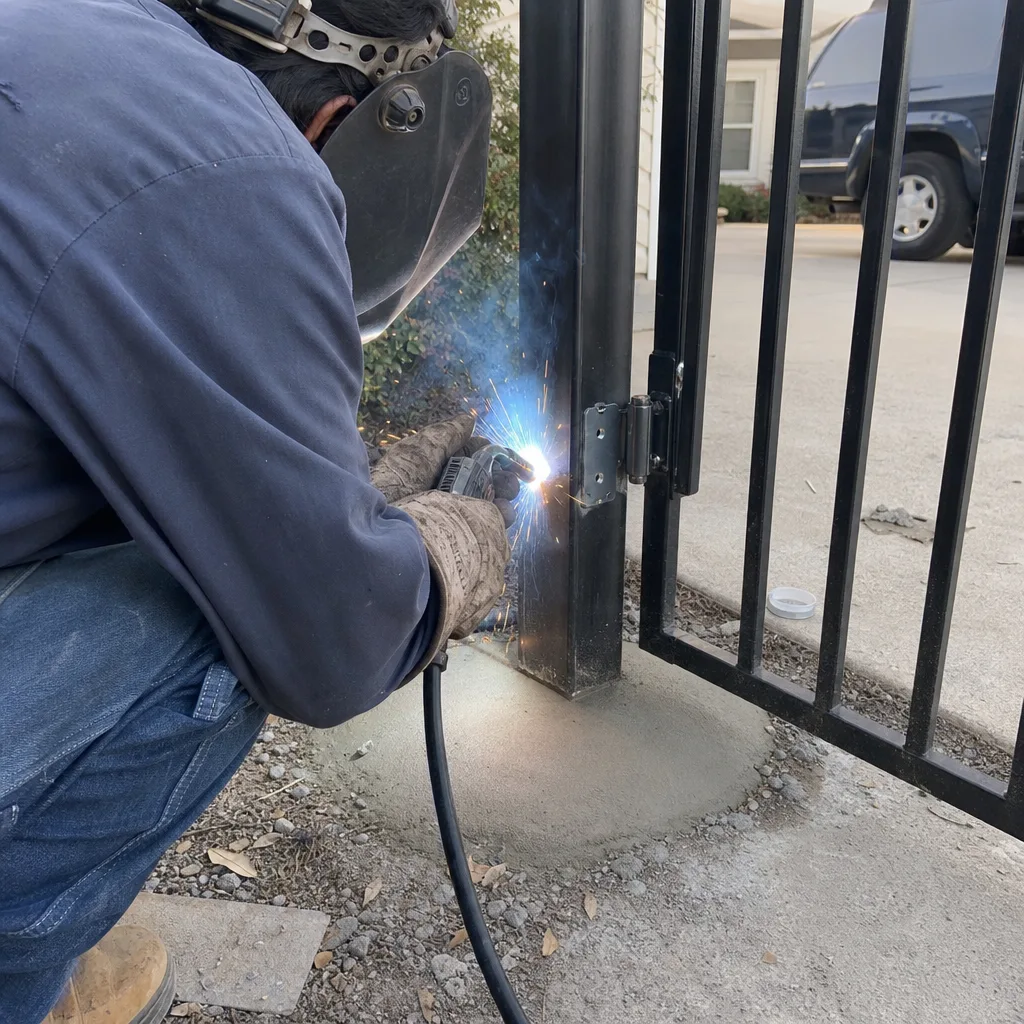
Call a gate repair professional when you’ve hit the thresholds in this guide: cycle time over 18 seconds, two false reversals in a day, remote delay beyond two seconds, a grinding or clicking sound that wasn’t there last month, or any visible hinge-gap asymmetry. These are not “keep an eye on it” situations. They are the earliest possible intervention points where a repair is still inexpensive and quick. If you’re in Pasadena and unsure whether your gate needs attention, take the photos from the progression section and compare them to the thresholds above. Vance Gate Repair Pasadena home diagnostics always include a written finding and a photographed record. For a free estimate in Pasadena, call (626) 624-4196.
If your gate won’t open at all and your car is trapped, that’s an emergency service call, and a live person answers our phone 24 hours a day. Don’t force the gate manually unless you know exactly how to engage the release, and never attempt to lift a gate with a failed hinge or post, because a falling gate leaf is heavy enough to cause serious injury. A trained professional from our Gate Repair services carries the right equipment to secure the gate before working on it.
Frequently Asked Questions
Most Pasadena gate repairs run between $95 and $450, depending on the component. Limit-switch re-calibration runs $85 to $150, photo-eye realignment $95 to $140, capacitor replacement $140 to $220, and gearbox replacement $250 to $450. Operator replacement, when the motor or control board has failed completely, runs $900 to $1,800. Call (626) 624-4196 for a written quote: every estimate at Vance Gate Repair is delivered as a written price before any work starts, so you’ll never face a surprise invoice. For How to Hire a Gate Repair Contractor in Pasadena: A Step-by-Step Guide, see our detailed walkthrough.
The gate is urgent if it won’t close (security risk), won’t open and your vehicle is trapped (access failure), makes a grinding noise during travel (imminent motor failure), or shows a hinge gap that has visibly widened in under a month (structural movement). If you’re unsure, the threshold list in this guide gives you specific numbers to measure against, and a diagnostic visit will answer the question definitively.
In most cases, yes. When the motor itself is still functional, a repair is almost always less expensive than replacement, and component-level fixes are the standard approach at our shop: capacitors, limit switches, receiver boards, photo-eyes, and gearboxes can all be replaced individually. We service nine major automation brands, including DoorKing, Elite, LiftMaster, and Mighty Mule, so the existing operator on your Pasadena property can almost always be repaired rather than swapped out. Explore more guides & resources for additional maintenance tips.
A properly installed and maintained operator in Pasadena typically lasts 10 to 15 years. The climate works against long life: sustained summer heat stresses capacitors and control boards, and clay soil movement stresses the gate structure that the operator must work against. Operators on gates that are structurally out of alignment fail in half that time. The maintenance that extends life most reliably is keeping the gate leaf hung plumb with no hinge play, and keeping the operator’s internal components clean and dry.
A gate repair fixes or replaces a component on an existing gate and operator, normally a one-visit job. A Gate Installation in Pasadena involves new gate fabrication or fitting, new post setting if required, and operator mounting, which is measured, quoted, and scheduled. The two services overlap when a repair reveals structural damage that makes continued patching uneconomical, at which point a written repair-vs-replace comparison is the fair way to decide.
We service all major brands found on Pasadena properties, including LiftMaster, FAAC, BFT, Linear, Viking, Ghost Controls, DoorKing, Elite, and Mighty Mule. This matters because most companies specialize in one or two brands and steer you toward replacing anything else. Our approach is to work on whatever Gate Motor & Opener in Pasadena equipment is already on the property, because a repair on your existing operator is usually the more honest and less expensive solution.
A gate that reverses without a visible obstruction is most often reading a false signal from the photo-eye, caused by dust, spider webs, or misalignment. The second most common cause is a safety-contact edge that has developed a flat spot. If cleaning and realigning the photo-eyes doesn’t resolve it, and the close-force setting is within spec, the obstruction circuit on the control board is the likely culprit. The full diagnostic sequence is in this guide, and at the end of it, you’ll have a definitive answer instead of a guess.
The Bottom Line
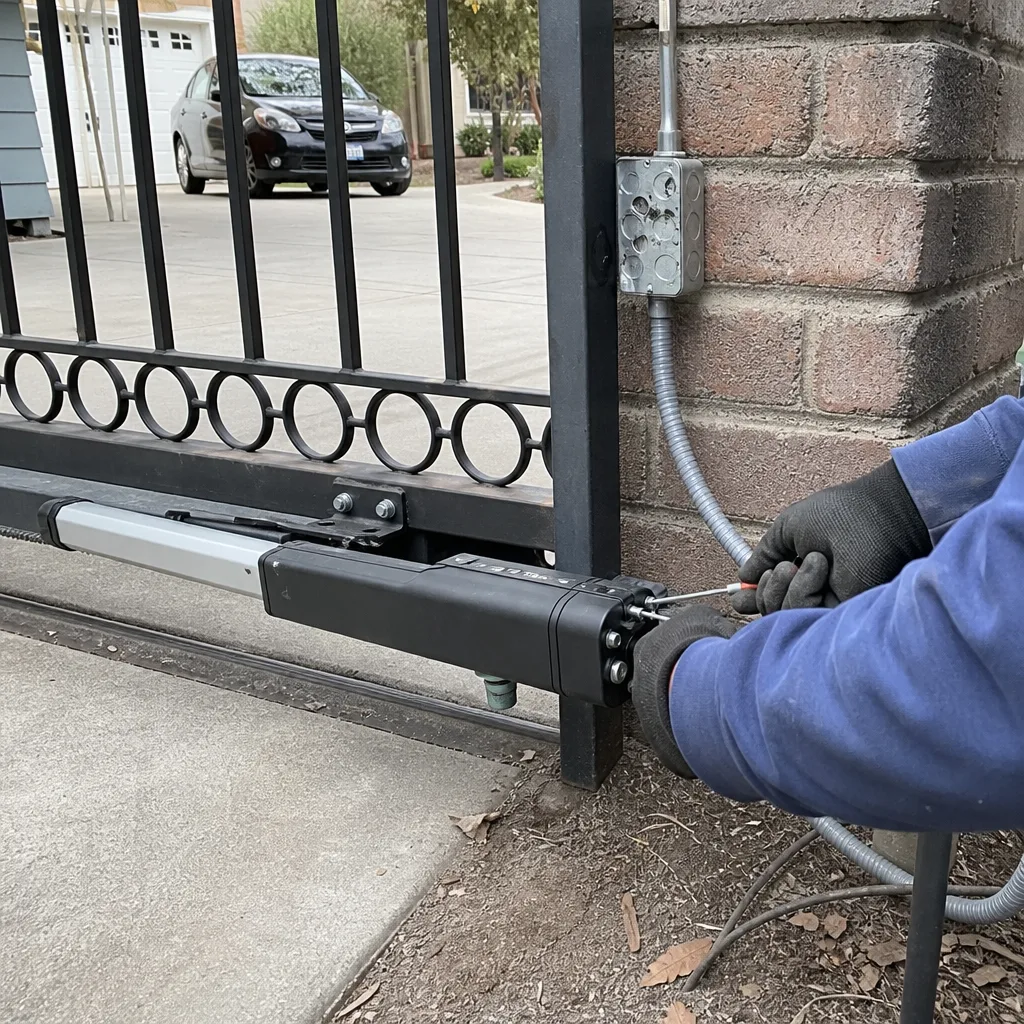
Gate warning signs become manageable when they come with thresholds. Noise, speed, reversal frequency, hinge gaps, and remote response delay are all measurable. If you measure them against the numbers in this guide, you’ll know whether your Pasadena gate needs a $95 adjustment, a $300 component repair, or a $1,500 replacement, and you’ll know it early enough to act while the problem is still small. That’s the entire point. A gate that talks to you is telling you something specific. Listen for the noise, time the cycle, photograph the hinge, and call a professional when the numbers cross the line. For a free written estimate in Pasadena, call (626) 624-4196.
Written by Adrian Vance, Owner at Vance Gate Repair Pasadena, serving Pasadena since 2014.