
Last updated September 20, 2026
Free on-site gate assessment - hinges, posts, and your LiftMaster or Nice gate operator checked before anything is quoted
The assessment is free and the quote is the invoice.
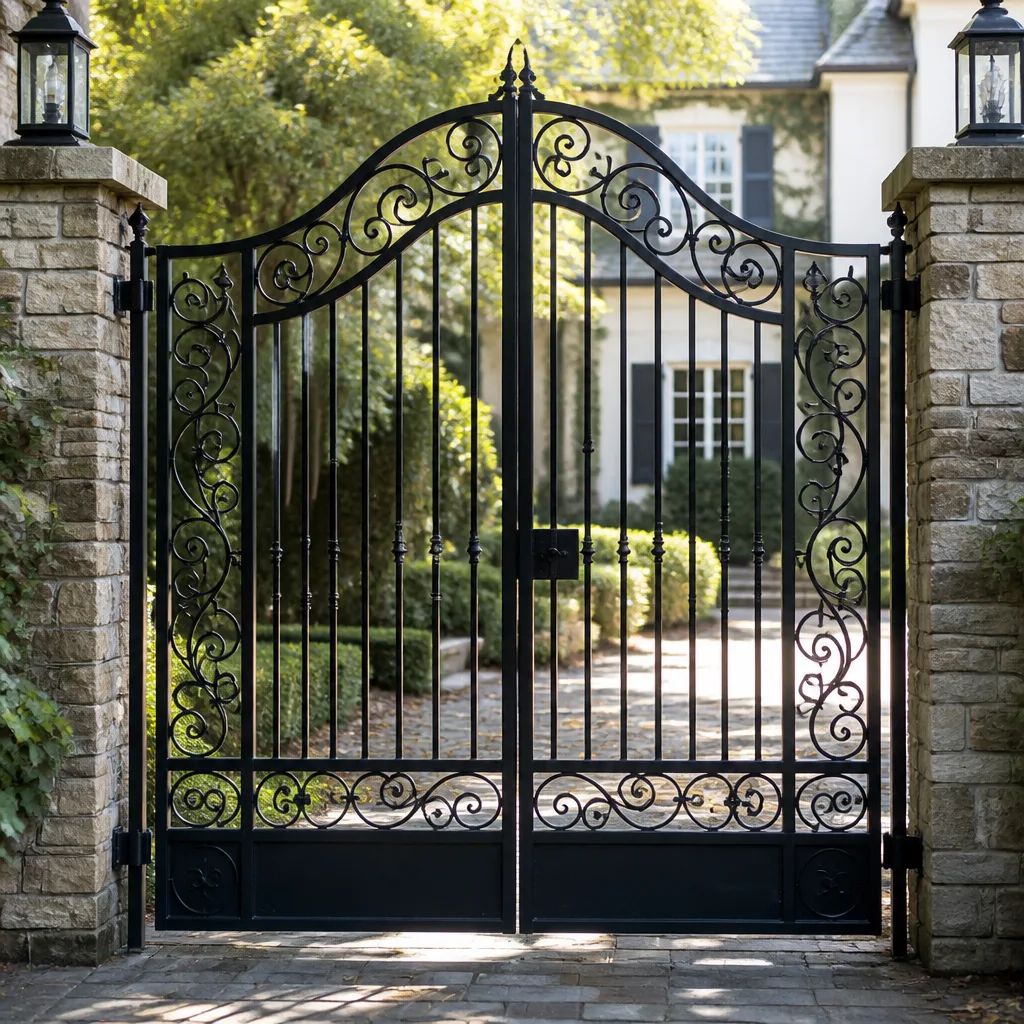
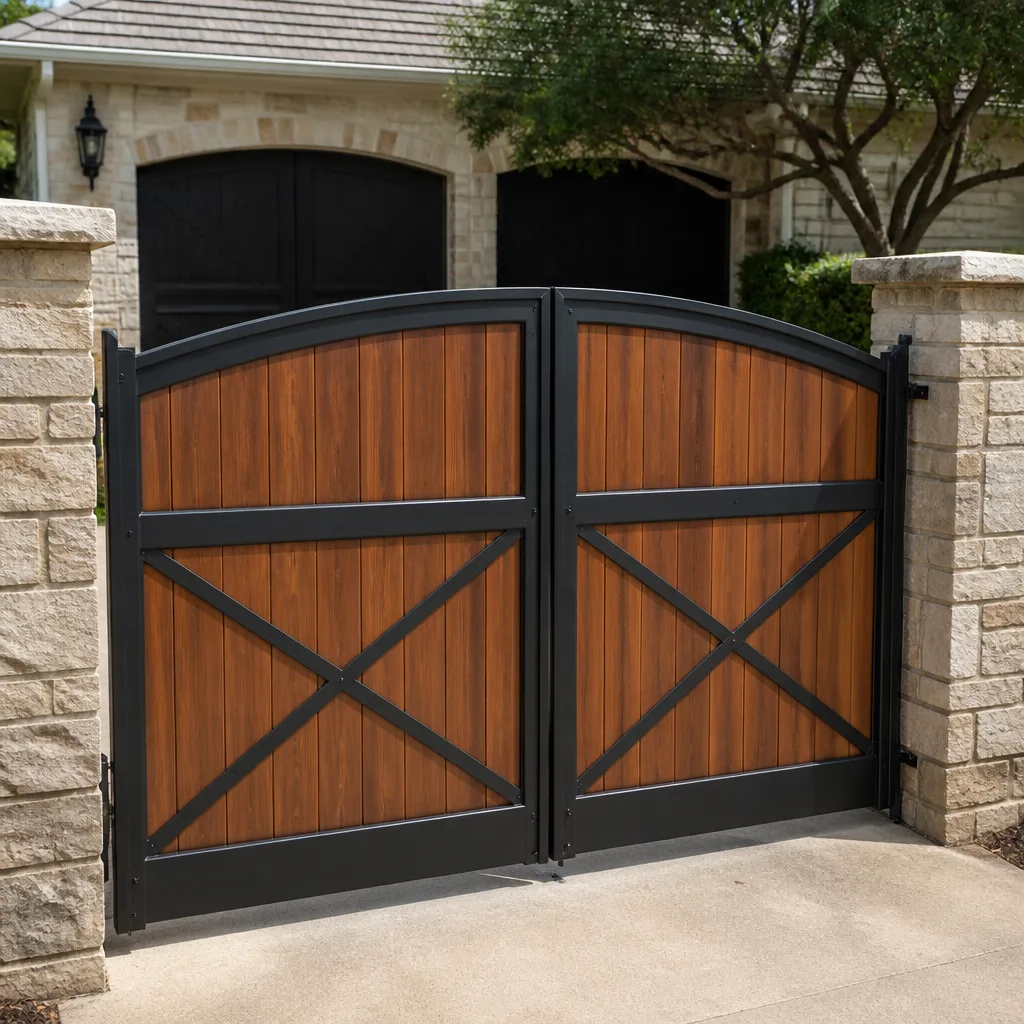
Farm & ranch
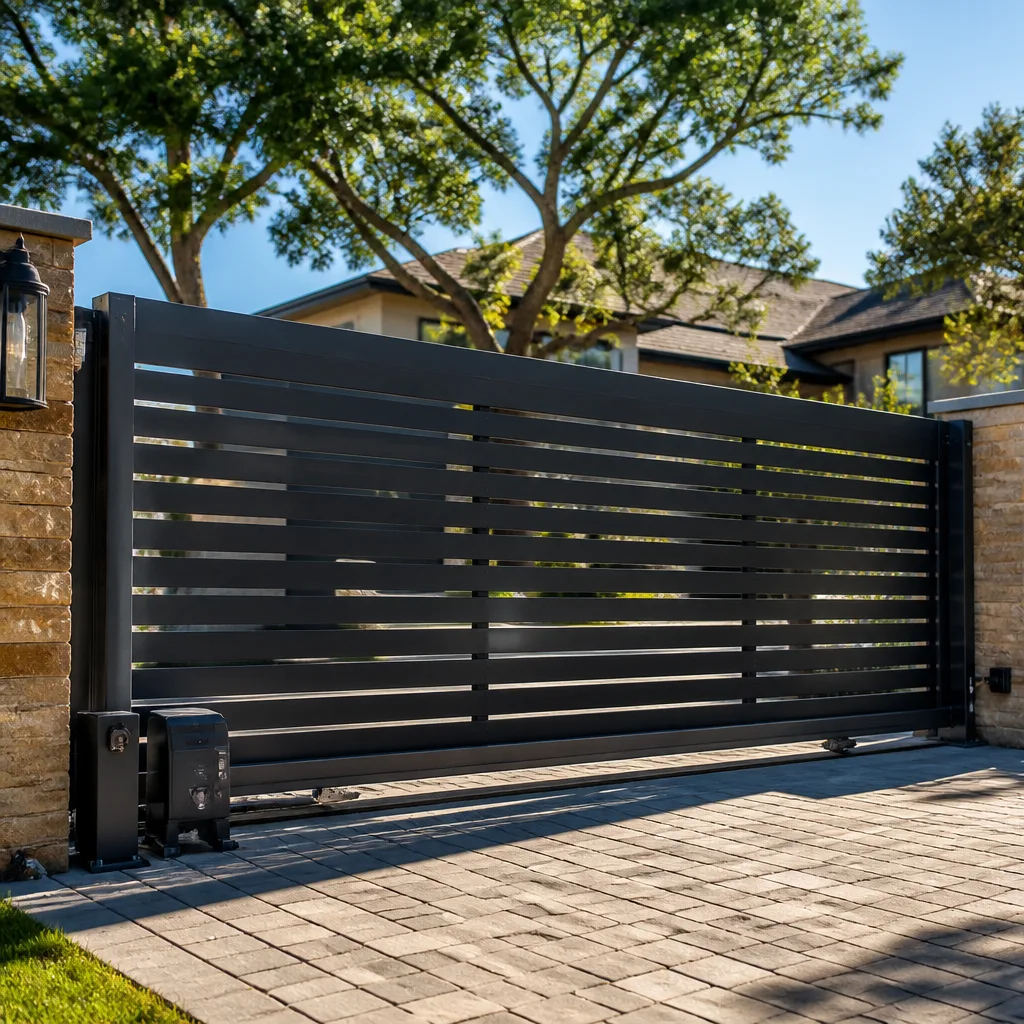
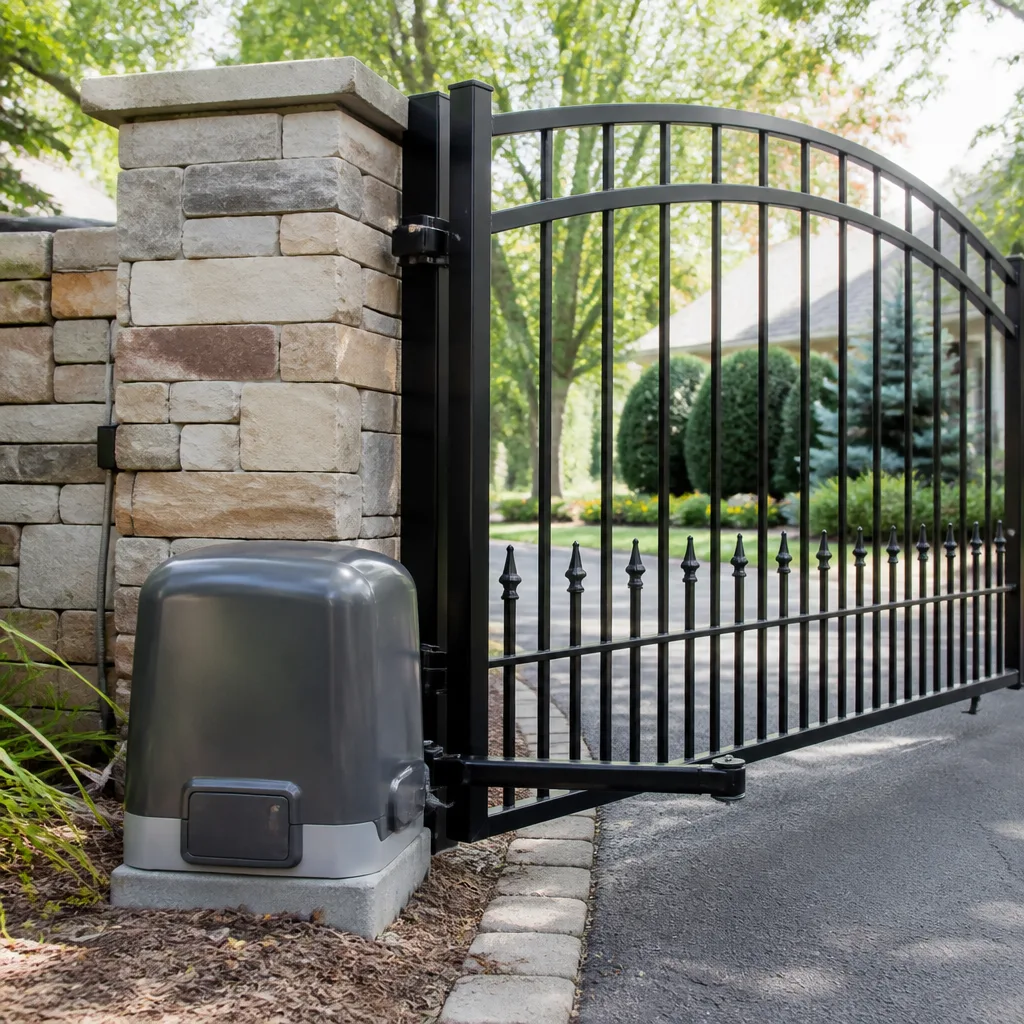
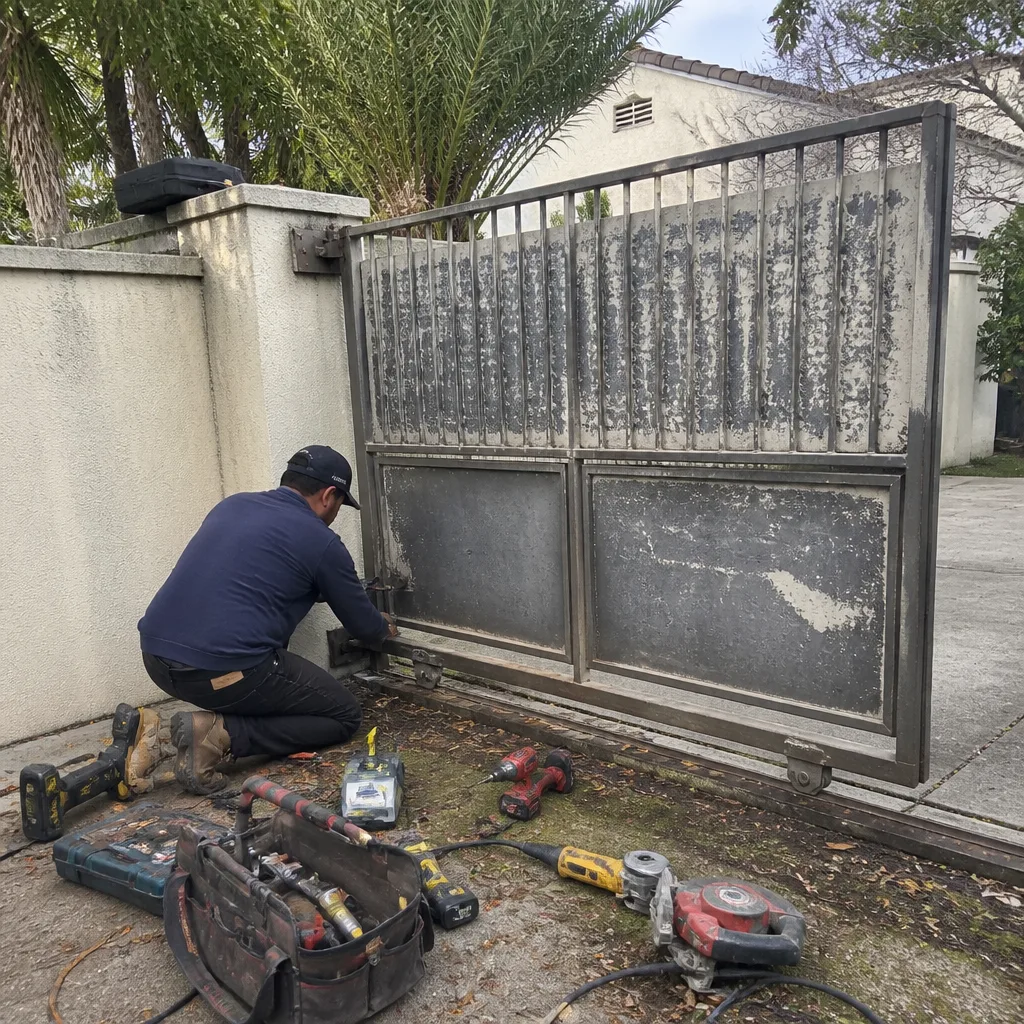 Before
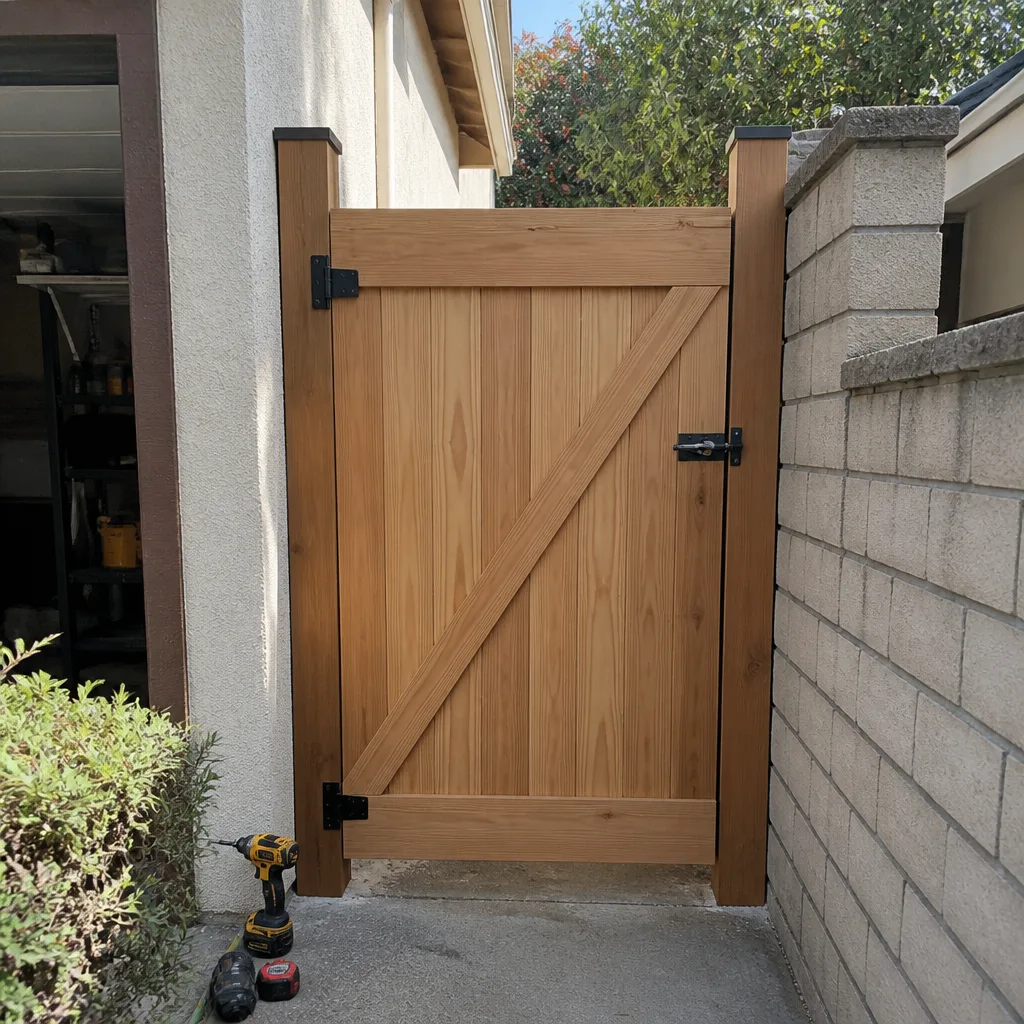 After
After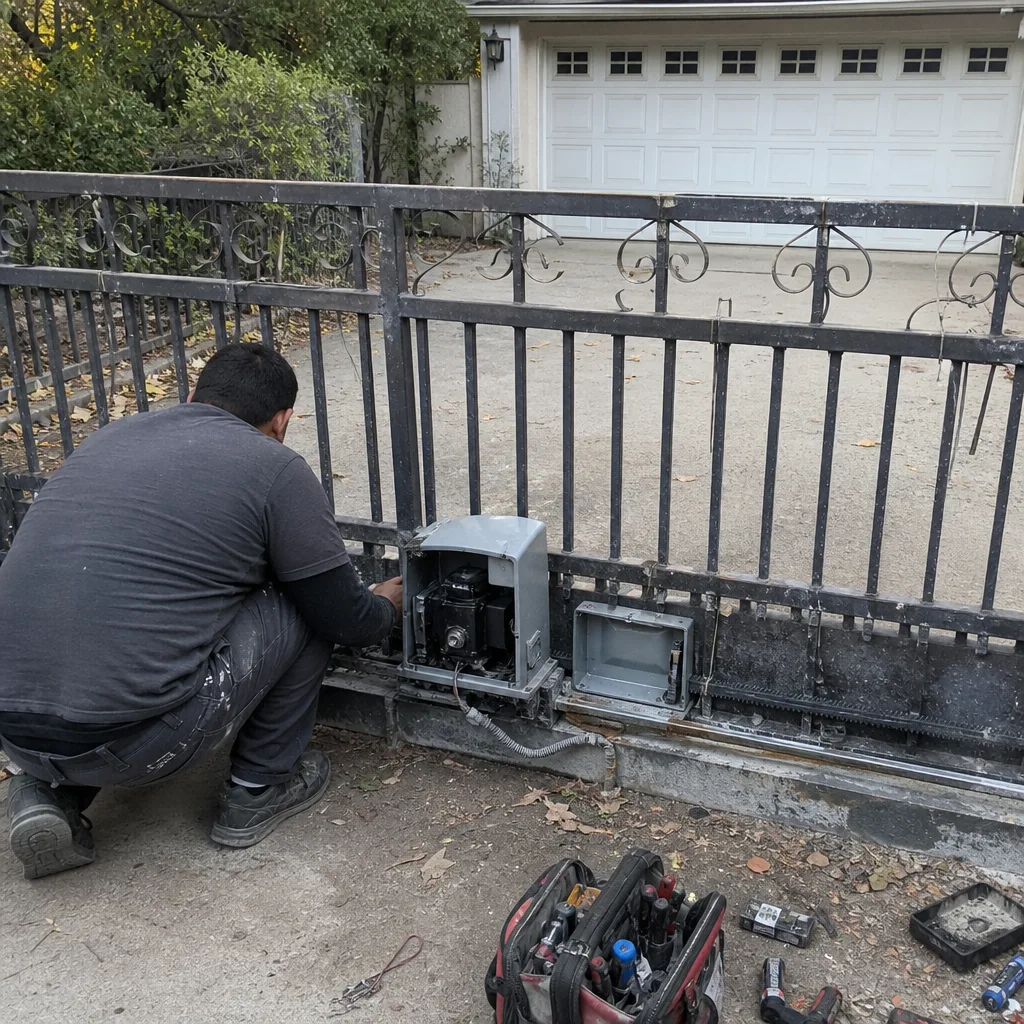 Before
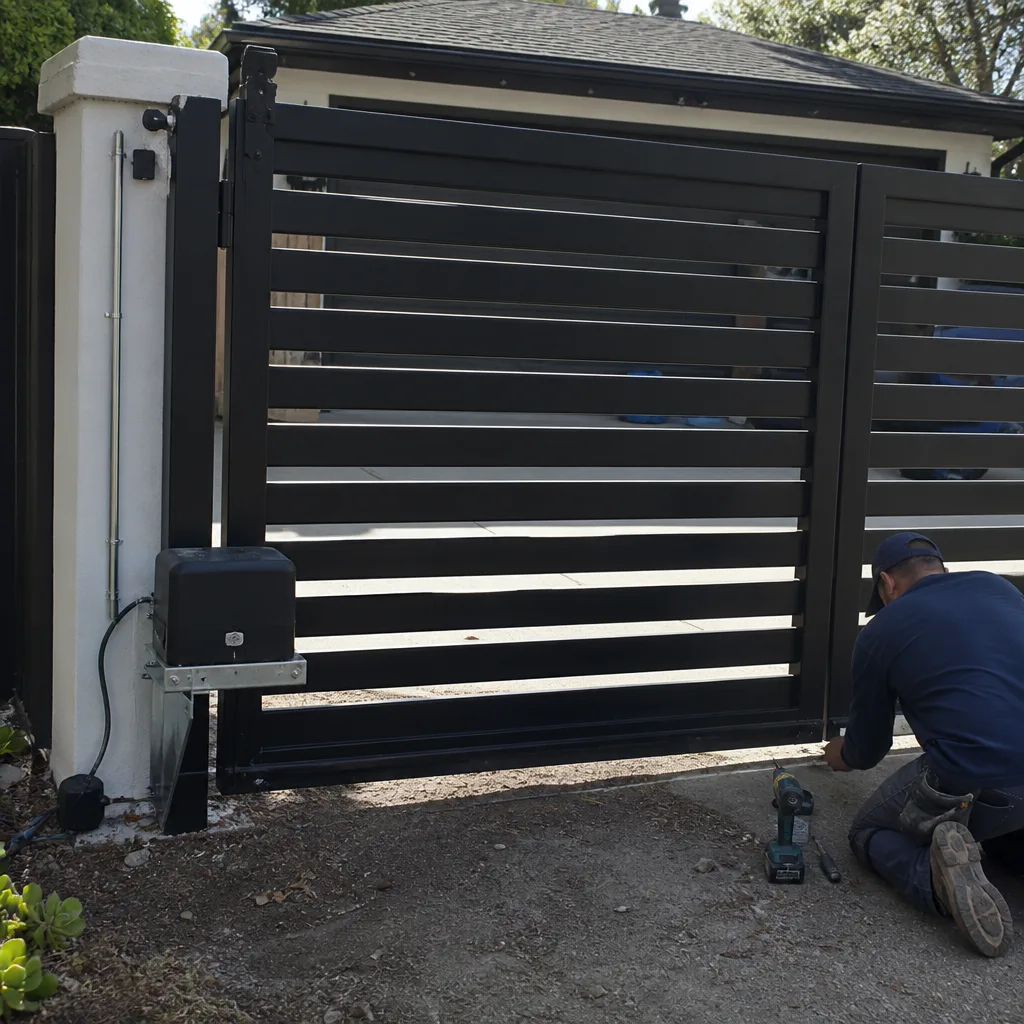 After
After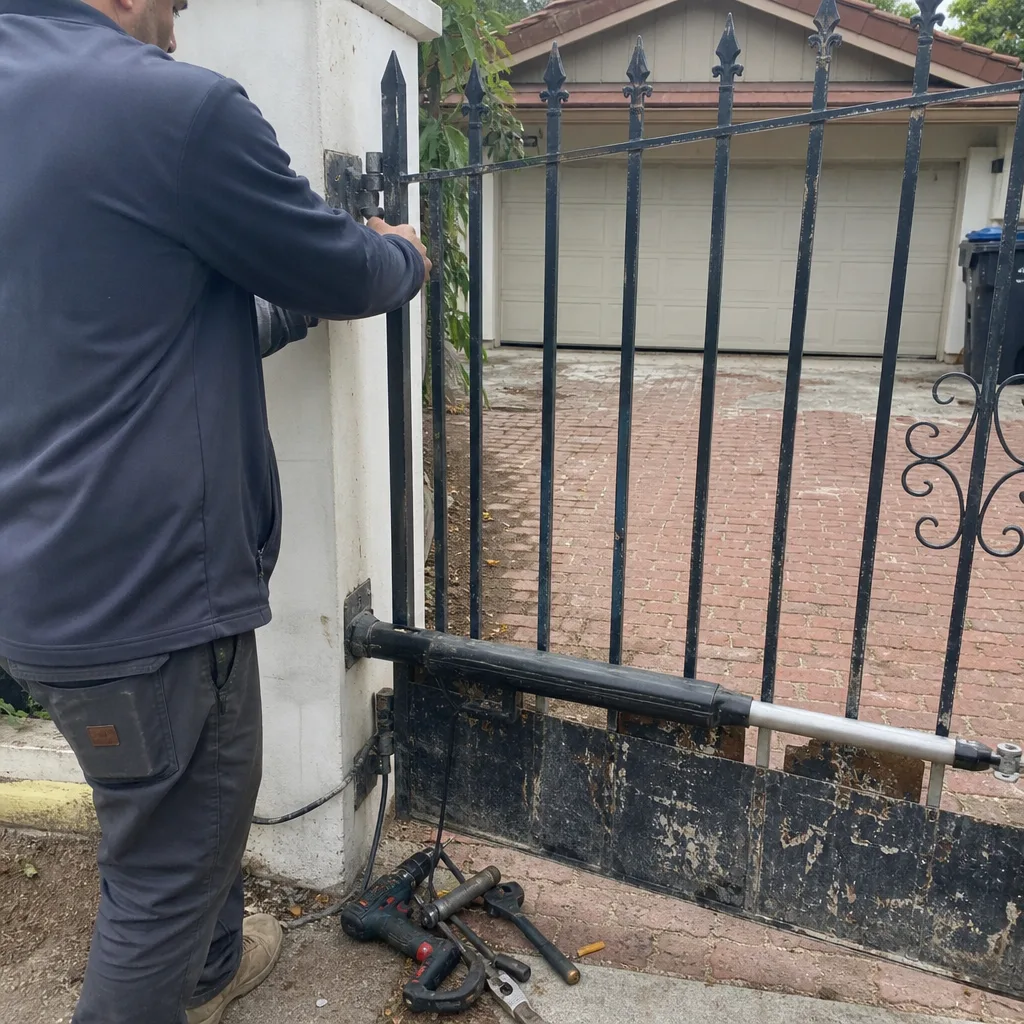 Before
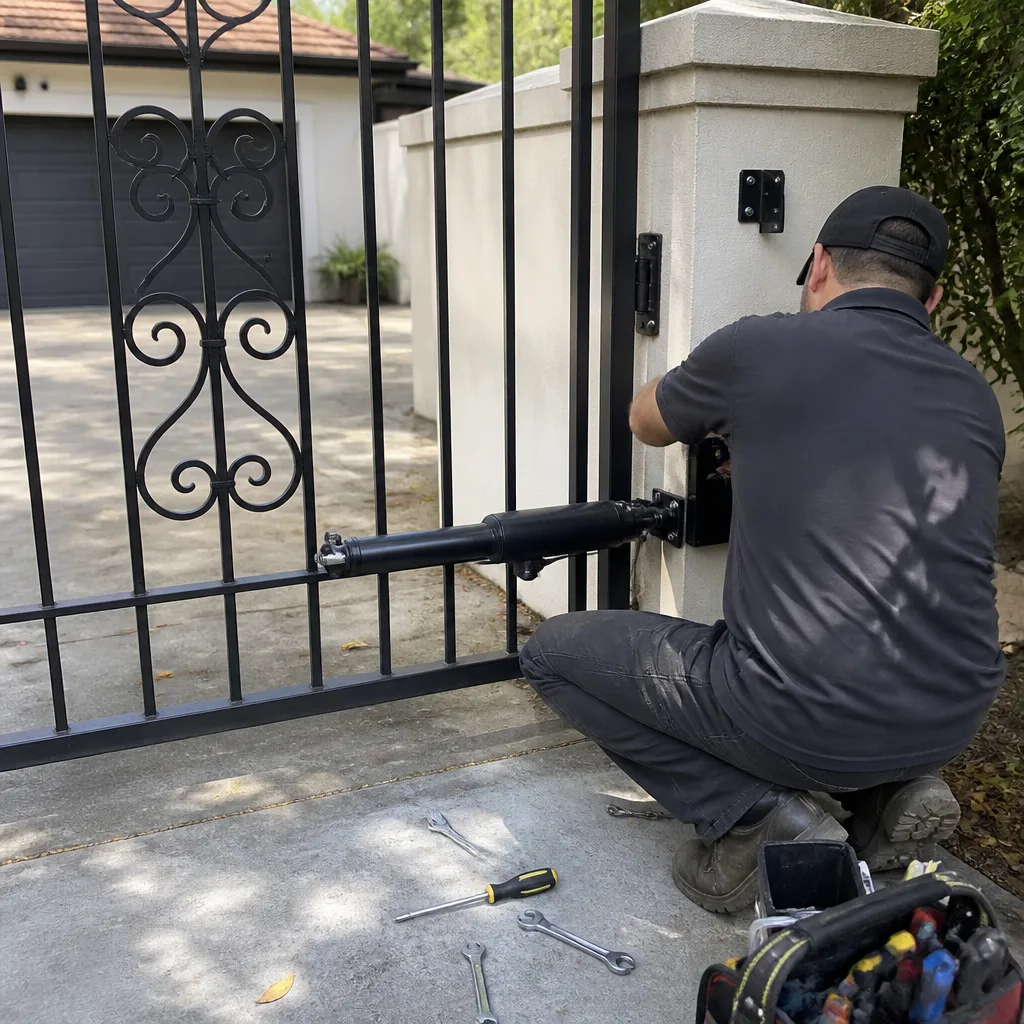 After
AfterGate Repair Permits, Codes & Inspections in CA: What You Need to Know
Here’s the counterintuitive truth about gate work in Pasadena: the most common repair call we get, a failed motor on an existing automated gate, rarely requires a permit in California. But the simplest-looking upgrade, swapping a manual gate for an automated swing operator, can trigger a building permit the moment you pour a new post footing or run line voltage to the motor. Most homeowners get this backwards. They panic over paperwork for a straightforward replacement and skip it entirely on work that actually needs city sign-off. This guide draws the line clearly, section by section, so you know where your project falls before you lift a finger. For more details on when to call in help, see our Gate Repair services.
Quick Answer
In Pasadena, gate repairs to existing structures, like replacing a motor, hinge, or circuit board, generally don’t require a permit. However, full gate installations with new posts and footings, adding an automated operator to a previously manual gate, or any electrical work that touches your home’s breaker panel does require a city permit. The two big triggers are:
- New post footings: drilling and pouring concrete for new gate posts is structural work, and Pasadena’s building code treats it that way.
- Panel-connected power: if your gate motor draws power from a new circuit on your electrical panel, that’s an electrical permit. If it plugs into an existing outdoor outlet, it typically isn’t.
- New automated operator on a manual gate: converting a manual gate to automated brings UL 325 safety requirements into play, and Pasadena wants that work documented.
Table of Contents
- Maintenance vs. Construction: Where Pasadena Draws the Line
- UL 325 and California’s Automated Gate Safety Standard
- What Unpermitted Gate Work Does to Your Insurance and Title
- What a Pasadena Gate Inspection Actually Checks
- Permit vs. Documentation: Why the Record Matters More Long-Term
- Step-by-Step: How to Handle a Gate Project in Pasadena
- Common Mistakes to Avoid
- When to Call a Professional
- Frequently Asked Questions
BeforeAfterMaintenance vs. Construction: Where Pasadena Draws the Line
Pasadena’s municipal code, like most California cities that follow the California Building Code (CBC) and California Electrical Code (CEC), distinguishes between maintenance and new construction. The line isn’t always intuitive, but it’s specific.
Maintenance work means repairing or replacing components on an existing gate or opener without altering the structure or the electrical supply. This covers:
- Replacing a worn hinge, roller, or wheel
- Swapping out a failed control board or limit switch
- Replacing a motor of the same voltage and similar draw on the existing circuit
- Adjusting photo-eyes, safety edges, or limit settings
- Welding a cracked frame member back into alignment
- Replacing a broken gate wheel or guide track
None of these changes how the gate is anchored, how it draws power, or how it operates. The gate was already there; you’re fixing it. Pasadena’s building department doesn’t want to see a permit for a hinge replacement any more than it wants to see one for a new garbage disposal.
Construction work changes the game. These projects cross the line into permitted territory:
- Setting new gate posts in concrete, whether for a replacement gate or a brand-new installation
- Running new electrical conduit or wiring from your breaker panel to a gate operator
- Adding a new circuit to the panel specifically for a gate motor or access control system
- Converting a manual gate to an automated one, because this introduces safety-device requirements that didn’t exist before
- Installing a new driveway gate where none existed, including moving the gate line closer to or further from the street
We’ve seen this exact scenario play out across Pasadena neighborhoods: a homeowner replaces a swing gate operator in Hastings Ranch, no permit needed, done. For more on spotting trouble early, read our Gate Repair Warning Signs: A Pasadena Homeowner’s Reference Guide. The same homeowner then decides to replace the gate itself with a heavier steel model that requires new posts, and suddenly we’re pulling a building permit because we’re digging footings. The distinction isn’t how much you spend; it’s what physically changes.
UL 325 and California’s Automated Gate Safety Standard
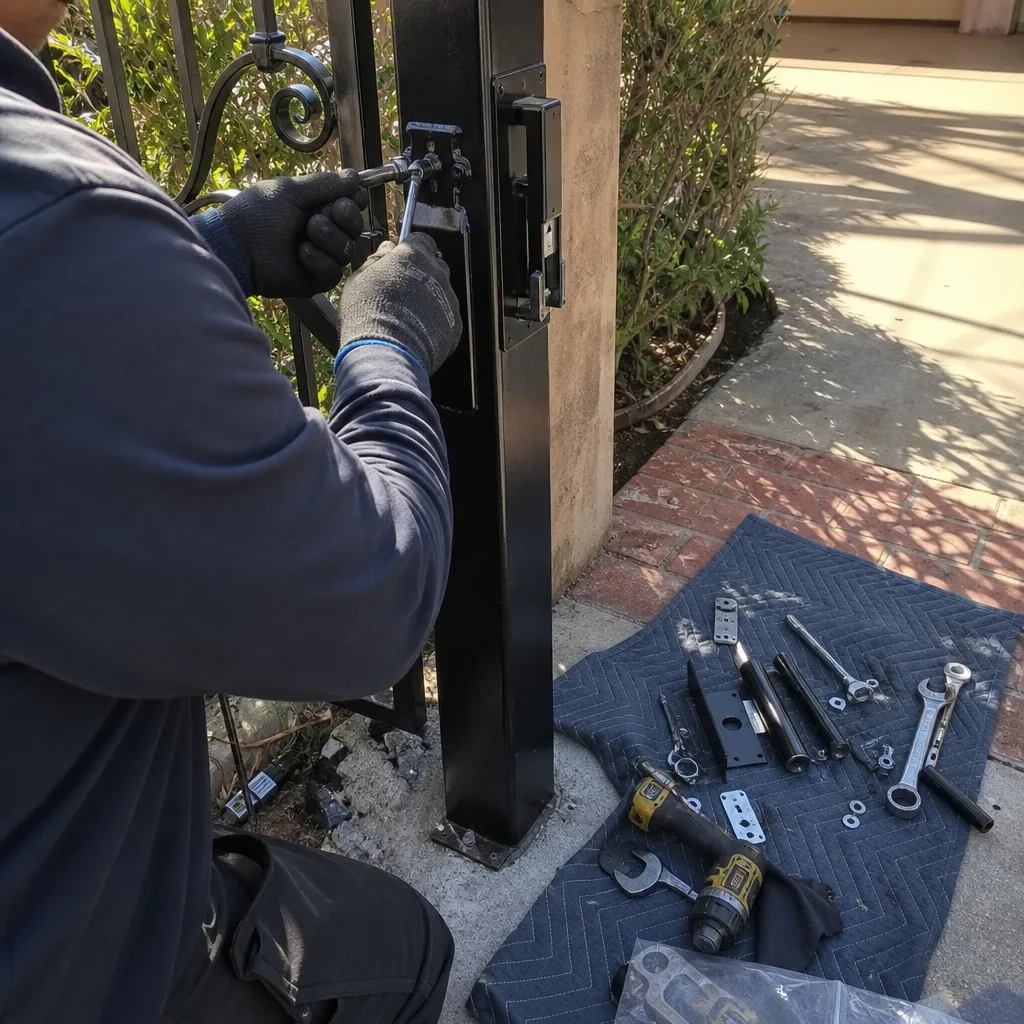
If your gate uses an automated operator, you’re operating under UL 325, the national safety standard for automated gate systems. California enforces this standard through the CBC and through the gate industry’s own certification programs. Here’s what it means in plain terms.
UL 325 exists because automated gates have killed people. They’re heavy, they move with significant force, and early models had no reliable way to stop when something, or someone, got in the path. The standard requires that every automated gate system include entrapment protection devices, specifically:
- Photo-eyes: infrared sensors mounted on each side of the gate path that detect an obstruction and reverse the gate before contact. On swing gates, you need a photo-eye on each side of the gate. On slide gates, you need them at the leading and trailing edges.
- Contact edges: pressure-sensitive strips mounted along the leading edge of a slide gate or the closing edge of a swing gate. If the gate contacts something, the edge compresses and signals the operator to stop and reverse.
- Inherent entrapment protection: some operators, particularly newer LiftMaster and FAAC models, include RPM sensing or current sensing that detects the increased resistance when the gate hits an obstruction and reverses without needing an external edge.
UL 325 isn’t just about the equipment. It mandates that whoever installs or services an automated gate understands the standard and verifies that safety devices are present and functioning. Before 2008, installing a gate operator without an external entrapment device was common. That’s a violation now. If we service a pre-2008 gate in Pasadena that has no photo-eyes and no safety edge, we won’t simply replace the motor and walk away. We’ll flag the missing protection and quote the retrofit, because the liability for a gate that can’t reverse on obstruction sits with whoever last touched it.
For BFT and FAAC hydraulic operators, the standard also covers pressure relief settings. For Mighty Mule and Ghost Controls DIY-style operators, the same UL 325 requirements apply, even though they were homeowner-installed. The gate doesn’t care who bolted the motor on.
What Unpermitted Gate Work Does to Your Insurance and Title
Skipping a permit on qualifying gate work doesn’t just create a code issue. It creates a paper trail problem, and in Pasadena’s real estate market, paper trail problems get expensive.
Insurance claims are the first exposure. If an automated gate on your property injures someone, your homeowner’s insurance carrier will investigate. They’ll look at the gate’s installation, the operator, and the safety devices. If the work was done without a permit when a permit was required, the insurer has grounds to deny the liability claim or to rescind your policy for material misrepresentation. A denied claim means you’re personally facing a premises liability suit where the plaintiff’s attorney already knows the gate was never inspected. That’s a bad position.
Title disclosure is the second exposure, and it’s one few homeowners consider until they’re selling. When you sell a Pasadena home, you complete a Transfer Disclosure Statement. One question asks whether you’ve done any work without required permits. If you answer truthfully, you’ve just flagged your unpermitted gate to every buyer and their lender. If you answer untruthfully, you’ve committed fraud. In California, a buyer can rescind a purchase or pursue damages for undisclosed unpermitted work, and the statute of limitations doesn’t start until they discover it.
The practical workaround used to be “get the permit retroactively.” That’s still possible in Pasadena, but it’s not automatic. The city can require you to expose work that’s been covered over, like digging up a post footing to verify depth and reinforcement. On a gate project, that often means redoing part of the work you already paid for.
What a Pasadena Gate Inspection Actually Checks
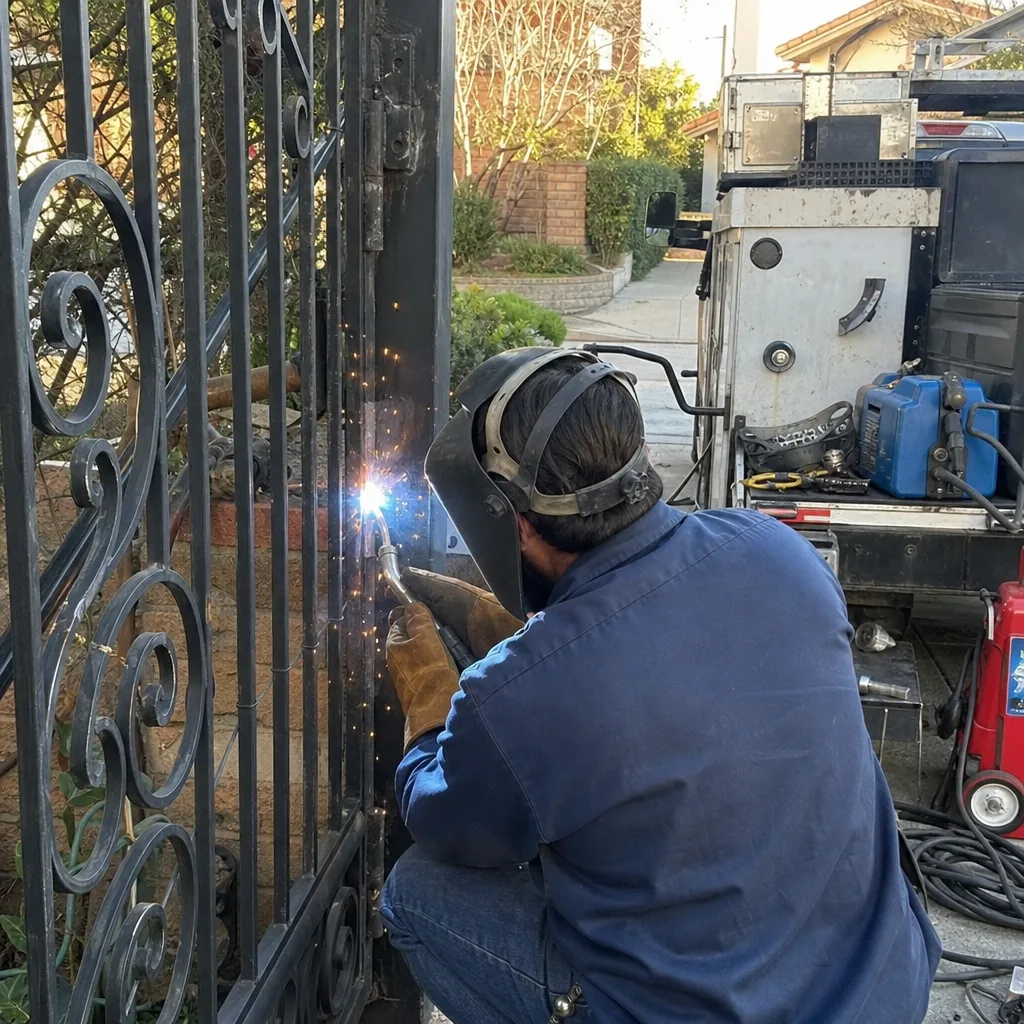
When you pull a permit for a gate project in Pasadena, the inspector comes out at prescribed stages. For a basic gate with new posts and no electrical, it’s usually one inspection after the concrete is poured and the posts are set, and a final after the gate is hung. Here’s what they’re checking.
- Post footing depth and diameter: Pasadena requires footings deep enough to reach below the soil’s active layer, which in our area means 24 to 36 inches depending on the post size and gate weight. The inspector checks the hole before the pour.
- Concrete bearing: the footing should bear on undisturbed soil, not fill, and the inspector will check that the hole wasn’t over-excavated and loosely backfilled.
- Gate clearance and swing: the gate can’t swing over a public sidewalk in a way that creates a hazard, and it can’t block the public right-of-way when open. The inspector will confirm the gate’s travel path stays on private property.
- UL 325 safety devices: for automated gates, the inspector verifies that photo-eyes and contact edges are installed correctly and reverse the gate on obstruction. This sometimes gets delegated to the gate contractor’s certification, but the inspector will still visually confirm the devices are present.
- Electrical work: if the permit includes electrical, the inspector checks that the dedicated circuit is installed to code, with proper ground fault protection and a disconnect within sight of the operator.
What helps an inspection go smoothly is documentation. When we do a gate installation or a major automation retrofit in Pasadena, we hand the homeowner a photo record of the footing depth before the pour, the safety device placement, and the final limit settings. Inspectors respect evidence. A homeowner who can show a footing measurement of 30 inches with rebar set in the pour doesn’t wave their hands and hope. They put the photo in front of the inspector and move on. Under Clause 4 of our Haven Standard, every job includes that documented photo record at no additional charge.
Permit vs. Documentation: Why the Record Matters More Long-Term
A permit tells the city the work complied with code on the day it was inspected. That’s the minimum. But a permit doesn’t tell the next homeowner, the next technician, or your insurance company what was actually installed, how it was configured, and where the wiring runs. That’s what documentation does, and it’s the piece most gate companies skip.
We’ve serviced gates in Pasadena that were installed with permits and passed inspection, where the wiring inside the junction box was a rat’s nest of unlabeled conductors and the limit switch settings bore no relation to the gate’s actual travel. The permit was clean. The operational knowledge was gone. The next technician either had to reverse-engineer the whole system or blindly replace parts.
Good documentation looks like this:
- Written record of every part number installed, from the operator to the safety edge
- Photos of the wiring inside the control panel, with conductors labeled
- Limit switch and force settings recorded as numbers, not “we set it where it stopped”
- Model and serial number of the operator, captured from the nameplate
- Photo evidence of safety device placement, verified on-site
This is where the Haven Standard diverges from what most Pasadena gate companies do by default. A verbal estimate and a handshake leave the homeowner with nothing they can produce later. Clause 1 puts the price in writing before any work starts. Clause 4 puts the evidence in your hands when the technician leaves. If you sell your house in five years and the buyer asks about the gate, you can hand them a folder, not a shrug.
Step-by-Step: How to Handle a Gate Project in Pasadena
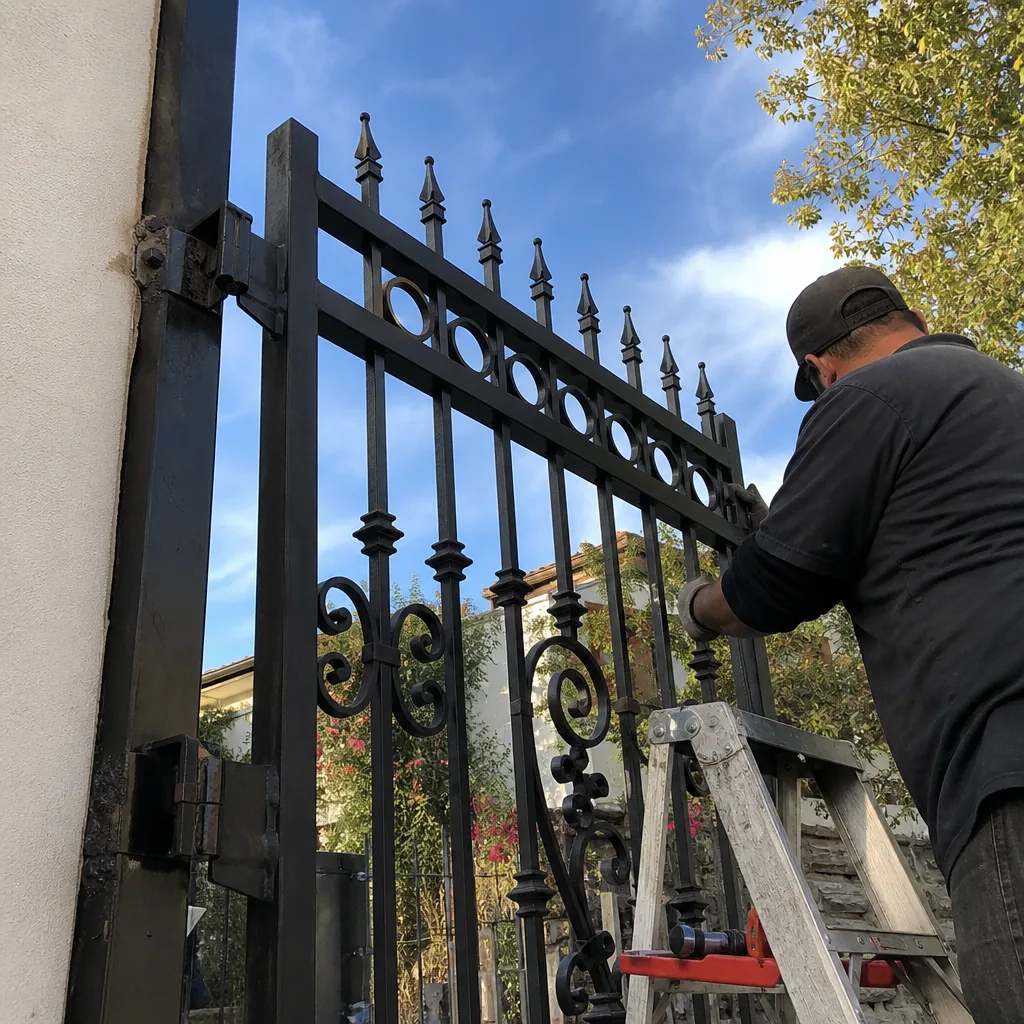
If you’re planning gate work, here’s the sequence that keeps you legal, safe, and audit-ready.
- Classify the work: is it maintenance or construction? Use the triggers from the first section: new footings, new circuit, manual-to-automated conversion. If none of those apply, you’re in maintenance territory and can proceed without a permit.
- If a permit is required, call the Pasadena Building & Safety Division: describe the project, and they’ll tell you the permit type and fee. Don’t guess. The fee for a simple residential gate permit is modest compared to the cost of retroactive compliance.
- Get your documents ready: if the project includes a panel-connected circuit, you’ll need a licensed electrical contractor or the electrical portion signed off by a licensed electrician. Gate operators that plug into an existing outdoor outlet skip this step.
- Schedule the footing inspection before you pour: do not pour concrete before the inspector signs off on the hole. If you pour early, you’ll be digging it back up to prove depth.
- Verify UL 325 devices before the final inspection: test each photo-eye and safety edge by obstructing the gate and confirming it reverses. Document the test. If it fails, fix it before the inspector arrives.
Working with a Pasadena gate contractor who does this every week saves you the learning curve. We pull the permit, schedule the inspections, and hand you the complete record when the job closes. For more on the full scope of what Gate Repair in Pasadena covers, including which repairs are permitted as maintenance, that guide walks through the common failure points we see across the city.
Common Mistakes to Avoid
- Pulling a permit for maintenance work: we’ve had Pasadena homeowners call us to “fix” a permit they pulled for a simple motor swap. You don’t need one. The permit office has better things to do.
- Pouring footings before the footing inspection: this happens constantly, and the inspector will make you expose the footing with a shovel or excavate one side to prove depth. Inspections happen before the pour, not after.
- Ignoring UL 325 devices on an older operator: if your gate opener was installed before 2008 and has no photo-eyes or safety edge, replacing the motor without adding entrapment protection leaves you holding the liability. Don’t let a contractor do it without flagging the gap.
- Using a plug-in transformer as a substitute for panel work: some operators can run from an existing outdoor outlet, and that’s fine. But if you need a new dedicated circuit and someone tells you to “just plug it in,” you’re creating a code violation and a fire hazard.
- Failing to document what was installed: a permit plus no documentation means the next technician starts from zero. You paid twice: once for the work and once for someone to rediscover it.
- Assuming all gate companies pull permits: ask directly. In Pasadena, some contractors will do permitted-quality work without actually filing, and you’ll discover it at the worst possible time, during a title search or an insurance claim.
- Buying a DIY operator and skipping the safety devices: Mighty Mule and Ghost Controls sell operator kits online. The motor is fine. The missing photo-eyes and contact edges are not. UL 325 doesn’t have a homeowner exemption.
When to Call a Professional
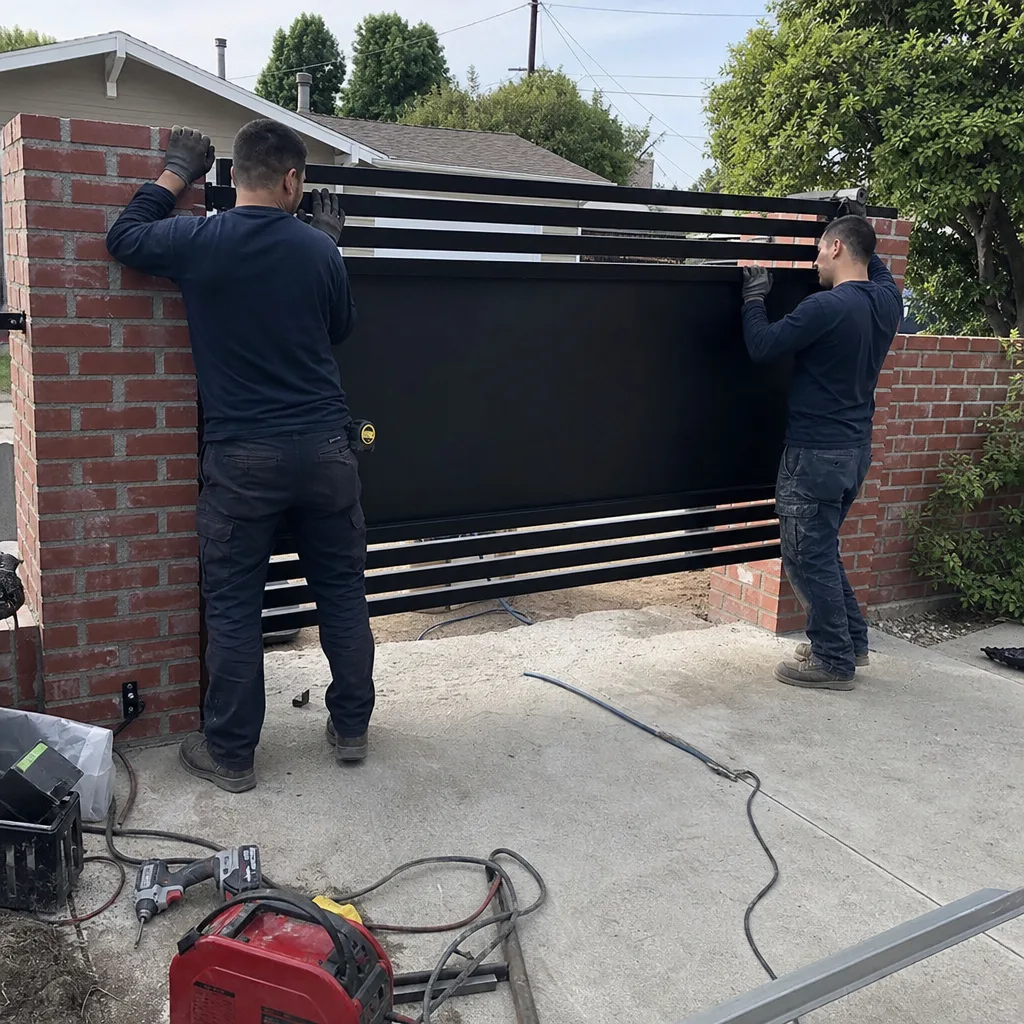
When a project starts involving post footings, you should have a professional in the loop. Digging and pouring a footing that will hold a 400-pound gate is not the place to learn on the job. One underbuilt footing shifts, the gate sags, and then you’re scheduling the repair and the permit at the same time.
You should also call us if your gate is automated but you can’t identify the UL 325 entrapment protection devices on it, if the gate has hit a car or a person and didn’t reverse, or if you inherited an unpermitted installation from a previous owner and want to know what compliance would cost. We provide free estimates in Pasadena and we’ll walk the site with you and tell you exactly what needs permitting and what doesn’t. Vance Gate Repair Pasadena home offers written, up-front pricing before any work begins, every time.
Vance Gate Repair Pasadena offers free estimates in Pasadena. Call (626) 624-4196 and a live person answers.
Frequently Asked Questions
No permit is required to replace a gate motor on an existing automated gate in Pasadena, as long as the new motor draws from the same circuit and you’re not altering the gate structure or adding a brand-new power run. Replacing a motor on a LiftMaster or BFT operator with a like-for-like swap is maintenance work, not construction. Call (626) 624-4196 if you’re unsure which side of the line your project falls on, and we’ll classify it in a free site visit.
Residential gate permits in Pasadena typically run a few hundred dollars depending on the project scope, with electrical work adding a separate electrical permit fee that varies by circuit count. The exact fee comes from the city based on your project valuation. Call (626) 624-4196 and we’ll help you get the right permit category before you pay anything.
If you’re adding an operator to a previously manual gate and it plugs into an existing outdoor outlet, no permit is required in Pasadena. If the operator needs a new dedicated circuit from the panel, the electrical work requires a permit. The automation itself also brings UL 325 safety requirements, permit or not. Call (626) 624-4196 and we’ll tell you which applies to your setup.
The city can require you to obtain a retroactive permit, and that often means exposing covered work like footings or conduit to verify compliance. The previous owner’s failure becomes yours when you take title. We help Pasadena homeowners navigate retroactive compliance without tearing up the whole yard. Gate Installation in Pasadena covers what a full compliant installation looks like, so you can compare your existing gate to code.
UL 325 applies to all automated gate types, including swing gates, slide gates, barrier arm gates, and vertical pivot gates. For swing gates, the standard requires entrapment protection at the hinge and closing edge areas, which usually means photo-eyes on each side plus a contact edge or inherent entrapment detection. A FAAC hydraulic swing operator must have its pressure relief set correctly to meet the standard. Call (626) 624-4196 and we’ll verify your gate’s compliance on site.
Insurance coverage for an unpermitted gate depends on your carrier and policy language, but a claim involving injury from an automated gate where a required permit was skipped gives the insurer strong grounds to deny coverage. The better move is to fix the compliance issue before an incident. Call (626) 624-4196 and we’ll assess what your gate needs for a free, written record.
The Bottom Line
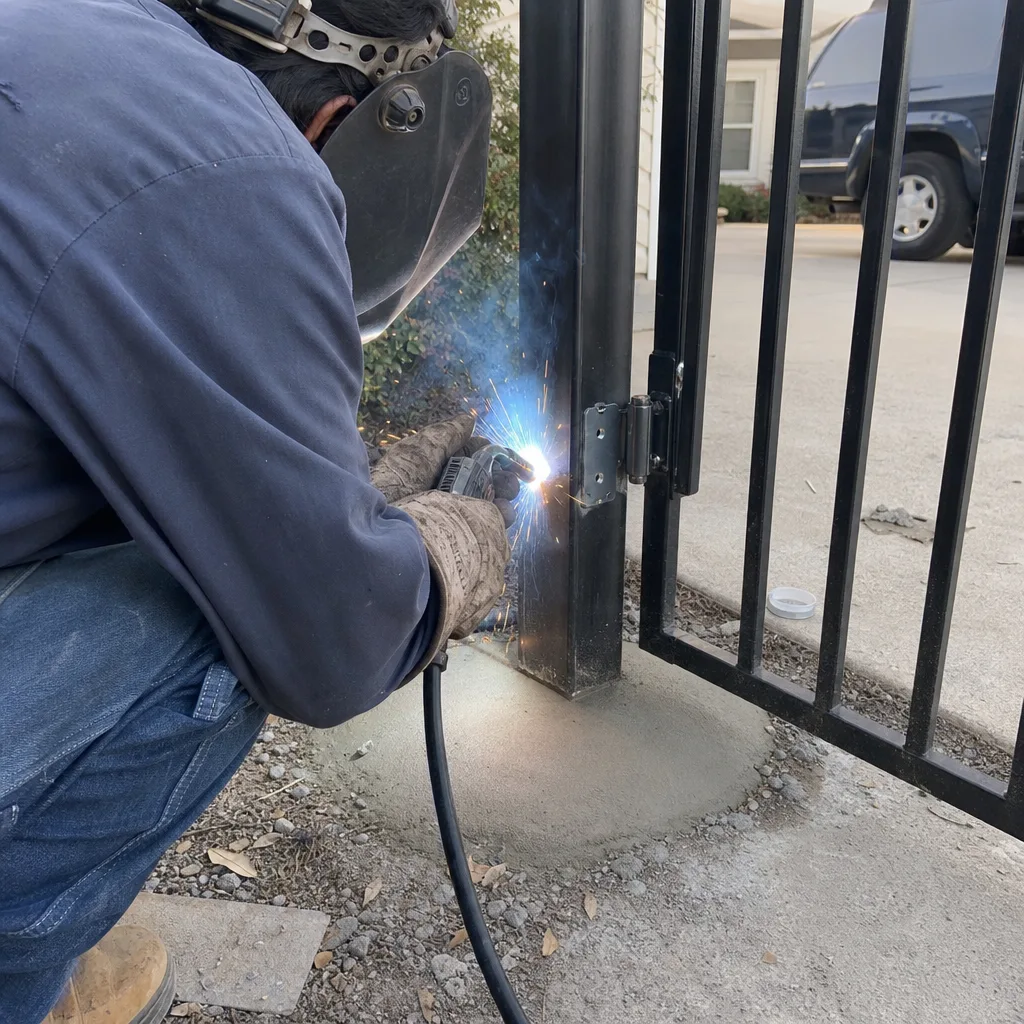
Permits for gate work in Pasadena aren’t a blanket requirement. They kick in at specific moments: new footings, panel-connected power, or converting manual to automated. Miss those triggers and you’re carrying unpermitted-work liability into your insurance policy and your property title. Work done inside those lines, done to UL 325, passes inspection cleanly when you document it. A permit proves compliance once. A documented record, photos, part numbers, settings, proves it every day after. That’s the standard we run every Pasadena gate job to, and it’s why the paperwork matters as much as the welding. For more on what Gate Motor & Opener in Pasadena service includes, read the full guide there.
Written by Adrian Vance, Owner at Vance Gate Repair Pasadena, serving Pasadena since 2014. Explore more guides & resources on gate maintenance and installation.